
(Photo by cottonbro studio via Pexels)
By Stephen Beech
A major breakthrough in the treatment of crippling spinal cord injuries could improve patients’ hopes of making a full recovery.
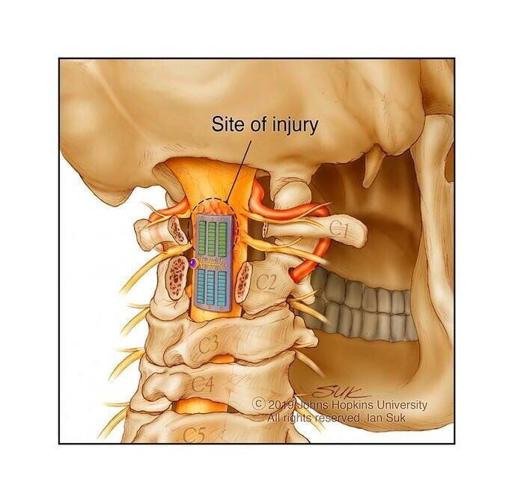
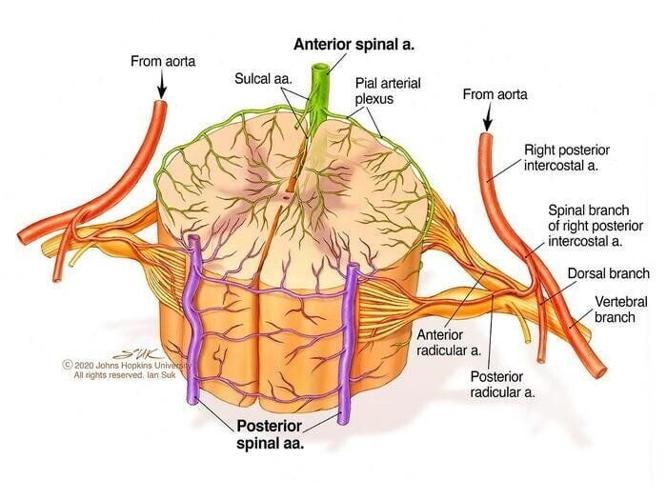
American scientists have successfully placed an ultrasound device, as a temporary implant, at the site of a spinal cord injury in animals to monitor and identify changes in blood flow.
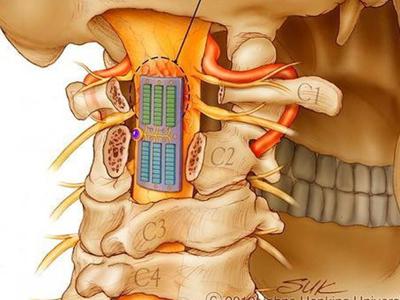
The device is the size of a small Band-Aid and can be placed over the spinal cord at the site of injury during surgery.
The study by a team of engineers and surgeons from Johns Hopkins Medicine, based in Baltimore, shows that temporarily implanting a tiny device into the location of a human spinal injury is “feasible, safe and potentially useful.”
The breakthrough follows a $13.48 million award from the U.S. Defense Department.
Principal investigator Amir Manbachi said: “When the biology of spinal cord injury is local, our devices should also be able to track and treat local physiology.”

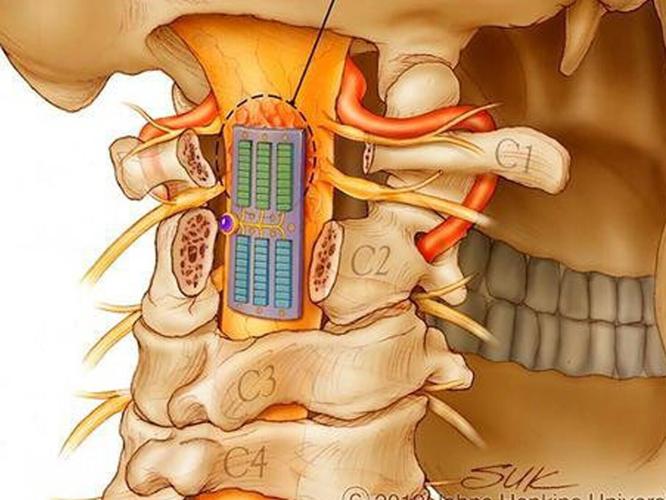
Researchers are studying how an ultrasonic neural interface device, which would be temporarily implanted at the site of injury following surgery, may be used to support recovery and personalize care for people recovering from spinal cord injuries. (Ian Suk | JHU via SWNS)
The device that Manbachi and his colleagues developed, called Multimodal Ultrasound System for Injury Care (MUSIC), is designed to enhance feedback about what is happening at and around the site of injury following surgery.
They say MUSIC will provide information to support key clinical decisions about care when a patient is recovering in the intensive care unit.
Manbachi explained that the ultimate goal of developing and studying the device is to identify a way to support people while they are in hospital and minimize risks for complications that they may face while recovering from a spinal cord injury.





He said the device was designed to double as a “mobile MRI” that could alleviate the need to move immobile patients in the days following their recovery, while providing on-demand and as-needed feedback to medical teams, as opposed to single points in time.
Manbachi, from Johns Hopkins University School of Medicine, says the device has a dual nature of diagnostic ultrasound and therapeutic ultrasound.
He said: “The diagnostic aspect of the device provides real-time insight about blood flow and changes surrounding the spinal cord injury and enables analysis of other measures, such as spinal fluids and excess fluid accumulation, how a person is responding to medication and what is happening outside of the injured area, which can provide insight about how well a person is healing.
“This type of real-time detection in the days and weeks after surgery could provide instant feedback to medical teams, while helping to personalize treatment decisions.
“The therapeutic ultrasound — also known as focused ultrasound — is the more futuristic and exploratory aspect of the device that has been studied for its potential ability to identify and respond to changes in blood flow at and around the site of the injury, when blood flowing through the small vessels around the affected area drops below or above acceptable levels.”

The Multimodal Ultrasound System for Injury Care (MUSIC) is an ultrasonic neural interface device designed, and currently being studied, for its ability to be temporarily implanted at the site of a spinal cord injury following surgery to monitor and modulate blood flow as a patient recovers in the intensive care unit. (Ian Suk | JHU via SWNS)
The first proof-of-concept study in animals, published in the journal Science Advances, shows that MUSIC was able to be temporarily implanted and provide real-time feedback about blood flow and imaging around the site where it is located.
Dr. Nicholas Theodore, a former neurosurgeon who created the device with Manbachi, added: “Timing is critical for recovery.
“This research represents a fusion of multiple industries, disciplines and applications that we envision has the power to fine-tune and personalize the care that a person receives following their surgery, which could support and improve their health outcomes months and years later.”
He said the team designed the device with the goal of helping people across a variety of ages and life stages, ranging from soldiers recovering from wounds on the battlefield to children or adults affected by severe car crashes, falls or sports injuries.
An estimated 18,000 spinal cord injuries occur in the U.S. each year with vehicle accidents being the most common.
(0) comments
Welcome to the discussion.
Log In
Keep it Clean. Please avoid obscene, vulgar, lewd, racist or sexually-oriented language.
PLEASE TURN OFF YOUR CAPS LOCK.
Don't Threaten. Threats of harming another person will not be tolerated.
Be Truthful. Don't knowingly lie about anyone or anything.
Be Nice. No racism, sexism or any sort of -ism that is degrading to another person.
Be Proactive. Use the 'Report' link on each comment to let us know of abusive posts.
Share with Us. We'd love to hear eyewitness accounts, the history behind an article.