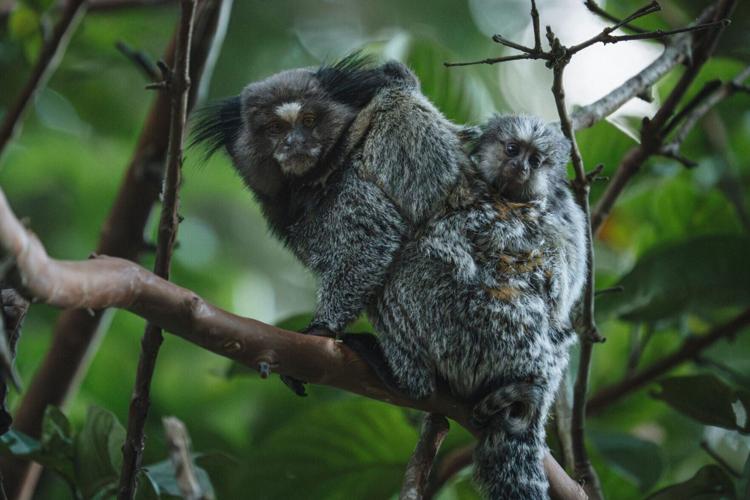


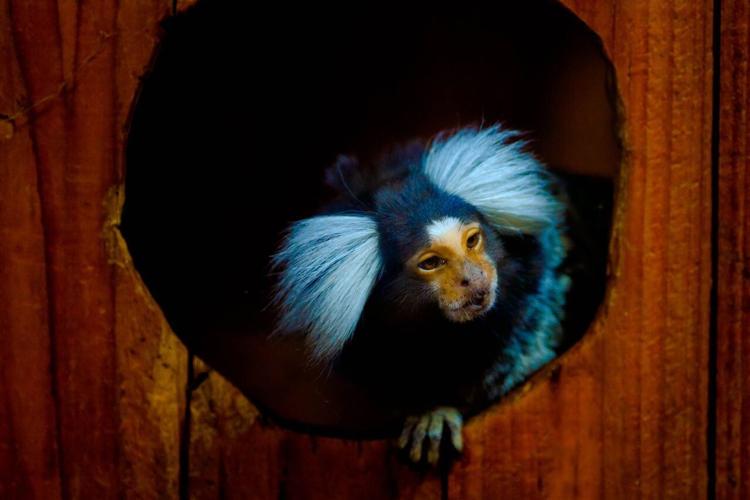

(Photo by Anderson Alves via Pexels)
By Stephen Beech
The first complete genome of a species of monkey will enable vital research into dementia and other diseases, say scientists.
To study complex diseases such as Alzheimer's, researchers analyze how genes change and malfunction in other species.
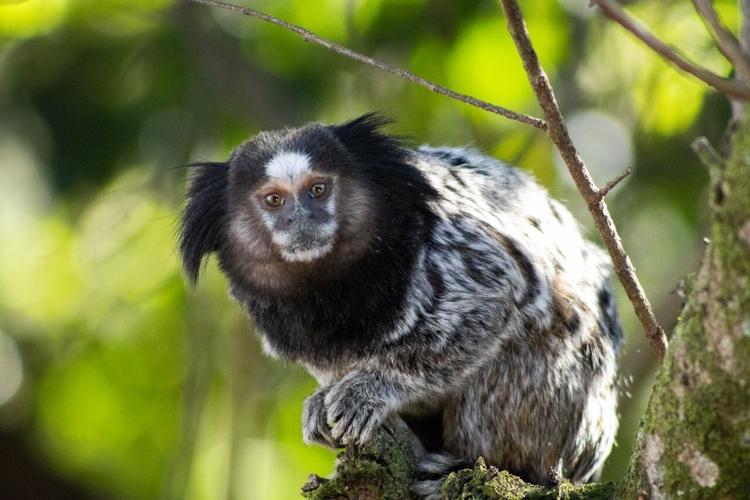
Marmosets — a species of tiny tree-dwelling monkey from South America, have become an important animal to study for understanding disease.
But researchers have never had a complete baseline for understanding the primate's DNA.
Now, the first complete genome of the common marmoset is available to the scientific community, thanks to a research team at the University of California, Santa Cruz Genomics Institute.
Their work, published in the journal Cell, means researchers will be able to study marmoset genetics with high accuracy and detail, revealing unseen features and enabling future insights into disease and evolution.
Doctoral student Prajna Hebbar and Benedict Paten led the project as part of the Telomere-to-Telomere (T2T) Consortium, a collaborative, multi-institution effort to create high-quality, truly complete reference genomes.

UC Santa Cruz Biomolecular Engineering and Bioinformatics Ph.D. student Prajna Hebbar led the effort to produce the first end-to-end genome sequence of the common marmoset. (Carolyn Lagattuta/ UC Santa Cruz via SWNS)
The consortium made history in 2022 with the first complete human genome, and has continued to advance and drive down the costs of the technologies and methods needed to create complete genomes.
The marmoset genome is one in a package of studies released that shows that the T2T approach is becoming routine enough to be applied not just to human genomes, but to different species.
The researchers say the more automated process could set the stage for "personalized genomics" — where everyone's complete genome sequence could serve as their own unique reference for medical care, at a lower cost than ever before.
Hebbar said: "Routine T2T genomics is making findings easier and more plausible, as we're able to much more easily access these complex regions.
"It's great to be in an era where we're not stuck with the technical problems — we can go into the biology and make discoveries relevant to human health."
Marmosets are increasingly studied by scientists because as a new world primate, they are more closely related to humans than other model species such as mice.
Their small size also makes them easier to work with than other primates such as macaques.
New-world primates like marmosets experience age-related memory loss, which has made them a great model for studying dementia.






To study the genetic makeup of a species, scientists use a standardized DNA sequence called a reference genome.

(Photo by Matheus Costa via Pexels)
By comparing individuals to the reference, they can make insights into disease, traits and evolution.
Scientists created the first marmoset reference genome in 2014, but that version contained gaps and errors, and left several regions of the genome unresolved, making it difficult for researchers to accurately identify genetic variation.
Thanks to new algorithms for highly accurate genome assembly pioneered by the T2T consortium, the updated reference resolves those errors and provides the first record of several complex features of the marmoset genome.
The researchers used the new reference to examine genetic differences across 230 marmosets, finding variation at many of the genes linked to Alzheimer's disease in humans, and those vital to the immune system.
Because the marmoset is increasingly relevant for studying neurodegenerative diseases, the researchers searched for a shortlist of genes known to be linked to Alzheimer's, Parkinson's and related neurodegenerative diseases in humans and provided references for 76 instances of matching genes in the monkey species.
They say it will enable other scientists to study the health impacts of the genes with much higher accuracy.
Hebbar said: "We see variation in these marmosets in the same genes that we do in humans, further reinforcing the idea that the marmoset is a good model for studying Alzheimer's disease in humans.
"Now, we have this really complete, high-quality resource that people can take advantage of."

(Photo by limoo via Pexels)
The complete genome also revealed that marmosets shuffle sets of ribosomal DNA (rDNA), a crucial subset of DNA that enables protein production, between chromosomes more freely than expected, gaining and losing whole arrays on individual chromosomes in ways not previously documented in primates.
Paten said: "We also identified sex differences in the distribution of these genes, a pattern that has previously been reported in orangutans and gibbons, widening our understanding of these genes that are extremely important to the biosynthesis of cells.
"While these sex differences may not have an effect on the species, now that we can do T2T sequences, we'll find out more."
The researchers also identified patterns in the centromeres, regions of the chromosomes vital for cell division, that will warrant further study.
Hebbar has been struck by the rate of findings that she and her colleagues have been able to make about regions of the genome that researchers worked around for decades because they were too tangled and repetitive to read.
She said: "It's pretty crazy that I'm doing this research in what is one of the best times to be doing your Ph.D. in genomics."
She added: "It's cool to be part of this era where you can actually study all of these complex regions."

(0) comments
Welcome to the discussion.
Log In
Keep it Clean. Please avoid obscene, vulgar, lewd, racist or sexually-oriented language.
PLEASE TURN OFF YOUR CAPS LOCK.
Don't Threaten. Threats of harming another person will not be tolerated.
Be Truthful. Don't knowingly lie about anyone or anything.
Be Nice. No racism, sexism or any sort of -ism that is degrading to another person.
Be Proactive. Use the 'Report' link on each comment to let us know of abusive posts.
Share with Us. We'd love to hear eyewitness accounts, the history behind an article.