

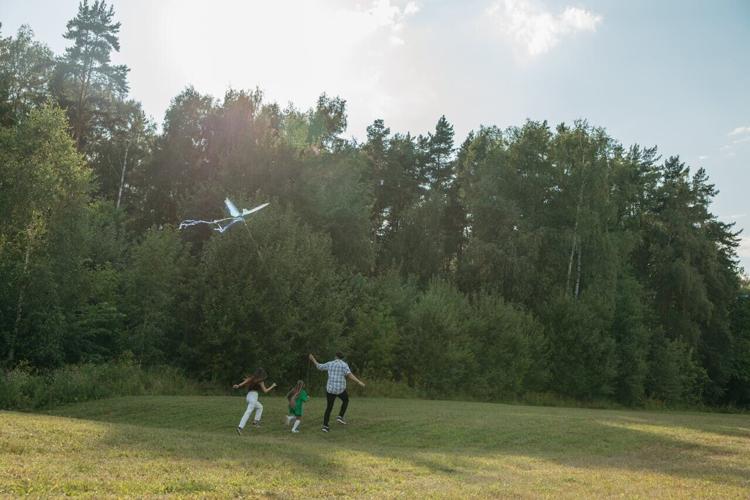



(Photo by GyÅzÅ Mórocz via Pexels)
By Stephen Beech
People who live in greener areas smoke and booze less, according to new research.
And those who make regular visits to nature tend not to smoke, say scientists.
An international team, led by University of Exeter researchers, found residential green spaces are associated with a "significant" reduction in risky health behaviours such as smoking and everyday drinking.
The study, published in the journal Health & Place, found that people living in the greenest communities were 13 percent less likely to be current smokers and 31 percent less likely to drink alcohol every day than those in less green areas.
The research team analysed data across multiple countries and different types of nature contact for the first time.
They said their findings were "consistent" across different countries, household income and educational attainment.
The presence of green spaces near someone’s home lowering health risk behaviours appears to be beneficial to all and not limited to particular groups, according to the study.

(Photo by Anastasia Shuraeva via Pexels)
Researchers also found that people who make intentional visits to nature away from their home at least once a week are less likely to smoke.






Study lead author Dr. Leanne Martin, of the University of Exeter, said: “Our finding that nature seems to be beneficial to all in society is hugely important because it goes some way to levelling the playing field in terms of reducing health inequalities.
"We've accounted for a wide range of socio-economic factors in our research and found the benefits are not determined by things like having a higher income or living in more affluent areas.
"For those people who don’t live in areas with high green space, we’ve found those intentional visits to nature also have huge benefits.”
The study defined residential green space as land comprised of vegetation and natural elements within 250 metres (273 yards) of someone’s home, including private gardens.

(Photo by Hector Perez via Pexels)
Data was used from the BlueHealth International Survey of 18,838 adults from 18 countries and across various socio-demographic groups.
The findings suggest that the positive effects of residential green spaces in reducing smoking and everyday drinking could be harnessed as a public health intervention.
The researchers say that it could involve nature-based interventions for people looking to quit smoking or to treat alcohol abuse.
Co-author Dr. Mat White, of the University of Vienna, Austria, said: “We don’t think it’s simply a coincidence those who are exposed to nature smoke and drink less.
"A growing number of studies are showing that when people are exposed to nature, they have fewer cravings for substances like alcohol and nicotine."
Dr. White added: "In part, we think this is because they tend to be calmer and don’t need that “hit”- which helps them give up smoking, for instance.”
(0) comments
Welcome to the discussion.
Log In
Keep it Clean. Please avoid obscene, vulgar, lewd, racist or sexually-oriented language.
PLEASE TURN OFF YOUR CAPS LOCK.
Don't Threaten. Threats of harming another person will not be tolerated.
Be Truthful. Don't knowingly lie about anyone or anything.
Be Nice. No racism, sexism or any sort of -ism that is degrading to another person.
Be Proactive. Use the 'Report' link on each comment to let us know of abusive posts.
Share with Us. We'd love to hear eyewitness accounts, the history behind an article.