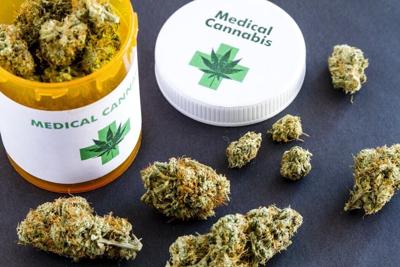

(BINGHAMTON, NY) When the U.S. Department of Justice moved to reclassify medical marijuana to a Schedule III drug on April 23, 2026, it set the stage for a vast amount of medical research that has been hobbled for decades by its more restrictive Schedule I classification.
The Justice Department also called for an expedited federal rescheduling process, with proceedings expected to begin in late June 2026, but for now cannabis at the federal level remains a Schedule I drug.
I’m an associate professor of nursing and I edited a textbook for nurses about providing care with cannabis. Cannabis is the umbrella term for the plant genus that includes both marijuana and hemp – two varieties of the same plant distinguished primarily by their content of THC, one of the active components of cannabis.
Moving cannabis to a Schedule III drug ushers in the end of the cannabis prohibition era and the beginning of the regulation era, potentially creating promising opportunities around research and new therapeutics.

How are drugs regulated by ‘schedule’?
The Controlled Substances Act of 1970 categorizes all substances regulated under existing federal law into one of five schedules. The act regulates the manufacturing, importation, possession, use and distribution of substances on each schedule.
Several factors determine schedule placement, including the drug’s medical use, scientific evidence of its benefits and pharmacological effects, patterns and history of abuse, public health risk level, degree of physical or psychological addiction potential, and whether the drug can be used to make another controlled substance.
The Drug Enforcement Administration’s rescheduling of marijuana will move it from its current classification as a Schedule I drug, defined as having a high risk for abuse and no accepted medical use, to a Schedule III drug under the Controlled Substances Act. While still tightly regulated, Schedule III drugs are considered to have moderate to low risk for physical and psychological dependence and to have some medical benefits.
Other Schedule I drugs include heroin, psilocybin, LSD, peyote and MDMA, or ecstasy. These drugs cannot be dispensed or prescribed, with some exceptions. Current Schedule III drugs include ketamine, anabolic steroids, testosterone, products with less than 90 milligrams of codeine per dosage unit and some cannabinoids.
The move to reclassify medical marijuana products as Schedule III drugs applies only to those products certified by state-level medical cannabis programs. All other cannabis products remain a federal Schedule I drug, including those available from states’ recreational cannabis programs.
Impacts of cannabis reclassification
This legal order acknowledges that medical marijuana has some medical value and asserts that it has a lower potential for abuse than under the previous Schedule I classification.
The reclassification also ensures that state-registered medical cannabis patients continue to be permitted to purchase medical cannabis products without changes to their current certification or recommendation.
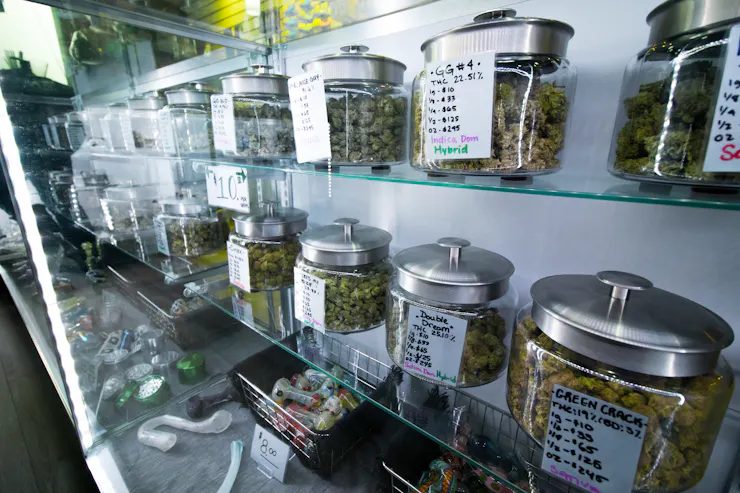
One of the challenges with this new law is that states have not standardized medical cannabis regulations, and each state will have its own quality and testing standards. In Maine, for instance, medical cannabis is not tested for molds, fungus, heavy metals or pesticides, while recreational cannabis is.
This means that the Schedule III medical cannabis in Maine could be contaminated, while the state’s testing of recreational cannabis makes it much safer to consume.






What are the implications for marijuana research?
For decades, researchers have struggled to conduct high-quality research studies due to their lack of access to the cannabis products that patients actually use and restrictions on their processes.
With the reclassification, researchers who are registered with the DEA to research cannabis will be able to obtain cannabis flower and plant material, as well as manufactured cannabis products, such as tinctures and edibles, directly from state-licensed businesses that are DEA-registered.
This means researchers will no longer need to rely on the federal DEA registry for access to cannabis products for research, which were often inferior in quality and variety in comparison to the everyday products medical cannabis patients typically have access to. Instead, they will be able to study cannabis products that patients use in daily life, such as vapes and various edible products.
This shift in access will now allow researchers to undertake the gold standard of research approaches: the randomized controlled trial.
Randomized controlled trials will help researchers like my colleagues determine how effective cannabis is in treating people with complex medical needs. This includes patients who experience nausea and pain while undergoing cancer treatments, multiple sclerosis patients with severe muscle spasm and stiffness, and chronic pain patients who strive to find relief without using opioids.
Might rescheduling send mixed signals?
Rescheduling may lead people to believe that cannabis is safe for all people to consume.
However, a growing body of research points to possible adverse effects from cannabis use, particularly in vulnerable groups, such as people who are pregnant, adolescents, people with preexisting mental health conditions such as schizophrenia or psychosis, and those with cardiac issues.
Cannabis can also lead to adverse drug interactions. Therefore, medical patients should use it with discretion and under the guidance of a healthcare professional.
For most medical cannabis patients, THC doses should start low and gradually be increased.
Rescheduling will be a big step toward helping researchers build a greatly needed solid body of evidence around both the benefits and potential harms of cannabis. But rescheduling should not be interpreted as a signal that cannabis is harmless.
This article is republished from The Conversation, a nonprofit, independent news organization bringing you facts and trustworthy analysis to help you make sense of our complex world. It was written by: Carey S. Cadieux, Binghamton University, State University of New York
Read more:
- Cannabis legalization spurs innovation, but not always in ways that benefit patients or public health
- Mounting research points to health harms from cannabis, THC and CBD use during pregnancy, adolescence and other periods of rapid development
- Cannabis legalization has led to a boom in potent forms of the drug that present new hazards for adolescents
Carey S. Cadieux is affiliated with the American Cannabis Nurses Association as a volunteer who consults with them on federal and state-level cannabis policy, and the editor of the textbook Cannabis: A handbook for nurses, published by Wolters Kluwer.


(0) comments
Welcome to the discussion.
Log In
Keep it Clean. Please avoid obscene, vulgar, lewd, racist or sexually-oriented language.
PLEASE TURN OFF YOUR CAPS LOCK.
Don't Threaten. Threats of harming another person will not be tolerated.
Be Truthful. Don't knowingly lie about anyone or anything.
Be Nice. No racism, sexism or any sort of -ism that is degrading to another person.
Be Proactive. Use the 'Report' link on each comment to let us know of abusive posts.
Share with Us. We'd love to hear eyewitness accounts, the history behind an article.