


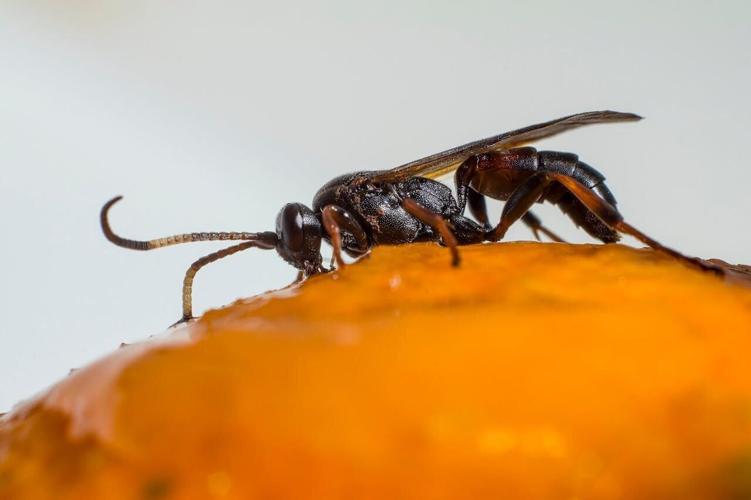

(Photo by MART PRODUCTION via Pexels)
By Stephen Beech
Feeding cocaine to "franken-flies" could lead to a cure for drug addiction, say scientists.
Researchers have created genetically modified fruit flies for the first time that can become addicted to the Class A drug.
The flies will self-administer cocaine if given the option, according to the study published in the Journal of Neuroscience.
Scientists say the new model could prove "immensely valuable" for the development of new therapies to prevent and treat the growing problem of cocaine addiction.
They explained that heredity strongly impacts the risk of developing cocaine use disorder.
But the large number of genes implicated in addiction risk has made it difficult to determine which might be the best targets for therapies.
American researchers hope the new fruit fly model of cocaine use disorder will help reveal the biology of addiction - and find better treatments much faster than previously possible.
Study senior author Professor Adrian Rothenfluh says flies and humans react to cocaine in "remarkably similar" ways.
Rothenfluh, of the University of Utah, said: “At low doses, they start running around, just like people.
“At very high doses, they get incapacitated, which is also true in people.”

(Photo by Leeloo The First via Pexels)
He says flies and humans have a lot in common when it comes to addiction.
Flies have around 75% of the human genes that are known to be involved in disease, and the insects have been instrumental in discovering the underlying biology behind other substance dependencies.
Because fruit flies grow quickly and are easy to conduct genetic experiments with, Rothenfluh says a fruit fly model of cocaine addiction would be a "valuable" early step toward developing therapies.
But he said: “Flies do not like cocaine one bit.”






His research team found that when given a choice between sugar water and sugar water laced with cocaine, fruit flies consistently chose the drug-free option- even when they’d been exposed to cocaine previously.
To better understand addiction in humans, the research team needed to figure out why flies wouldn’t take cocaine - and if there was a way to bypass it.
Study first author Dr. Travis Philyaw suspected that the answer might lie in the flies’ sense of taste.
He said: “Insects are evolutionarily primed to avoid plant toxins, and cocaine is a plant toxin.
“They have taste receptors on their ‘arms’- their tarsal segments - so they can put their hand in something before it goes in their mouth, and decide, ‘I’m not going to touch that.’”
By watching how flies’ sensory nerves responded to cocaine, the research team found that the compound strongly activates bitter-sensing taste receptors in the flies’ tarsal segments.
When the team muted the activity of the bitter-sensing nerves so that the flies couldn’t taste bitter flavours, they started developing a preference for cocaine-laced sugar water over plain sugar water.

(Photo by Erik Karits via Pexels)
The team found that flies would only voluntarily consume cocaine at low concentrations, but they developed a preference "remarkably quickly" - within 16 hours of first exposure.
The researchers say its will help them understand addiction in humans.
And they can now study hundreds of potentially relevant genes in a much shorter time span.
Dr. Philyaw said: “We can scale research so quickly in flies.
“We can identify risk genes that might be difficult to uncover in more complex organisms, and then we pass that information to researchers who work with mammalian models.
"Then, they’re able to uncover treatment targets that facilitate the jump from studying animal behaviour to developing human therapeutics.”
Rothenfluh said: “We can really start to understand the mechanisms of cocaine choice, and the more you understand about the mechanism, the more you have a chance to find a therapeutic that might act on that mechanism.”
He added: “Just trying to understand the simple little fly brain can give us insights that you cannot anticipate.
“Basic science is important, and you never know what exciting things you might find that turn out to be impactful for understanding the human condition.”
(0) comments
Welcome to the discussion.
Log In
Keep it Clean. Please avoid obscene, vulgar, lewd, racist or sexually-oriented language.
PLEASE TURN OFF YOUR CAPS LOCK.
Don't Threaten. Threats of harming another person will not be tolerated.
Be Truthful. Don't knowingly lie about anyone or anything.
Be Nice. No racism, sexism or any sort of -ism that is degrading to another person.
Be Proactive. Use the 'Report' link on each comment to let us know of abusive posts.
Share with Us. We'd love to hear eyewitness accounts, the history behind an article.