


Stress sweating vs. heat sweating
Picture this: Eighty thousand fans in a stadium are on their feet and holding their breath, anticipating a penalty kick that could decide everything. In that suspended moment, players and supporters alike feel that familiar prickle of sweat that has nothing to do with the afternoon sun. That's anxiety sweating, and it's completely different from the sweat people break during a workout or a hot summer commute.
Aside from being interesting science, understanding the difference is practical knowledge that helps you stay comfortable and confident when you need it most. Degree explored the differences between heat sweat and anxiety sweat while providing tips for managing both kinds.
Two Types of Sweat, Two Different Triggers
The body has two distinct sweating systems, each activated by different circumstances and with different purposes. Also, how much you sweat is unique to you. “The amount of sweat that an individual produces varies from person to person,” Unilever R&D scientist Matt Annecharico explained. “This is due to a number of factors that include environmental temperature, physical effort, emotional stress, and fitness level.”
Anxiety sweat
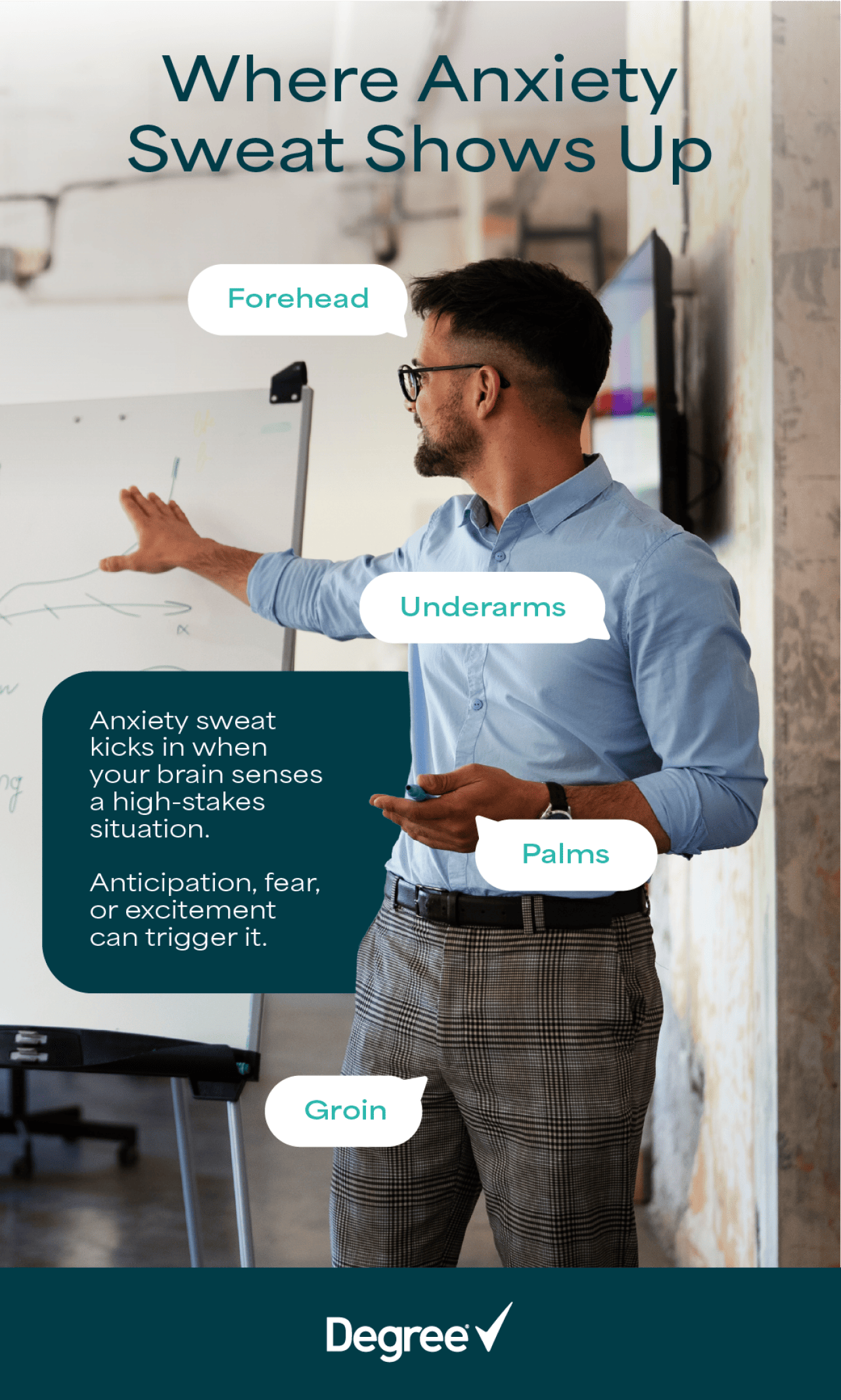
Also known as stress sweat, this type kicks in when your brain senses a high-stakes situation. Anticipation, fear, excitement—all of these can trigger it. “Stress sweat is controlled by the sympathetic nervous system, and when adrenaline or the heart rate rises, this system triggers sweat that contains lipids and proteins, which bacteria naturally found on the skin love,” Annecharico said.
Importantly, this type of sweat has nothing to do with your body temperature. You could be sitting in an air-conditioned room, watching your team take a penalty in the FIFA World Cup final, and still experience a sudden rush of nervous sweating on your palms, in your armpits or on your soles.
Heat sweat
This is your body’s natural cooling system. When your body temperature rises during exercise or in warm weather, it releases sweat, which then evaporates from your skin to help bring your temperature back down.
Same output, very different cause.
The Glands Behind the Sweat
Heat sweating is managed by eccrine glands, which can be found throughout the body. These glands produce a clear, watery sweat made mostly of water and electrolytes. Because it's used for quick evaporation and cooling, it's odorless on its own.
Stress sweat, on the other hand, comes from the apocrine glands found mainly in the underarms and groin. “Apocrine glands are activated by an emotional response and produce an oily sweat. This fatty and oily sweat does not have any odor on its own, but when certain skin microbes feed on it, this breaks it down to produce a strong odor,” Unilever Personal Care R&D manager Bivash Dasgupta explained.
This is why, when anxious or stressed, your sweat can smell more intense than the sweat your body produces during a long run. It's not about how much you sweat; it's about which glands are active.
What Each Type of Sweat Is For
Heat sweating is one of your body’s most effective ways to cool down. As sweat evaporates from the skin's surface, it draws heat away, helping to regulate your body temperature during physical activity or when it's hot. You can think of it as your body’s natural thermostat at work.





Anxiety sweating has a different purpose. It’s part of the body’s natural fight-or-flight response, a physical reaction to stress or stressful situations. It’s an old survival system that once helped prepare the body for quick action in moments of danger. Today, that same response can still kick in during everyday situations like writing an exam, waiting for a job interview, or watching a last-minute penalty shootout from the stands.
Easy Ways to Manage Both Types of Sweat
For stress sweat
Breathing exercises, mindfulness, and regular physical activity can all help calm your body’s stress response. Before high-pressure situations, slow, controlled breathing can help reduce the physical reactions that lead to nervous sweating.
For heat sweat
If you’re heading to a stadium on a hot day, a little preparation can go a long way. Stay hydrated, choose breathable, moisture-wicking fabrics, and dress in a way that helps your body stay cool naturally. This means loose, comfortable clothing, a hat or cap, sunglasses—and don’t forget the sunscreen.
Protect Against Sweat
Antiperspirants are one of the most effective ways to manage sweat. Unlike deodorants, which only help with odor, antiperspirants work by reducing sweat production, which also means less odor.
Regular use, especially after your evening shower before bed, when sweat glands are less active, can provide reliable protection against both types of sweating.
FAQs
Why does emotional sweating feel different from heat sweating?
Emotional sweating is triggered by stress or anxiety rather than changes in temperature. It often shows up in areas like your palms, feet, or underarms, which can make it feel quite different from heat-related sweating. Heat sweating occurs across the body and helps cool you down.
How can I manage emotional and heat-related sweating effectively?
Managing both types of sweating can involve stress-reduction techniques, staying hydrated, using an antiperspirant, and wearing appropriate clothing.
When should I seek help for excessive sweating?
If you notice sudden changes in your sweating pattern, night sweats, or sweating alongside symptoms like weight loss or fever, it could point to an underlying health issue. It’s a good idea to speak to your doctor to get it checked out.
Anxiety sweat, nervous sweat, stress sweat, whatever you call it—it’s completely normal. The same goes for heat sweat. Both are simply your body doing what it’s designed to do: responding to its environment, regulating itself, and preparing for what’s ahead.
The difference comes down to what triggers it, which sweat glands are involved, and the composition of the sweat itself. Understanding these differences can help you choose the right tools and approaches for each, so you can stay fresh, dry, and confident—even at the game.
This story was produced by Degree and reviewed and distributed by Stacker.

(0) comments
Welcome to the discussion.
Log In
Keep it Clean. Please avoid obscene, vulgar, lewd, racist or sexually-oriented language.
PLEASE TURN OFF YOUR CAPS LOCK.
Don't Threaten. Threats of harming another person will not be tolerated.
Be Truthful. Don't knowingly lie about anyone or anything.
Be Nice. No racism, sexism or any sort of -ism that is degrading to another person.
Be Proactive. Use the 'Report' link on each comment to let us know of abusive posts.
Share with Us. We'd love to hear eyewitness accounts, the history behind an article.