




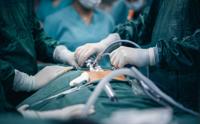

(Photo by Andrea Piacquadio via Pexels
By Stephen Beech
Walking an extra 1,000 steps a day after surgery helps patients recover quicker, according to a new study.
Researchers found that each additional 1,000 steps a patient takes after going under the knife reduces the risk of complications as well as lowering the chance of being readmitted to the hospital.
The study showed that every extra 1,000 steps per day after an operation was linked to an 18% lower chance of complications, 16% lower odds of readmission, and 6% shorter hospital stays.
The association stayed true across different types of procedures and patient health levels, according to the findings published in the Journal of the American College of Surgeons (JACS).
The researchers say step counts from a wearable device offer a practical tool to track recovery in real time.
They analyzed data from 1,965 adult patients undergoing inpatient surgery.

Photo by Jari Lobo via Pexels
Their findings show that a patient’s step count following surgery is a "powerful" predictor of recovery, outperforming other metrics such as heart rate variability and self-reported wellness.
Study senior author Professor Timothy Pawlik said: “We tell patients that they need to get up and walk after an operation, but we don’t have a good sense of how much they’re actually moving.
“Wearables give us an objective, continuous readout.
"Instead of asking how you feel, we can see that you’re up and moving, which is a very actionable signal of how your recovery is progressing.”





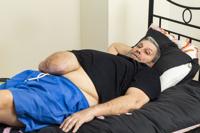
After adjusting for factors including age, sex, and surgical risk, each additional 1,000 steps per day in the post-op period was associated with a 6% reduction in length of stay, as well as lower odds of 30-day and 90-day complications.
Incremental increases in daily steps were also associated with lower odds of 30-day and 90-day hospital readmissions.
But postoperative changes in heart rate variability and self-reported “wellness” scores were not independently associated with length of stay, complications, or readmissions.
Dr. Pawlik, chair of the department of surgery at The Ohio State University Wexner Medical Center, said: “It’s a bit of a chicken-and-egg situation.

Photo by Zakir Rushanly via Pexels
“People who feel better are naturally more likely to be up and around.
"However, the signal is so strong that it suggests step count is not just a marker of wellness, but a key component of it.
"Seeing a patient’s step count drop can be an early indicator to intervene, perhaps by involving physical therapy or checking in more frequently.”
He says the findings align with a 2023 study which found that patients who took more than 7,500 steps per day before surgery had a 51% lower risk of post-op complications.
Dr. Pawlik said the findings could empower patients and doctors to speed up recovery from surgery.
He added: “If a patient’s goal is 8,000 steps before surgery and 6,000 on postoperative day three, they can see if they’re hitting those targets.
“It gives them a concrete goal and gives us objective data to help decide if they’re ready for discharge or if they need more support at home.”
Dr. Pawlik also said that all exercise plans should be discussed with a doctor and that the number of steps any individual takes each day should be considered in light of other health issues.

(0) comments
Welcome to the discussion.
Log In
Keep it Clean. Please avoid obscene, vulgar, lewd, racist or sexually-oriented language.
PLEASE TURN OFF YOUR CAPS LOCK.
Don't Threaten. Threats of harming another person will not be tolerated.
Be Truthful. Don't knowingly lie about anyone or anything.
Be Nice. No racism, sexism or any sort of -ism that is degrading to another person.
Be Proactive. Use the 'Report' link on each comment to let us know of abusive posts.
Share with Us. We'd love to hear eyewitness accounts, the history behind an article.