

The essential guide to sweat, electrolytes, and muscle recovery
When you exercise, it's normal to perspire. "Your body sweats to maintain your body temperature," explains Bivash Dasgupta, R&D manager at Degree. "Sweating cools your body."
If you're sweating heavily from intense exercise, your body starts losing more than just water. You're also losing electrolytes, which are the essential minerals your body needs to function properly.
What happens when you sweat heavily
First, it's helpful to understand how sweat cools you down.
Your sweat glands release moisture onto your skin, which evaporates to regulate your body temperature. "Sweat cools you only when it evaporates," explains Matt Annecharico, R&D scientist at Unilever.
So what you wear is also important. "Breathable fabrics and natural fibers allow for more evaporation, while clothing that is synthetic and fit tight, do not allow for as much evaporation, which means more sweat can occur and will have less opportunity to cool you down," says Annecharico.
While your sweat is mostly made up of water, it also contains electrolytes like sodium and potassium, which help your muscles contract, keep your nerves firing, and support hydration levels. And when you sweat heavily, losing these minerals can cause you to feel more tired than usual.
The main electrolytes that are lost during sweating include:
- Sodium. An important essential mineral that regulates fluid balance, nerve impulses and muscle contractions.
- Potassium. Vital for regulating your heartbeat, never impulses and muscle contractions.
- Calcium. Plays a role in bone health and supports your muscle function.
- Magnesium. Helps your muscles relax and supports energy production.
The more you sweat, especially over intense periods of activity, the more of these essential minerals you lose.
Why you need electrolytes
An imbalance of electrolytes can cause you to feel out of sorts. You might start experiencing muscle cramps, fatigue or dizziness. In extreme cases, you can get dehydrated.
If you're experiencing any of the above symptoms, it's time to consider replenishing electrolytes, especially after sweating a lot.
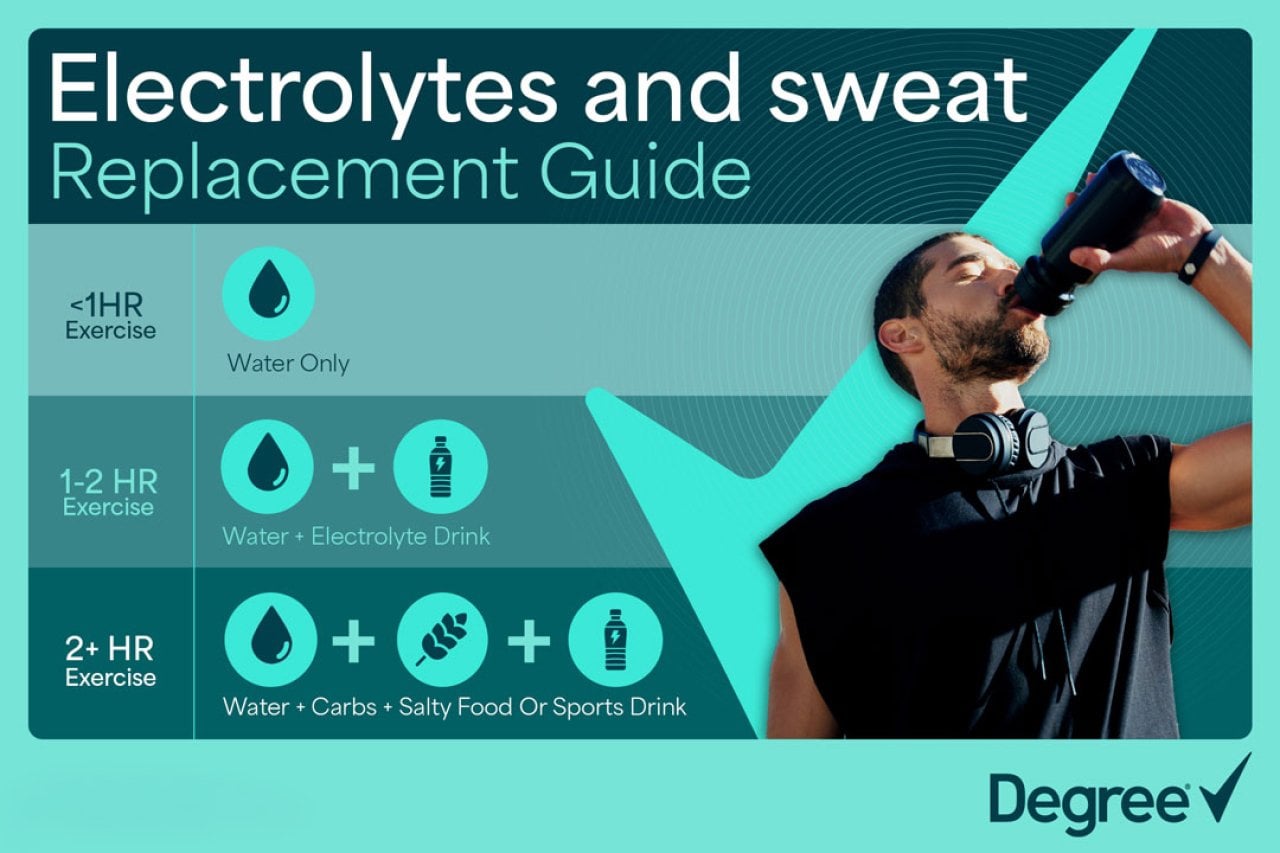
There's no one-size-fits-all approach to how much replenishment you might need, but if you're doing light, short workouts, water is usually enough. If you're sweating over a one- to two-hour session, you could benefit from adding electrolytes to your water.
For those doing intense exercise, adding electrolytes and carbohydrates, or salty foods, can help fuel your body.






You can also eat bananas, leafy greens, yogurt or salt to help boost your electrolyte levels. A cool shower, post-workout, can also bring your body temperature down and support muscle recovery.
When sweating and recovery feel off
Most of the time, your body handles sweating and recovery without much issue.
"It's not uncommon for an adult running a marathon to produce many liters of sweat over the course of a race," adds Annecharico. "On average, adults can sweat around a liter a day, but this varies depending on activity, environment, and fitness level."
If you're sweating heavily and notice symptoms like persistent dizziness, cramping, or fatigue, it's worth paying closer attention to your hydration and electrolyte intake. And if something feels consistently off, it's a good idea to check in with a healthcare provider.
Your questions, answered
I sweat a lot. Do I need more electrolytes?
Yes. The more you sweat, the more electrolytes you're losing. Make sure to replace your electrolytes when you're exercising longer or more intensely.
Do electrolytes affect how much I sweat?
No. Electrolytes don't change how much you sweat. They're essential minerals that help your body function properly while sweating happens.
How do I know if I'm losing too many electrolytes?
If you're struggling with muscle cramps, fatigue, dizziness, or an irregular heartbeat, these could be signs of an electrolyte imbalance. If symptoms persist, speak to a healthcare professional.
Is it safe to take electrolyte supplements every day?
If you're active, electrolyte supplements could be beneficial. But overdoing it can also lead to symptoms like nausea, so make sure you're staying in touch with a healthcare professional if this happens.
This story was produced by Degree and reviewed and distributed by Stacker.


(0) comments
Welcome to the discussion.
Log In
Keep it Clean. Please avoid obscene, vulgar, lewd, racist or sexually-oriented language.
PLEASE TURN OFF YOUR CAPS LOCK.
Don't Threaten. Threats of harming another person will not be tolerated.
Be Truthful. Don't knowingly lie about anyone or anything.
Be Nice. No racism, sexism or any sort of -ism that is degrading to another person.
Be Proactive. Use the 'Report' link on each comment to let us know of abusive posts.
Share with Us. We'd love to hear eyewitness accounts, the history behind an article.