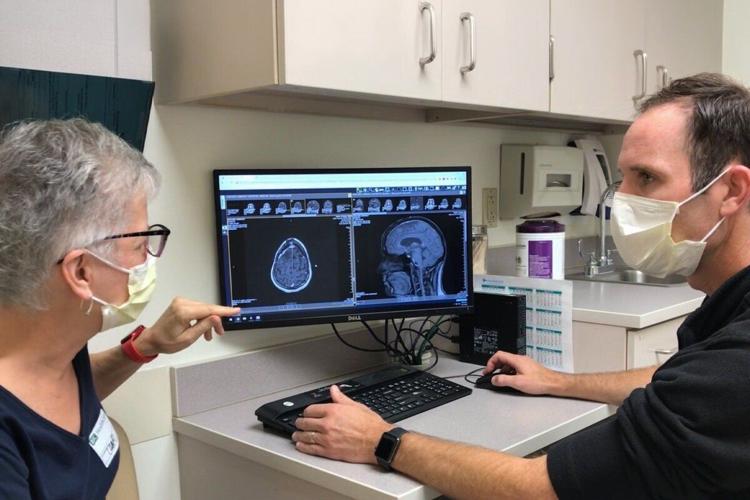
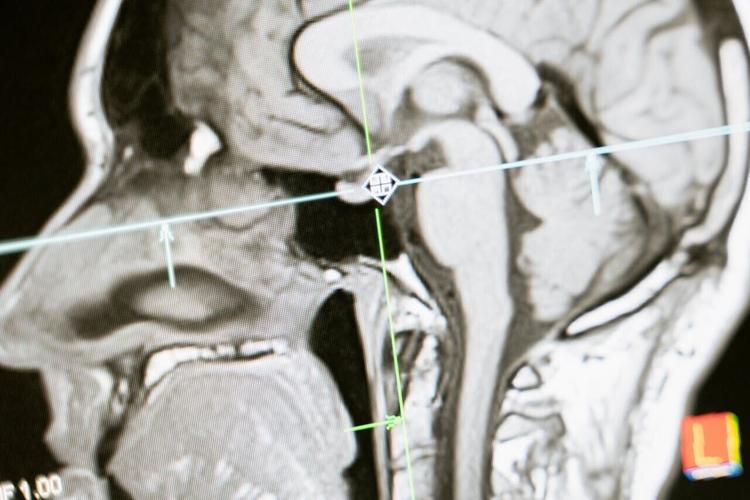
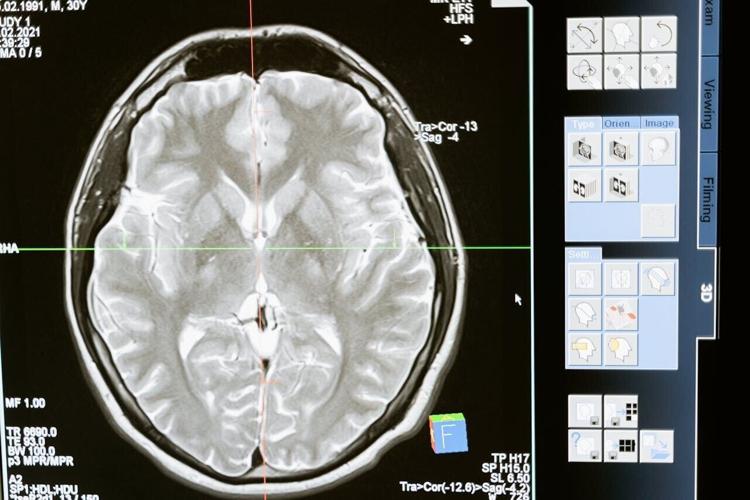
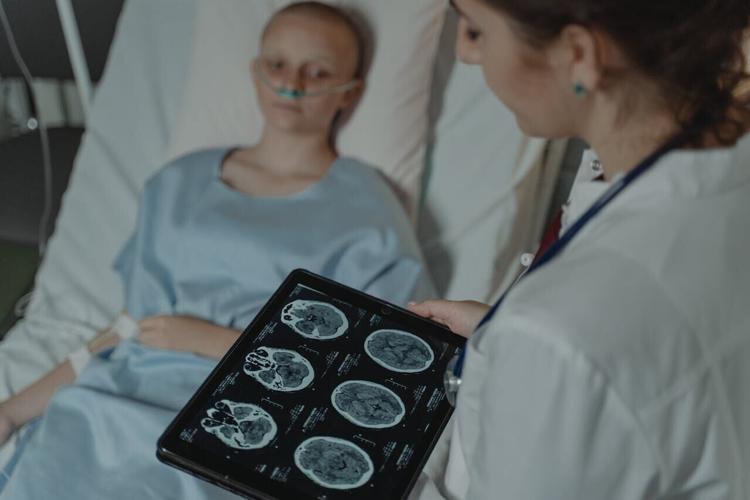

A WashU Medicine-led clinical trial conducted at Siteman Cancer Center has found that a personalized vaccine to treat glioblastoma is safe and could potentially improve outcomes. (Scott Garland via SWNS)
By Stephen Beech
A new personalized vaccine has shown promise in treating an incurable form of brain cancer.
Participants in a clinical trial lived longer years longer after increased immune response to glioblastoma slowed progression of tumors.
One long-term survivor, a former nurse, remains recurrence-free nearly five years after joining the trial, say scientists.
Glioblastoma is a fast-growing brain cancer that affects around four in every 100,000 people.
But doctors say the "encouraging" trial showed that the vaccine is safe, and elicits "robust and broad" immune responses that appears to increase recurrence-free survival in patients.
The study, published in the journal Nature Cancer, found that, in patients with an especially aggressive form of glioblastoma, the vaccine caused no serious side effects and prolonged survival.
The research was led by scientists from Washington University School of Medicine in St. Louis.
Study lead author Dr. Tanner Johanns said: "We are extremely encouraged by these results.
"This kind of vaccine is a first for glioblastoma, and it is exciting to think how we can leverage this individualized therapeutic DNA cancer vaccine platform to make a positive impact on the lives of patients who are fighting this disease.

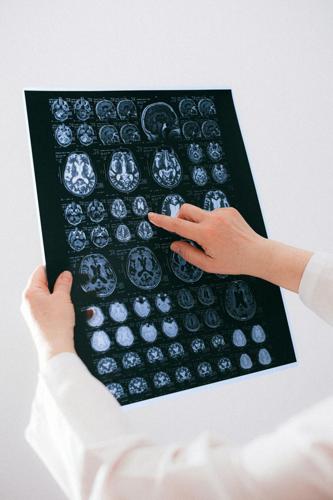
(Photo by Anna Shvets via Pexels)
"Additionally, combination therapies leveraging this personalized platform are currently being investigated at Washington to test if outcomes may be improved further."
He explained that the new treatment uses engineered DNA molecules designed to stimulate the patient's immune system against the cancer.
Johanns said each patient's tumor has "unique" proteins specific to that tumor, and the vaccine activates the patient's immune system to recognize those proteins and eliminate the tumor cells.
He said that although some immunotherapies targeting glioblastoma have shown promise in previous studies, they ultimately are ineffective in significantly delaying or preventing recurrence.
Johanns explained that's likely because glioblastoma can evolve and escape immune attack, but the new vaccine was designed to help the immune system recognize many different targets on cancer cells.
So even if the tumor loses several of the targets, the vaccine is still able to generate responses to many others.
Johanns says glioblastoma is termed a "cold" tumor, meaning that the tumor environment is able to hide from the immune system.
But the vaccine used in the trial, developed by Philadelphia-based biotechnology firm Geneos Therapeutics, transforms cold tumors into "hot" tumors that are then susceptible to immune-mediated eradication.

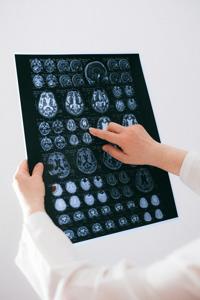
(Photo by MART PRODUCTION via Pexels)
Johanns explained that the vaccine is able to improve the patient's immune response by targeting proteins on the cancer cell and by making the environment within the tumor more favorable to immune activation.
He said: "We chose a DNA-based platform because it would allow us an opportunity to target more cancer proteins than any vaccine had targeted before.





"Our thinking was that if we could generate a broader range of immune responses against those proteins then it may lead to a more potent vaccine compared to other vaccine platforms with more limited protein targets."
The DNA-based vaccine platform was able to activate each patient's immune system to seek out as many as 40 cancer proteins specific to each patient's tumor — twice as many as had been targeted by any cancer vaccine therapy to date.
The vaccine in the study, called GNOS-PV01, targets so-called "neoantigens" — proteins unique to an individual patient's cancer cells that their immune cells can recognize.
The neoantigens were identified and selected using an algorithm developed by computational biologists at Washington Medicine.
Johanns and his colleagues selected neoantigens from different regions of a patient's tumor, a method they incorporated to further increase the number of cancer cell proteins targeted by the vaccine.
The trial enrolled nine adult patients who had been recently diagnosed with glioblastoma.
The research team prepared a synthetic DNA molecule, encoding the unique information for each patient's tumor neoantigens, during the patient's post-operative recovery and subsequent radiation treatment.
The vaccine injections started, on average, 10 weeks after the patient's surgery and were administered every three weeks for a nine-week period, and then every nine weeks thereafter.

(Photo by MART PRODUCTION via Pexels)
All the participants, except one who was taking an immune-suppressing steroid, showed an increase in immune-cell activity indicating a response to the vaccine intervention.
Two-thirds of the patients had no progression of their cancer six months after undergoing surgery, and two-thirds survived one year.
Two-thirds of the participants were still alive after two years, which is twice the historical survival rate.
When offered the opportunity to participate in a clinical trial, glioblastoma patient Kim Garland agreed in the hopes that it would improve future treatments.
When diagnosed in 2021, aged 62, both retired school nurse Kim and Scott, her husband of 31 years, didn't expect that she would be alive with no recurrence nearly five years later.
Scott, who lives with Kim in Kirkwood, Missouri, said: "We know we are fortunate to have the kind of care that Kim has been able to receive, just a 30-minute drive from our home.

(Photo by Tima Miroshnichenko via Pexels)
"We see many other patients who are traveling long distances for their treatments.
"Having this level of care and treatment so close to home has been a huge blessing."
With the support of their team, the couple have gained the confidence to make longer-term plans, including a long-delayed vacation and spending quality time with their children and 15 grandchildren.
The goal of Johanns and his team is to improve the vaccine response to ensure more patients can experience benefits like those experienced by Kim.
Study senior co-author Dr. Gavin Dunn said: "Cancer vaccines have a long history, and the development of personalized neoantigen-targeting therapeutic vaccines now represents a highly compelling approach in glioblastoma and in other cancers."
Dunn, a neurosurgical oncologist at Mass General Brigham Cancer Institute, added: "These programs require a high degree of integrated teamwork, and we are fortunate to have collaborated with many dedicated team members in this effort."

(0) comments
Welcome to the discussion.
Log In
Keep it Clean. Please avoid obscene, vulgar, lewd, racist or sexually-oriented language.
PLEASE TURN OFF YOUR CAPS LOCK.
Don't Threaten. Threats of harming another person will not be tolerated.
Be Truthful. Don't knowingly lie about anyone or anything.
Be Nice. No racism, sexism or any sort of -ism that is degrading to another person.
Be Proactive. Use the 'Report' link on each comment to let us know of abusive posts.
Share with Us. We'd love to hear eyewitness accounts, the history behind an article.