
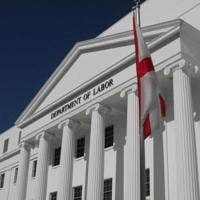

A statement from the Alabama Department of Labor reported that the state's labor force participation rate remains at 57%.
The report said that the percentage of prime-age workers increased by an estimated one-tenth of a percentage point to 78.1% during the month of October. Prime-age workers are those who are aged 25-54 years.
“We are continuing to see positive growth in our prime-age worker labor force participation rate, with more than three out of every four prime-age Alabamians holding down a job,” said Secretary Fitzgerald Washington.
“One of the main components of the labor force participation rate is the state’s total population, and Alabama has a larger portion of retired workers. We will continue to work to bring in other, more traditionally underutilized segments of the population to ensure that we are maximizing our workforce.”
The seasonally adjusted unemployment rate is 2.3%, which is up from 2.2.% in September, though below 2.6% recorded in October 2022. It represents 52,196 unemployed persons, compared to 50,166 in September and 60,443 in October 2022.
Those considered employed increased by 38,038 over the year to a "record high" of 2,260,806, the report notes. The civilian labor force also saw an increase to a record of 2,313,002 and 29,791 more people joining during the year.
Despite the unchanged participation rate labor did see some record high increases.





Private average weekly wage reportedly increased by $8.10 during 2023 to a "new record high" of $1,027.76. The average weekly wages in construction and financial activities sectors also reached record highs as construction wages increased by $71.63 per week and financial activities wages increased by $104.68 weekly.
“Our labor force is growing, and more and more people are working,” Washington said. “Additionally, Alabamians are earning more money – this month we saw our average weekly wages rise to a new record high of $1,027.76.”
Wage and salary employment increased by 24,700 over the year, reaching record high of 2,163,400. Gains were seen in the private education and health services sector at more than 8,700, the government sector at more than 7,400, and the trade, transportation, and utilities sector at more than 5,900.
Wage and salary employment increased in October by 5,700 as monthly gains were seen in the professional and business services sector at more than 3,300, the government sector at more than 3,100, and the trade, transportation, and utilities sector at more than 1,600.
Several Black Belt counties continue to be the highest in unemployment. These were Wilcox County at 7.8%, Dallas County at 5.6%, and Clarke and Perry Counties at 4.6%.
Selma is among the highest in unemployment at 6.6%.


(0) comments
Welcome to the discussion.
Log In
Keep it Clean. Please avoid obscene, vulgar, lewd, racist or sexually-oriented language.
PLEASE TURN OFF YOUR CAPS LOCK.
Don't Threaten. Threats of harming another person will not be tolerated.
Be Truthful. Don't knowingly lie about anyone or anything.
Be Nice. No racism, sexism or any sort of -ism that is degrading to another person.
Be Proactive. Use the 'Report' link on each comment to let us know of abusive posts.
Share with Us. We'd love to hear eyewitness accounts, the history behind an article.