WASHINGTON — More funding and research is needed to secure the United States’ agriculture system against threats, Alabama university experts told Congressman Dale Strong’s subcommittee recently.
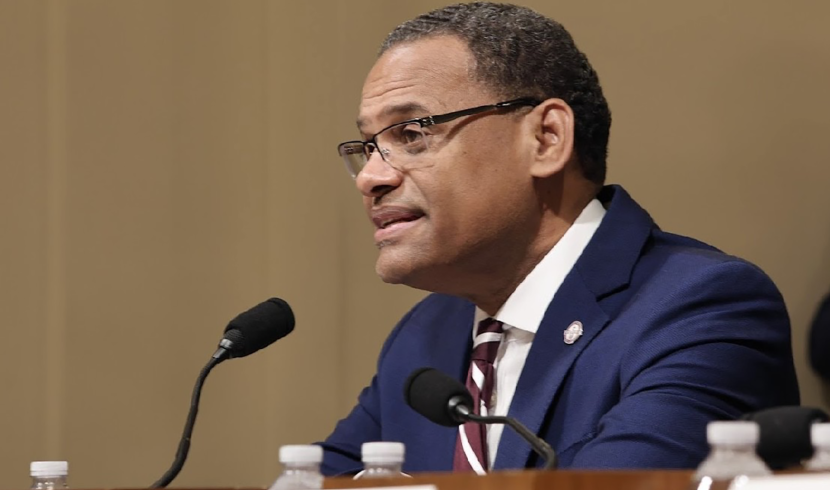
In a first for the school, Alabama A&M University President Daniel Wims appeared before a House Homeland Security subcommittee to discuss agroterrorism, which is a deliberate attempt to destroy or harm a food supply. An agroterrorism event in the United States could cost as much as $106 billion today, Wims said.
“Defending access to American abundance and preserving the American experiment is the essence of agro security, and it’s why farm security is national security,” Wims told the subcommittee.
Protecting the nation’s food supply and farmland has been a key focus of the U.S. Department of Agriculture under the second Trump administration. In July, the USDA rolled out a Farm Security Action plan to block foreign adversaries from buying U.S. farm and timber land. In Congress, Strong and U.S. Sen. Tommy Tuberville, R-Ala., sponsored companion legislation to also prohibit China and other adversaries from purchasing or leasing agricultural land.
“It’s a common sense step to protect our food, fiber and supply chain and prevent adversaries from using our farmland as a base for operations that threaten our homeland security,” Strong said.
In the Southeast, producers can be particularly vulnerable to biological, chemical or radiological attacks that could completely disrupt a growing season.
“So we think that awareness, as well as education, technical assistance is very important,” Wims said. “Technical assistance, via our Cooperative Extension System, with very clear and concise research produces data-driven information from our researchers, but… that requires funding, and there has to be a better and closer collaboration between research and extension.”






Wims acknowledged that some threats come from bad actors gaining access to the food that’s distributed to students.
“Every day, we have hundreds of pounds of food that we prepare and serve our students and our constituents,” Wims said. “It is vulnerable, and we need systems in place, whether it be artificial intelligence and or cybersecurity, to make sure that we protect not just the production, distribution, dissemination and storage of those food items.”
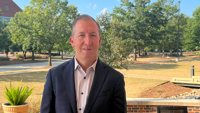
During the hearing, Auburn professor of veterinary medicine Cris Young testified that if the United States ends up in a war, the agriculture system will be just as important as traditional military capabilities, such as missiles and submarines.
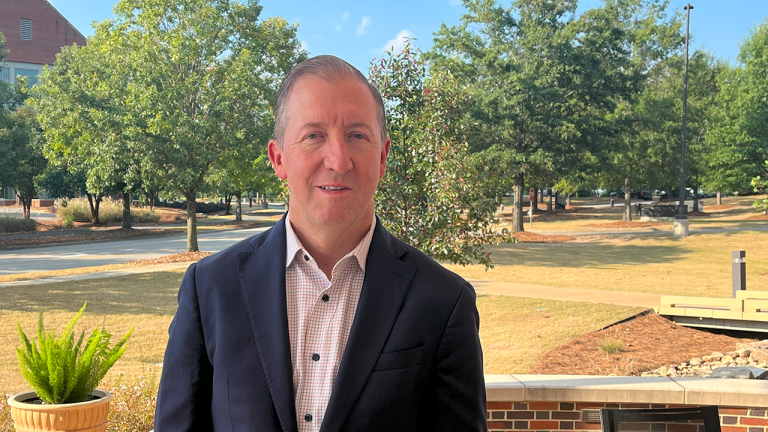
Cris Young, veterinary professor (Auburn University)
“Wars can be and are lost by lack of material, but they can also be lost due to strategic and tactical errors involving food and water, Young said. “Non-state actors like terrorists and violent extremist organizations may also target our homeland food supply via the agricultural sector.”
Young and Wims appeared alongside a biosecurity expert from Kansas State University and the executive director of the Bipartisan Commission on Biodefense.
(0) comments
Welcome to the discussion.
Log In
Keep it Clean. Please avoid obscene, vulgar, lewd, racist or sexually-oriented language.
PLEASE TURN OFF YOUR CAPS LOCK.
Don't Threaten. Threats of harming another person will not be tolerated.
Be Truthful. Don't knowingly lie about anyone or anything.
Be Nice. No racism, sexism or any sort of -ism that is degrading to another person.
Be Proactive. Use the 'Report' link on each comment to let us know of abusive posts.
Share with Us. We'd love to hear eyewitness accounts, the history behind an article.