
The chairman of the House Military & Veterans Affairs Committee says he is working on legislation to expand Veterans Treatment Courts statewide.
Across the state, there are currently just under 30 Veteran Treatment Court programs that offer veterans charged with a crime an alternative route through the criminal justice system that, if adhered to, allows them to avoid incarceration.
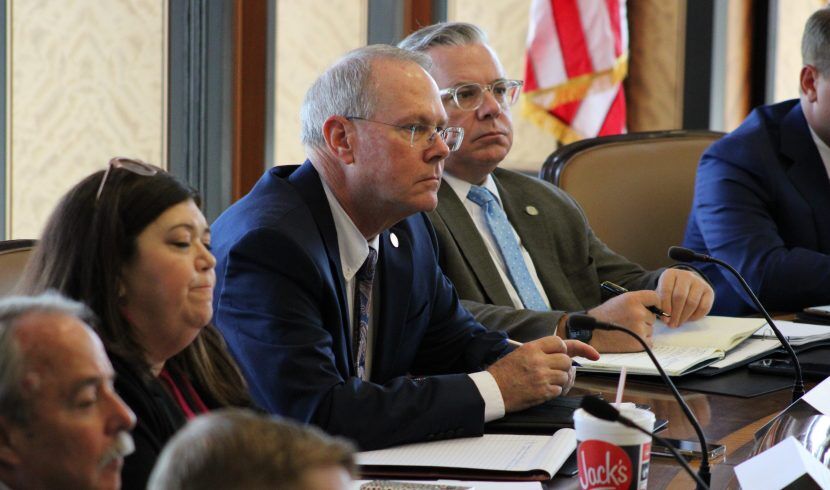
Speaking with ADN Thursday after a meeting of the newly-formed Veterans Mental Health Steering Committee in Montgomery, Rep. Ed Oliver, R-Dadeville, said he had recruited the help of Alabama Supreme Court Justice Sarah Stewart and St. Clair County Circuit Court Judge Philip Seay in his efforts to expand the program.
“We’ve got Justice Stewart and Circuit Judge Seay that are helping us draft legislation as we speak to offer veterans treatment courts in every circuit in the state of Alabama, so we’re very excited about it,” Oliver told ADN.
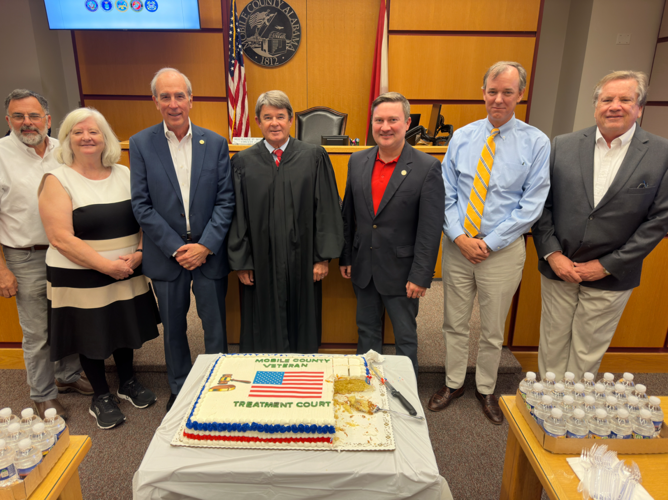
One of the more robust Veteran Treatment Court programs is run by Judge Michael Windom in Mobile, which recently celebrated its one-year anniversary. While touted by Windom and other advocates as a runaway success, state funding for the program is limited, and varies from county to county.
“There’s a certain amount of money they get from the state every year that goes to the treatment courts, (but) it’s never enough, I think each court, the most you can get is $30,000, so they definitely need to fix that up,” Windom told ADN recently.
“Different counties do it differently, some of your smaller counties have the veterans and drug (treatment courts) all together, which I think is a mistake, and I wish at some point we would address that because veterans do not need to go through the same thing that someone in drug court does.”

Judge Philip Windom (center) celebrates the one-year anniversary of the Mobile County Veterans Treatment Court program on Aug. 23.
Oliver said Jake Proctor, executive director of the Alabama Military Stability Foundation, is helping draft the legislation.
As far as the program in Mobile, Windom said it has grown at a steady rate, and that its success was in part due to the amount of veterans managing the program.
“We’ve reached in Mobile County over the last year well over 100 veterans and told them about the program, introduced them to the program, and that’s phenomenal,” Windom said. “We started with zero, and now we have about 12 people that are actually in the program going through the stages, and about seven or eight more at any one time that are going through the evaluation process.”
“Every time a veteran is arrested in Mobile County, we know about it. We bring them to court and introduce them to the program to see if they want to do it. The district attorney is a veteran, I’m a veteran, the public defenders are veterans, so it’s kind of a veterans court that’s run by veterans.”
Each veteran that participates in Mobile’s Veteran Treatment Court program is assigned a mentor, a veteran themself that counsels program participants on a volunteer basis.






“They’re not a spy for the court or for the DA or anything, they’re just here for the veterans, and so that really has made such a difference,” Windom explained.
On expanding the program statewide, no specific dollar amount has been floated by either Oliver or Windom, however, the cost savings associated with keeping veterans charged with a crime out of incarceration, Windom argued, would ultimately be a net savings to the state.
“Of course I’d love to see more funding because we need it; I know they give some, but there is so much more they need to give because it’s such a benefit to the community,” he said.
“Cost savings, you’re keeping people out of jail, you’re giving them back their life, and so how much money is saved by the county, it’s really phenomenal when you add it up.
That sentiment was shared by Rep. Neil Rafferty, D-Birmingham, who Thursday told ADN he would be open to supporting a bill expanding the program.
“I think the amount of money would be a consideration, but ultimately, you would be saving money if you have a veteran back on track who’s able to get a job, find purpose and support their family,” Rafferty, a veteran himself, said.
Another veteran lawmaker, Rep. Chip Brown, Hollingers Island, also said he was open to the idea of expanding the program statewide, telling ADN Thursday that veteran-tailored court programs were “desperately needed.”
“We’ve had our one-year anniversary in Mobile, it’s been a tremendous success and it’s just growing,” Brown said. “So I think we do need to look at that from a statewide aspect, and look at the funding of course.”
Alternative rehabilitation programs designed specifically for veterans was first put into practice in Buffalo, New York in 2008. The veteran-tailored drug and mental health programs proved successful, with the first round of graduates demonstrating a one-year recidivism rate of 14%, far below the national rate of 44%.
The veteran-specific model of treatment, argued Rep. Margie Wilcox, R-Mobile, who celebrated the Mobile County program on its anniversary this month, was the least lawmakers could do for veterans’ service.
“I think it’s a wonderful court in that they’re addressing the unique needs of veterans and making sure that they are taken care of like we promised them when they went and defended our country,” Wilcox told ADN.
“So I think it’s just important that we recognize their contributions and that we recognize some of the special issues that they came back with and try to address those, because sometimes that is the root of what has found them in court.”


(0) comments
Welcome to the discussion.
Log In
Keep it Clean. Please avoid obscene, vulgar, lewd, racist or sexually-oriented language.
PLEASE TURN OFF YOUR CAPS LOCK.
Don't Threaten. Threats of harming another person will not be tolerated.
Be Truthful. Don't knowingly lie about anyone or anything.
Be Nice. No racism, sexism or any sort of -ism that is degrading to another person.
Be Proactive. Use the 'Report' link on each comment to let us know of abusive posts.
Share with Us. We'd love to hear eyewitness accounts, the history behind an article.