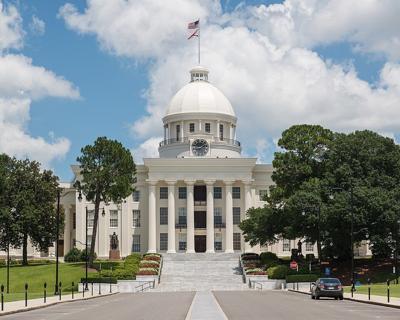

A bipartisan package of three bills has been introduced by Alabama legislators that seeks to keep utility costs from rising and prevent "undue" political influence on businesses.
An announcement from the office of Senate Minority Leader Bobby Singleton stated that if passed the package can accomplish these without raising taxes or rates.
The first bill to "Prohibit Cost Shifting from Data Centers to Alabama Businesses & Families" was sponsored by Sen. Lance Bell (R-Pell City) and Rep. Neil Rafferty (D-Birmingham). It seeks the following:
- Data centers must pay the full cost of any grid or infrastructure upgrades required for their operations.
- Existing utility customers will be shielded from higher bills caused by private development.
“Alabama families and businesses should never foot the bill for someone else’s private profit,” said Bell, Chairman of the Senate Committee on Fiscal Responsibility and Economic Development. “This bill ensures fairness and transparency in our energy system.”
“Alabama families come first,” said Rafferty. “We are making sure our state’s existing utility customers are taken care of and ensuring that energy costs remain fair and predictable for everyone.”
The second is to "Replace Data Center Incentives to Align with Other Businesses and Industry" and was sponsored by Sen. Andrew Jones (R-Centre) and Rep. Leigh Hulsey (R-Helena):





- Reforms data center incentives to ensure measurable public benefits, consistent with incentives for any economic development prospect.
- Recovered incentive dollars will be reinvested into communities.
“We need incentives that work for all Alabamians—not just big tech,” said Senator Andrew Jones. “This bill ensures that taxpayer-supported incentives deliver real value to our state and don't drive up utility costs for hardworking Alabamians."
“This bipartisan legislation is designed to deliver real results for Alabamians,” said Hulsey, “We must grow our economy and protect our citizens at the same time.”
And third: Reform of Utility Oversight & Protection from Special Interests. It is sponsored by Singleton (D-Greensboro) and Rep. Chip Brown (R-Hollinger’s Island). This bill:
- Depoliticizes the Public Service Commission and shields power bills from campaign donors.
- Mandates yearly public meetings where regulated utilities must present to the public and to the commission on their rates, costs, and other factors impacting the state and their customers.
- Moves the Public Service Commission to a model where members are appointed by the Governor, House Speaker, and Senate Pro Tem respectively, and confirmed by the Alabama Senate. Nominees will be selected with a focus on expertise, transparency, accountability and consumer protection with new qualifications for the office of commissioner. Appointment-based systems are used in 40 states around the country to align energy availability and cost with supporting economic development priorities and rates.
- Prohibits consumer’s money from paying for lobbying expenses and political activity.
“Our goal is simple: make the Public Service Commission accountable to Alabama families, not special interests,” said Singleton. “Alabama is one of only ten states in the country that still elects its PSC, and it is time to modernize how we set utility rates and double down on the oversight we have on this board.”
“This legislation restores trust in utility oversight and ensures Alabama residents are protected from political or outside influence at a time when energy is more important and complex than it has ever been,” said Brown.


(0) comments
Welcome to the discussion.
Log In
Keep it Clean. Please avoid obscene, vulgar, lewd, racist or sexually-oriented language.
PLEASE TURN OFF YOUR CAPS LOCK.
Don't Threaten. Threats of harming another person will not be tolerated.
Be Truthful. Don't knowingly lie about anyone or anything.
Be Nice. No racism, sexism or any sort of -ism that is degrading to another person.
Be Proactive. Use the 'Report' link on each comment to let us know of abusive posts.
Share with Us. We'd love to hear eyewitness accounts, the history behind an article.