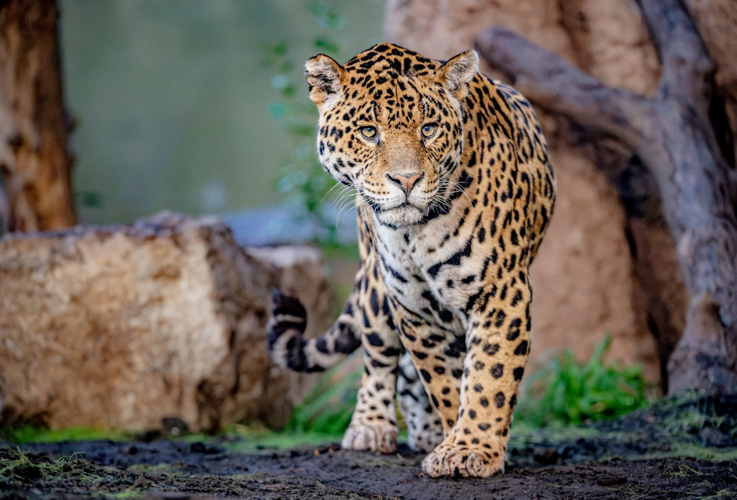
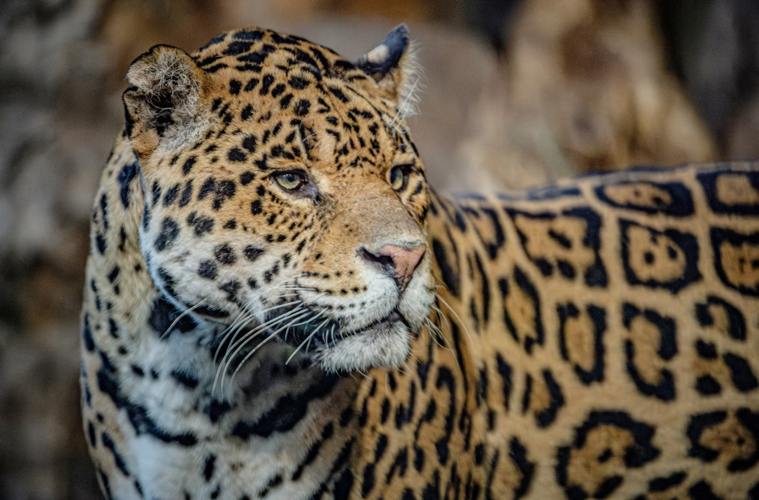
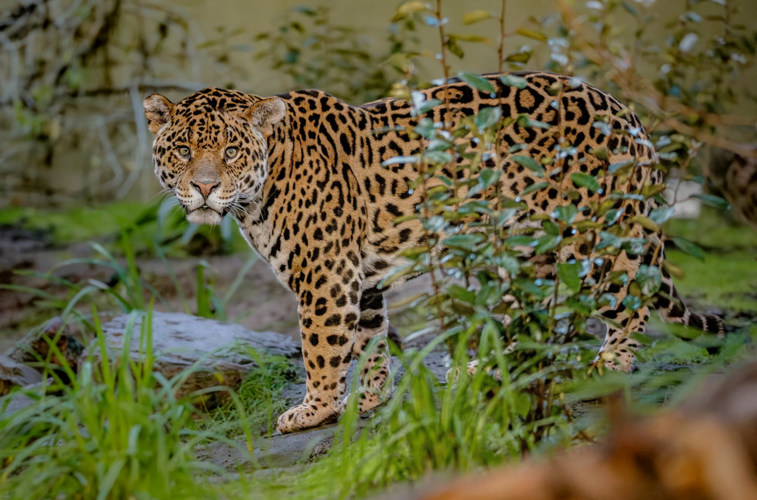
Two aging jaguars have arrived at a specially made "retirement" home in a UK zoo.
Female Bonita, 16, and her 11-year-old son Remi, moved into Chester Zoo after being transported from a safari park in Cumbria.
Wild jaguars typically live for around 12 years, meaning the pair is expected to require increased support as they age.
Bonita and Remi have lived side-by-side since Remi’s birth and will remain together in their new home.
The move follows months of planning with experts from Europe’s jaguar conservation program.
(Chester Zoo via SWNS)
By Talker
Dave Hall, Chester Zoo’s Team Manager of Carnivores, said: “Bonita and Remi are truly special animals, and we’re delighted to be able to provide them with a new retirement home here at Chester Zoo.
“Bonita has been a devoted mother to Remi throughout his life, so ensuring they stayed together was a real priority for everyone involved.
“Remi’s journey has also been a remarkable one - in 2019, a lump was removed from his head following a diagnosis of hemangiosarcoma, a very aggressive malignant cancer, which makes his continued good health today all the more extraordinary.
“Our teams have worked closely with colleagues from across the UK and Europe to make sure every detail of their move and ongoing care has been fully considered - from transport to the set-up of their new habitat.
(Chester Zoo via SWNS)
By Talker
“It’s fantastic to see them already settling in and exploring their new surroundings side-by-side.”
The jaguar is the largest cat in Latin America.
They are listed as “Near Threatened” on the International Union for Conservation of Nature’s Red List.
Conservationists blame their dwindling numbers on habitat loss through farming and illegal hunting.
Paul Bamford, Regional Field Program Senior Manager for Chester Zoo, said: “Jaguars can be found across a massive range in the wild, but from our landscape projects in Bolivia and Brazil, we know their habitats are under serious pressure from human activity.
“Jaguar territories are increasingly fragmented as more land is taken up for agriculture, and this leads to more human-wildlife conflict between carnivores and farmers in rural areas.”
Keep it Clean. Please avoid obscene, vulgar, lewd,
racist or sexually-oriented language. PLEASE TURN OFF YOUR CAPS LOCK. Don't Threaten. Threats of harming another
person will not be tolerated. Be Truthful. Don't knowingly lie about anyone
or anything. Be Nice. No racism, sexism or any sort of -ism
that is degrading to another person. Be Proactive. Use the 'Report' link on
each comment to let us know of abusive posts. Share with Us. We'd love to hear eyewitness
accounts, the history behind an article.








(0) comments
Welcome to the discussion.
Log In
Keep it Clean. Please avoid obscene, vulgar, lewd, racist or sexually-oriented language.
PLEASE TURN OFF YOUR CAPS LOCK.
Don't Threaten. Threats of harming another person will not be tolerated.
Be Truthful. Don't knowingly lie about anyone or anything.
Be Nice. No racism, sexism or any sort of -ism that is degrading to another person.
Be Proactive. Use the 'Report' link on each comment to let us know of abusive posts.
Share with Us. We'd love to hear eyewitness accounts, the history behind an article.