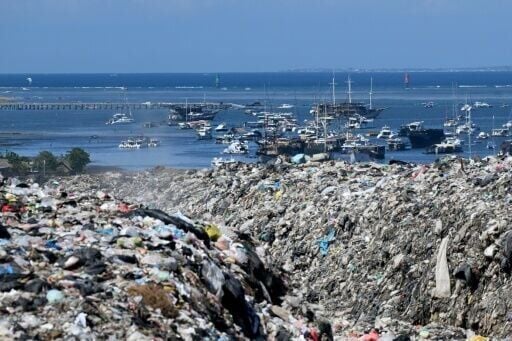
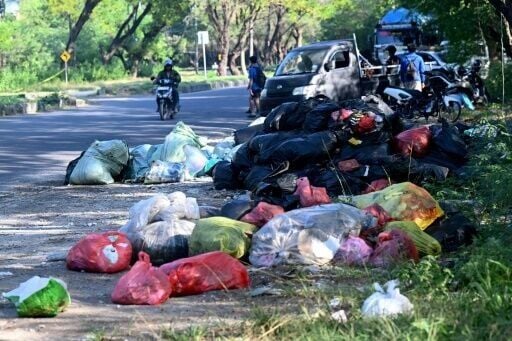
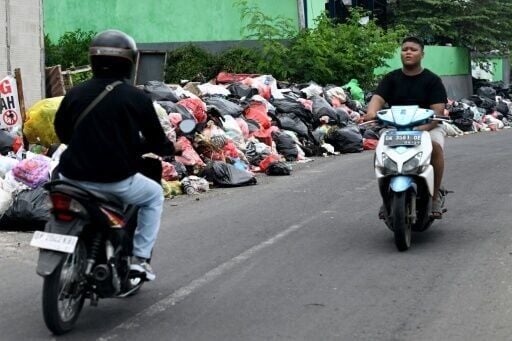
Buckets of blooms adorn Yuvita Anggi Prinanda's sidewalk flower stall in Bali, but their perfume can't mask the stench of accumulating trash bespoiling parts of the resort island famed for its natural beauty.
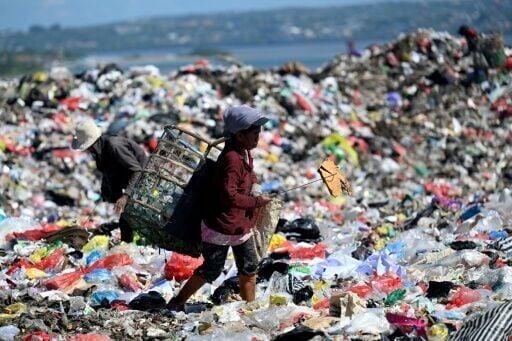
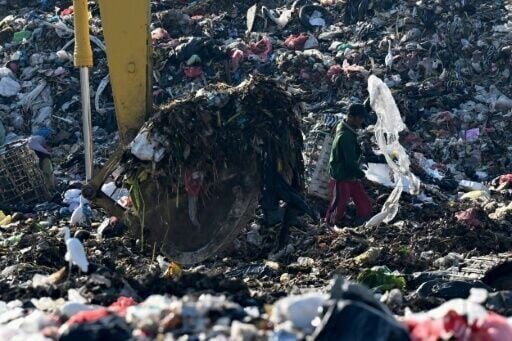
Bali's largest landfill was declared off-limits for organic waste from the beginning of April, as the government moves to enforce a longstanding ban on open tips.
But with no immediate alternatives provided, trash is piling up in the streets and attracting rats, or being set alight by frustrated residents, causing acrid smoke that has prompted health concerns.
"As a business owner, this is a real nuisance," Yuvita told AFP.
She has dipped into her meagre profits to pay a private company to remove the trash from near her stall.
"Some customers, perhaps bothered by the smell, ended up not making a purchase," the 34-year-old told AFP.
Her shop alone generates about four large black bags full of waste every day, mostly leaves and flower cuttings -- adding to the island's estimated 3,400 tons of daily garbage output.
On paper, Indonesia has banned open landfills since 2013, but it is only now attempting to fully implement the measure.
- 'Not a good look' -
At Kuta beach, a popular tourist spot regularly inundated with plastic debris that washes ashore, rubbish bags are piled up waist-high in a parking lot.
"You have many rats here at nighttime. The smell is not very good... it's not a good look," said Australian visitor Justin Butcher.
Around seven million tourists visited Bali last year, vastly outstripping the island's native population of around 4.4 million, and contributing to Bali's waste output.
People caught dumping or burning trash risk up to three months' jail time and a 50-million rupiah (nearly $3,000) fine, according to I Dewa Nyoman Rai Dharmadi, the head of Bali's public order agency, but many feel they have no other choice.
On April 16, hundreds of sanitation workers drove waste-filled trucks to the governor's office in protest.
"If we don't collect our client's trash, we are in the wrong, if we collect it, where do we dispose it?" said protester I Wayan Tedi Brahmanca.
In response, the local government said it would allow limited disposal of waste at Suwung as a temporary measure until the end of July.






But from August, the government has vowed to end all open landfills nationwide, though it is unclear what alternatives will be in place by then.
- 'People need guidance' -
Nur Azizah, a waste management expert at Gadjah Mada University, told AFP the Suwung landfill received about 1,000 tons of waste per day and has been overcapacity for years.
Up to 70 percent is organic waste that "is dangerous because over time it generates methane, which could explode and cause landslides".
This has happened several times, including a March collapse at Indonesia's largest landfill outside Jakarta that buried trucks and food stalls, killing seven people.
Nur said the only long-term solution was a mass campaign to educate people on managing organic waste, mainly through composting.
Yuvita agreed.
"People need guidance. It's like when someone cannot swim, they shouldn't be told to jump right in," she said.
The head of Denpasar's environment and forestry agency Ida Bagus Wirabawa told AFP the government has been running awareness campaigns since last year, and handing out composting containers.
Indonesia's 284 million people produce more than 40 million tons of rubbish per year, nearly 40 percent of it food waste and nearly a fifth plastic, according to the environment ministry.
Only about a third gets "managed", meaning recycled or processed, according to Nur.
The rest ends up in nature.
Fewer than a third of the country's 485 landfills have shuttered since the ban on open dumping came into force on paper about 13 years ago.
"We have not been managing waste properly, resulting in an emergency in all cities and regencies," then-environment minister Hanif Faisol Nurofiq told reporters recently. He has since been replaced.
The government aims to break ground on several waste-to-energy projects in June, including one in Bali that could process about 1,200 tons of waste daily, but these could take years to come online.
mrc/mlr/sah/cms

(0) comments
Welcome to the discussion.
Log In
Keep it Clean. Please avoid obscene, vulgar, lewd, racist or sexually-oriented language.
PLEASE TURN OFF YOUR CAPS LOCK.
Don't Threaten. Threats of harming another person will not be tolerated.
Be Truthful. Don't knowingly lie about anyone or anything.
Be Nice. No racism, sexism or any sort of -ism that is degrading to another person.
Be Proactive. Use the 'Report' link on each comment to let us know of abusive posts.
Share with Us. We'd love to hear eyewitness accounts, the history behind an article.