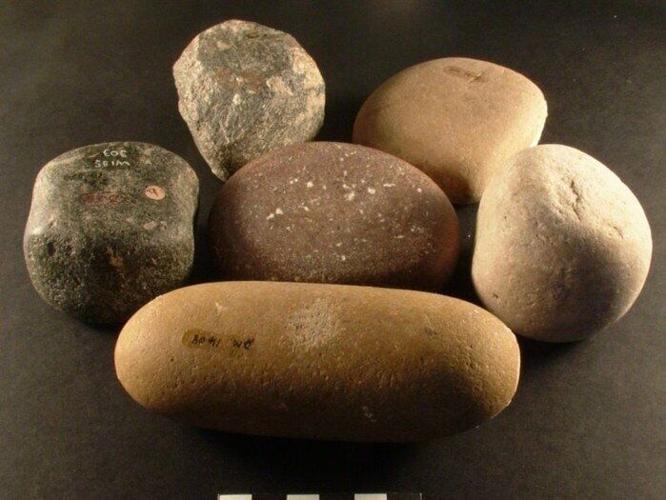
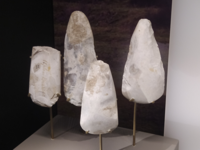

River pebbles from Devon Cornwall with gold traces. (Wiltshire Museum via SWNS)
By Filipa Gaspar
A gold-worker from the time of Stonehenge, thought to have been a "stout man", has been revealed to be a woman - after new DNA evidence.
The burial was originally excavated in 1803 by William Cunnington and he deduced "from the largeness of the bones" that the burial "appeared to be a stout man."
But new analysis of the DNA extracted from the skeleton's skull, tooth and toe bone revealed that they had XX sex chromosomes - typical in those who present as female.
The bones showed that she was around 45 years old when she died and had arthritis in her right wrist - consistent with lifelong use of metal working tools.
Lisa Brown, curator of the Wiltshire Museum, where "stout man" has been on display, says this shows for the first time that women were also craftworkers during this period.
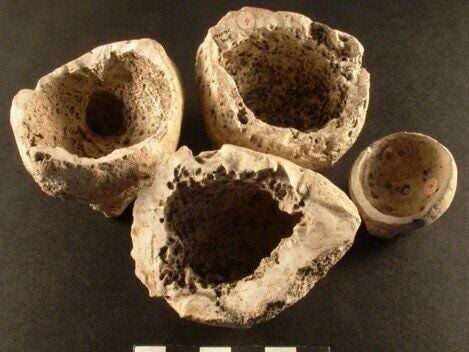
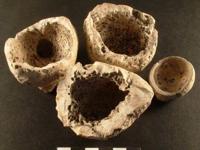
Fossil sponge cups - contained ochre for posihing. (Wiltshire Museum via SWNS)
She said: "This groundbreaking research, using cutting-edge techniques, shows the importance of making museum collections available for scientific analysis.
"We now have a whole new understanding of this burial, rewriting their story, breaking stereotypes, and putting women front and center in our understanding of early Bronze Age society."
She was a gold-worker and lived in the early Bronze Age, around 4,000 years ago and was buried on the chalk downland of Salisbury Plain at Upton Lovell, less than 10 miles from Stonehenge.






The burial was excavated more than 200 years ago by Cunnington in a barrow at Upton Lovell, Wiltshire.
The unique burial was accompanied by a range of intriguing objects, including a battle axe, tools used for working gold and a cloak decorated with perforated animal bones.
Over the centuries, the barrow was badly damaged by ploughing.
In 2000, the site was re-excavated by Colin Shell, senior fellow at the University of Cambridge, assisted by Gill Swanton, a Wiltshire archaeologist.

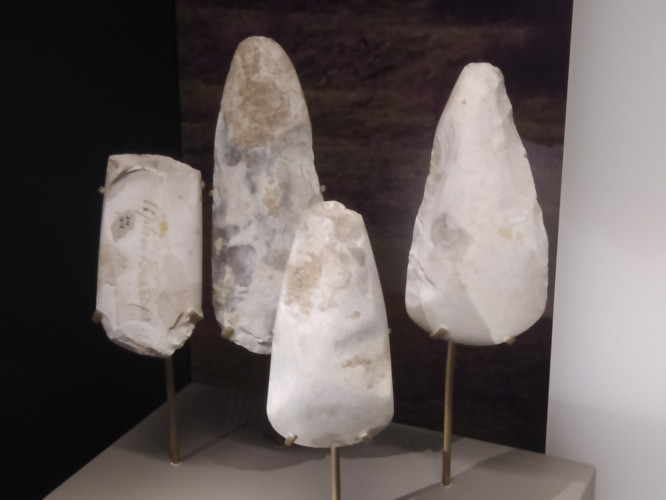
(Wiltshire Museum via SWNS)
Colin Shell recovered the human remains from the burial and was the first to identify traces of gold on some of the accompanying stone tools.
In 2022, new research by Oliver Harris, Rachel Crellin and Christina Tsoraki of the University of Leicester told how each of the objects in the burial had a role in gold-working, ranging from cups made from fossil sponges used for mixing adhesives to battle-axes re-used to hammer and smooth the gold.
This brand-new aDNA research on the human remains forms part of ongoing work at London's Francis Crick Institute and is part of the We Go Way Back exhibition, Britain's first dedicated exhibition on ancient DNA.
The detailed research carried out at the Ancient Genomics Laboratory at the Crick will be published in a scientific journal shortly.
Objects from the Upton Lovell G2a burial are on display at the Wiltshire Museum in Devizes.

(0) comments
Welcome to the discussion.
Log In
Keep it Clean. Please avoid obscene, vulgar, lewd, racist or sexually-oriented language.
PLEASE TURN OFF YOUR CAPS LOCK.
Don't Threaten. Threats of harming another person will not be tolerated.
Be Truthful. Don't knowingly lie about anyone or anything.
Be Nice. No racism, sexism or any sort of -ism that is degrading to another person.
Be Proactive. Use the 'Report' link on each comment to let us know of abusive posts.
Share with Us. We'd love to hear eyewitness accounts, the history behind an article.