
(Chiew Loo via SWNS)
By Faye Mayern
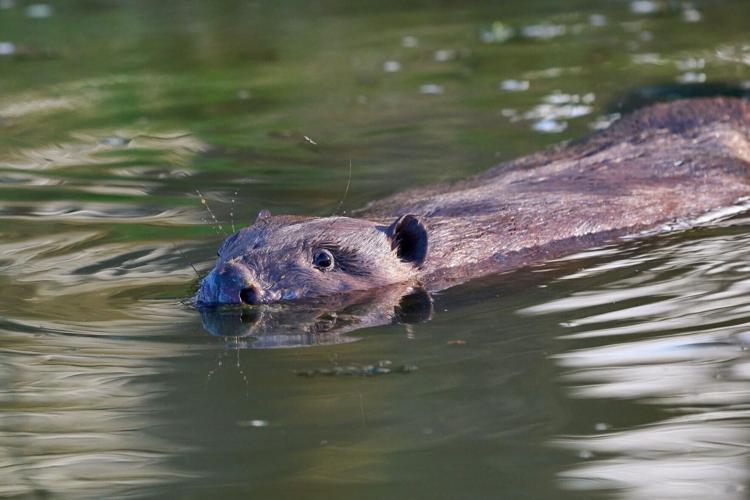
A family of beavers has been released into the wild of one of the driest counties in England for the first time in 400 years.
Two adults beavers, and two kits, were released following two years of preparation.
The family of Eurasian beavers are housed in a purpose-built enclosure on the Southill Estate, near Biggleswade, Beds., after the "long and complex journey."
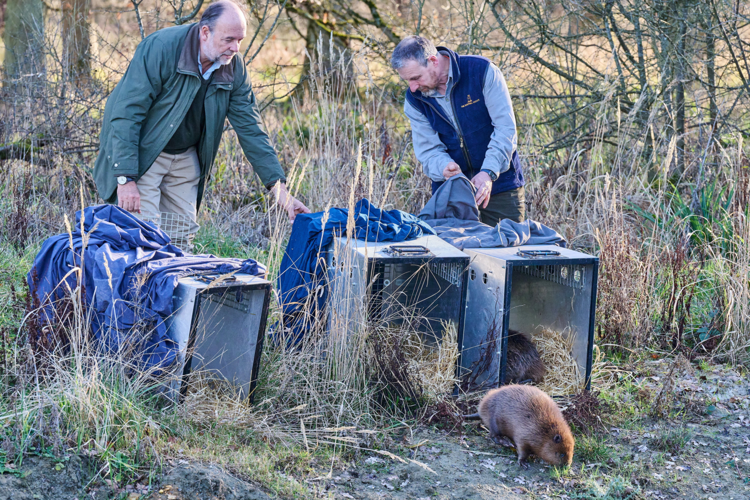
The release took place in two stages with an adult male and two kits sourced from Scotland first introduced to the enclosure.
A few days later, the family group was completed with the arrival of an adult female, which had spent the past 14 months being rehabilitated.
Owner of the estate Charles Whitbread said: "This has been a long and complex journey, with challenges we didn't always know we would overcome and there were moments when we genuinely wondered whether this day would ever come.







(Chiew Loo via SWNS)
"To finally see the beavers released and swimming in the landscape was truly wonderful, and something I will not forget.
"We hope the return of beavers will be the first of many lost species to find a home at Southill, and that what we are building here will continue to grow in ambition for years to come."
The release follows the successful granting of a licence from Natural England, secured in partnership with Beaver Trust.
Construction of a securely fenced enclosure, pond creation, and "rewiggling" of an existing ditch to restore the habitat had all been underway.
Specialist nature restoration company RESTORE, who provided management planning, added: "Beaver dams slow water flow, helping to retain water in the landscape, a critical function in Bedfordshire, one of the driest counties in the country.
"By attenuating peak flows, they contribute to natural flood mitigation within the River Ivel chalk stream catchment."
Eurasian beavers were hunted to extinction in the UK by the 16th century, driven by demand for their valuable fur, meat, and castoreum, a chemical excreted from a gland at the base of the tail to mark territory, that was used as a food flavouring and in the perfume industry.
(0) comments
Welcome to the discussion.
Log In
Keep it Clean. Please avoid obscene, vulgar, lewd, racist or sexually-oriented language.
PLEASE TURN OFF YOUR CAPS LOCK.
Don't Threaten. Threats of harming another person will not be tolerated.
Be Truthful. Don't knowingly lie about anyone or anything.
Be Nice. No racism, sexism or any sort of -ism that is degrading to another person.
Be Proactive. Use the 'Report' link on each comment to let us know of abusive posts.
Share with Us. We'd love to hear eyewitness accounts, the history behind an article.