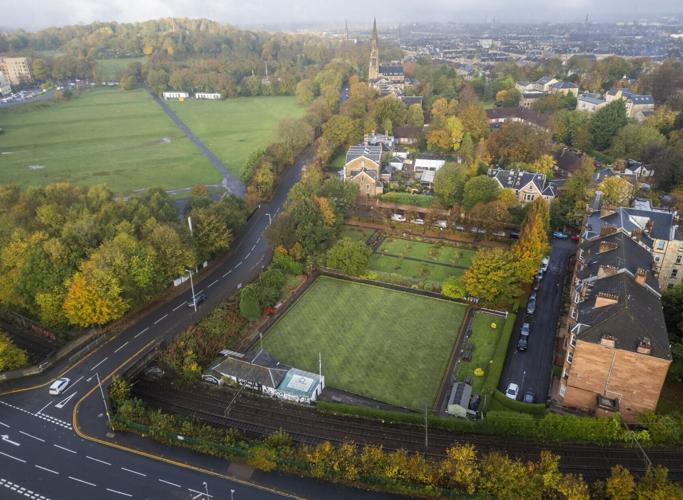
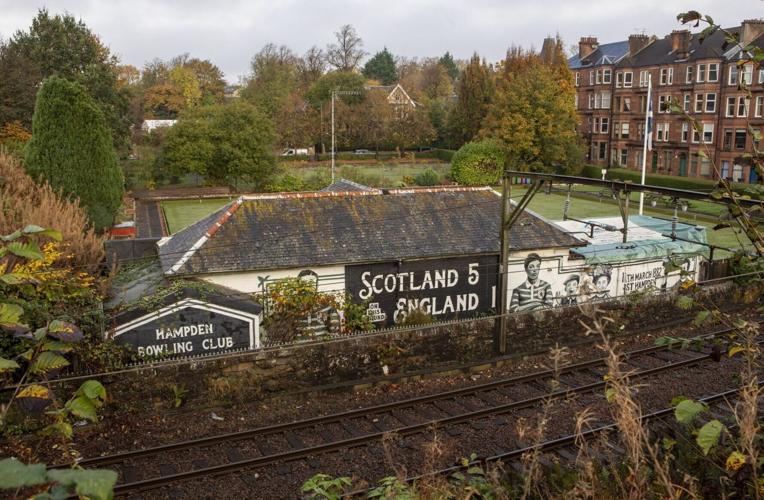
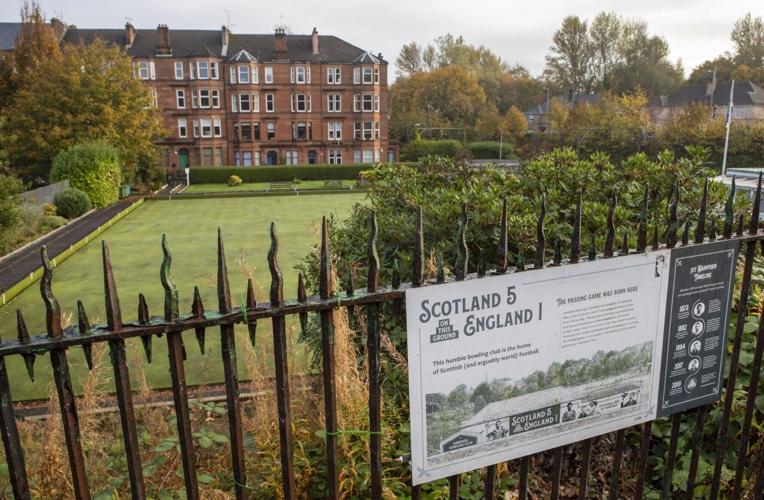
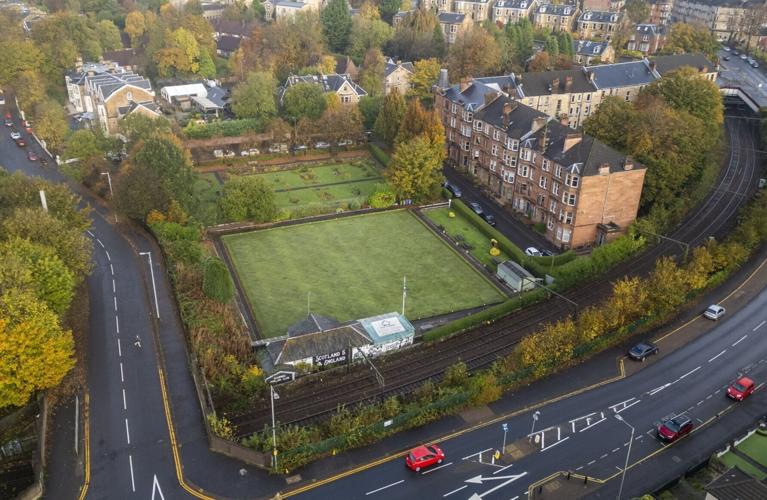

The site of the world's first international football stadium. (Katielee Arrowsmith via SWNS)
By Tom Bevan
The world's first international football stadium has been saved after fears it would be turned into apartments or a parking lot.
The original Hampden Park in Glasgow was the home of Queen's Park from 1873–1883 and hosted Scottish Cup finals and Scotland internationals.
It was the first to build toilets, turnstiles and grandstands and has been described as a "blueprint" for all football stadiums since.
It has been home to a bowling club since 1905 but its future was plunged into doubt as the club faced financial difficulties that were feared could open it up for commercial development.
The club closed earlier this year and the site was handed back to Land Property Glasgow — a body which handles land for Glasgow City Council.
But campaigners are now celebrating after it was given listed and protected status from Historic Environment Scotland to mark its historical significance in the game.
It has been designated as a scheduled monument in recognition of its place in football history to preserve it for future generations.

The stadium has been described as the "blueprint" for football stadiums. (Katielee Arrowsmith via SWNS)
The aim of a scheduled monument is to preserve significant sites in Scotland as much as possible in the form they have been passed down to people today.
Dara Parsons, head of designations at HES, said: "It feels timely to recognize the central role that Scotland played in the development of the sport, and the place of First Hampden within that story.
"The remains of the pavilion at the first Hampden are a link to the earliest days of football in Scotland, and its importance to, and impact on, communities. It is a monument to our national game and to the origins of the modern football stadium."
Significant support for the designation was received following a public consultation.
Parsons added: "We'd like to thank everyone who took time to take part in our consultation and share their valuable contributions.
"We had a great response, and we are looking to continue that engagement over the summer where we will be asking people to suggest important football heritage sites from across the whole of Scotland for us to investigate."
Before Queen's Park built the stadium the previous year, teams would typically play on converted cricket pitches.
Scotland and England had played the world's first international a decade earlier on one of these pitches in 1872.

It was the home of Queen's Park from 1873-1883 and hosted Scottish Cup finals and Scotland internationals. (Katielee Arrowsmith via SWNS)





Four years ago, an archaeological excavation found remains of the original football stadium — where Scotland famously thrashed England 5-1 in 1882.
Lindsay Hamilton runs a walking tour company and takes customers around the three different Hampden Park sites built over the decades.
She believes the original set the template for football venues since then.
She said previously: "This ground is the blueprint for every football stadium that was built.
"Queen's Park built grandstands, toilets, turnstiles for it and it was the first purpose-built international football stadium in the world.
"It was the first place where season tickets were first used, or members books as they called it then.
"How we experience football today was all built at first on that site — it's of huge significance to football."
Queen's Park moved to another purpose-built stadium in 1884, carrying the Hampden name with them.

It is currently the home of a bowling club facing financial difficulties. (Katielee Arrowsmith via SWNS)
But Hamilton says the site allows people to remain connected to the early days of football before it became a huge global game.
She added: "A lot of early football landmarks in other cities have become supermarket parking lots or things like that, but here you can still step on it — it's tangible.
"If you lose that, you lose the magic and the spark, because having the green there brings it to life. Being able to ask if you want a pint on the grounds of the original Hampden Park is something special.
"It doesn't look like a pitch now, but the foundations of the original stadium are there — what else can we discover? If this was in London or Rio de Janeiro or Buenos Aires it would have its own museum there.
"It needs to be protected, and celebrated."
The National Trust for Scotland (NTS) said the stadium is the place where "modern football as we know it was created."
It was only eight years ago that the discovery of a Victorian map from the former Cathcart District Railway Logs in the National Records of Scotland confirmed its Kingsley Avenue location.
Philip Long, chief executive of the NTS, said: "The site is intrinsic to the development of the game of football as we know it, making a vital contribution to Scotland's culture and modern identity.
"A place of such significance needs to be protected and respected.
"It is vital that our country's cultural history is preserved, and we continue to tell the stories that have made Scotland the place it is today."

(0) comments
Welcome to the discussion.
Log In
Keep it Clean. Please avoid obscene, vulgar, lewd, racist or sexually-oriented language.
PLEASE TURN OFF YOUR CAPS LOCK.
Don't Threaten. Threats of harming another person will not be tolerated.
Be Truthful. Don't knowingly lie about anyone or anything.
Be Nice. No racism, sexism or any sort of -ism that is degrading to another person.
Be Proactive. Use the 'Report' link on each comment to let us know of abusive posts.
Share with Us. We'd love to hear eyewitness accounts, the history behind an article.