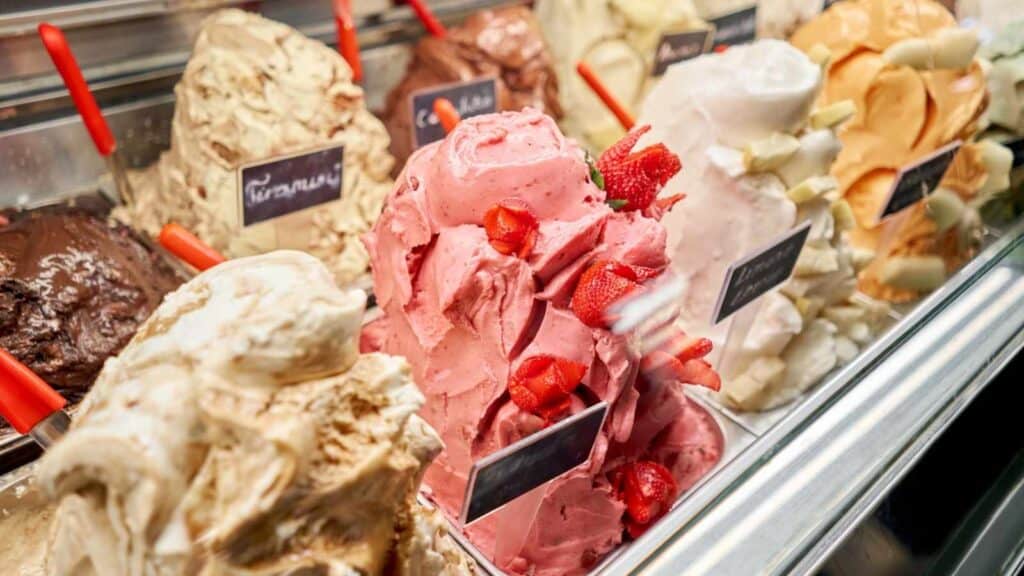
Gelato has moved well beyond Italian restaurants and specialty dessert shops in the United States. As Americans spend more on premium frozen desserts in 2026, shoppers increasingly encounter gelato in grocery store freezers, hotel restaurants and neighborhood scoop shops alongside traditional ice cream.
This post may contain affiliate link(s). As an Amazon Associate, I earn from qualifying purchases. See Disclosures.
The frozen dessert category continues to expand as consumers spend more on premium and specialty products. The U.S. frozen desserts market is projected to increase at an annual rate of 10.6% from 2026 to 2033, driven by growth across categories, including gelato, custard and ice cream. Future Market Insights, Inc. also estimates steady long-term growth for the U.S. gelato market as shoppers increasingly seek richer textures, premium ingredients and desserts positioned beyond traditional ice cream.
The difference between gelato and ice cream
Both gelato and ice cream start with dairy, sugar and flavorings, which is why many consumers assume they are essentially the same dessert. The biggest differences come from fat content, air and serving temperature.
Traditional American ice cream usually contains more cream and a higher butterfat content, while gelato relies more heavily on milk, which changes both the flavor profile and the texture. Ice cream is also churned faster, incorporating more air and creating the lighter consistency most Americans recognize from supermarket brands and scoop shops.
On the contrary, gelato is churned more slowly and contains far less air. That lower air content gives it a denser texture that feels smoother and more compact on the spoon. The contrast becomes clearer in side-by-side tastings, where ice cream often feels fluffier and colder while gelato feels softer and more concentrated.
Gelato often tastes richer, even with less fat
Many consumers assume gelato contains more fat because it tastes so rich, but this is mainly because of its texture and serving temperature. Since it contains less air, flavors come through more intensely instead of feeling whipped or diluted. Pistachio, coffee and chocolate flavors tend to hit the palate faster and more directly.
Serving temperature changes the experience even further. Gelato is typically served slightly warmer than traditional American ice cream, which allows flavors to come through more clearly. Extremely cold foods can dull flavor, while warmer temperatures make ingredients taste fuller and more aromatic.
That softer consistency also changes how the dessert melts. Gelato spreads across the palate differently, creating the silky texture many consumers now associate with premium frozen desserts.






American ice cream now focuses on novelty and indulgence
Ice cream and gelato developed along very different paths in the U.S. market. American ice cream became closely tied to supermarket culture, convenience and large portions. Grocery freezers filled with oversized tubs, candy mix-ins and limited-edition flavors helped turn ice cream into a mass-market category built around variety and indulgence.
Gelato stayed more closely linked to small-batch production and specialty shops for much of its history in the American market. For many consumers, it remained something encountered while traveling or dining out rather than during routine grocery shopping trips.
The demand began to change as retailers expanded premium frozen dessert offerings and consumers became more willing to spend extra on specialty products. Gelato gradually moved from niche dessert cases into mainstream grocery aisles over the past decade, giving shoppers more choices beyond traditional ice cream brands.
Texture-driven desserts continue gaining attention
Texture has become a larger part of how consumers talk about food, especially online. Crispy, chewy, creamy and silky now function almost like flavor descriptions in restaurant marketing and food coverage, and frozen desserts fit naturally into that trend. Gelato benefits because texture is one of the first things consumers notice. Dense scoops, glossy finishes and slower melting all contribute to the premium feel many shoppers look for.
Ice cream brands have also responded by pushing further into premium products of their own, with grocery stores now carrying more custard-style desserts, ultra-premium pints and richer formulations designed to compete on texture as much as flavor. Market researchers at Mordor Intelligence say premium and artisanal frozen desserts continue gaining traction as consumers spend more on indulgent products and higher-quality ingredients.
The line between gelato and ice cream keeps getting less clear
As gelato becomes more common in the U.S., the distinction between the two categories is not always strict. Some products labeled as gelato contain more air than traditional Italian gelato would. At the same time, many premium ice creams now use slower churning methods and denser textures that move closer to gelato territory. Packaging and branding can blur the differences even further, with labels often emphasizing Italian inspiration or artisanal production without complying with traditional standards.
For most consumers, the technical definitions matter less than the overall experience. Shoppers increasingly choose frozen desserts based on texture, flavor intensity and how indulgent the product feels over strict category rules. That has left Americans with more frozen dessert options than ever before, whether they prefer a dense scoop of hazelnut gelato or a loaded pint of traditional ice cream.
Jennifer Allen is a retired professional chef and long-time writer. Her work appears in dozens of publications, including MSN, Yahoo, The Washington Post and The Seattle Times. These days, she’s busy in the kitchen developing recipes and traveling the world, and you can find all her best creations at Cook What You Love.
The post Gelato gains ground in the US as consumers seek more premium frozen desserts appeared first on Food Drink Life.

(0) comments
Welcome to the discussion.
Log In
Keep it Clean. Please avoid obscene, vulgar, lewd, racist or sexually-oriented language.
PLEASE TURN OFF YOUR CAPS LOCK.
Don't Threaten. Threats of harming another person will not be tolerated.
Be Truthful. Don't knowingly lie about anyone or anything.
Be Nice. No racism, sexism or any sort of -ism that is degrading to another person.
Be Proactive. Use the 'Report' link on each comment to let us know of abusive posts.
Share with Us. We'd love to hear eyewitness accounts, the history behind an article.