Leading German institutes on Thursday downgraded their 2026 growth forecasts, in another bad sign for Chancellor Friedrich Merz whose efforts to reboot Europe's biggest economy face mounting criticism.
The Ifo institute cut its forecast by a hefty half point to 0.8 percent growth while the Kiel Institute for the World Economy and the RWI Leibniz Institute also trimmed their predictions, with both expecting expansion of one percent.
After two years of recession, Merz has vowed vast outlays on defence and infrastructure and a barrage of reforms to get the country's export-driven economy moving again.
But critics say his efforts so far have not been radical enough as challenges mount for the economy, from a deepening industrial slump to US tariffs.
The government's spending plans "will give the German economy a slight boost next year and the year after," Timo Wollmershaeuser, Ifo's head of forecasts, told AFP.
"But it will probably not change anything about the structural problems we have in Germany."
"Bureaucracy is holding us back, our digital infrastructure is outdated, our infrastructure as a whole is in poor shape," he said, urging "courageous decisions" to tackle the challenges.
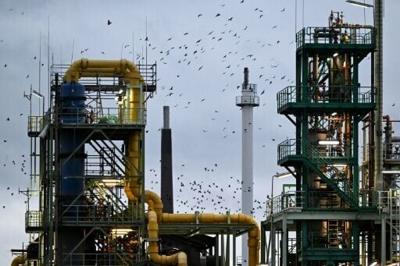
The German economy has been hammered by a surge in energy costs triggered by the Ukraine war, a huge burden for energy-intensive manufacturers, weak demand in key markets and the emergence of China as an industrial rival.
US President Donald Trump's tariffs have added to the headwinds as the United States is the top market for German exporters.
Growth rates in the eurozone's traditional powerhouse have lagged behind most other industrialised countries in recent years.
And while the economy is expected to dodge a third year of recession in 2025, eking out meagre growth, observers still view the long-term outlook as bleak.
"Without structural reforms, no self-sustaining upswing can emerge," warned Stefan Kooths, head of economic research at the Kiel Institute.
Keep it Clean. Please avoid obscene, vulgar, lewd,
racist or sexually-oriented language. PLEASE TURN OFF YOUR CAPS LOCK. Don't Threaten. Threats of harming another
person will not be tolerated. Be Truthful. Don't knowingly lie about anyone
or anything. Be Nice. No racism, sexism or any sort of -ism
that is degrading to another person. Be Proactive. Use the 'Report' link on
each comment to let us know of abusive posts. Share with Us. We'd love to hear eyewitness
accounts, the history behind an article.








(0) comments
Welcome to the discussion.
Log In
Keep it Clean. Please avoid obscene, vulgar, lewd, racist or sexually-oriented language.
PLEASE TURN OFF YOUR CAPS LOCK.
Don't Threaten. Threats of harming another person will not be tolerated.
Be Truthful. Don't knowingly lie about anyone or anything.
Be Nice. No racism, sexism or any sort of -ism that is degrading to another person.
Be Proactive. Use the 'Report' link on each comment to let us know of abusive posts.
Share with Us. We'd love to hear eyewitness accounts, the history behind an article.