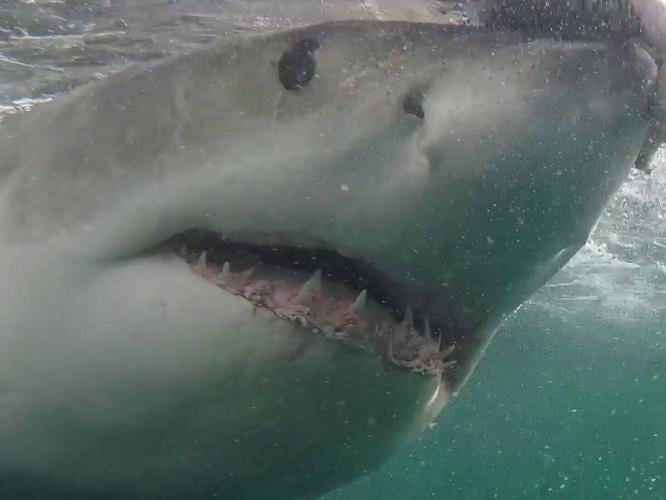

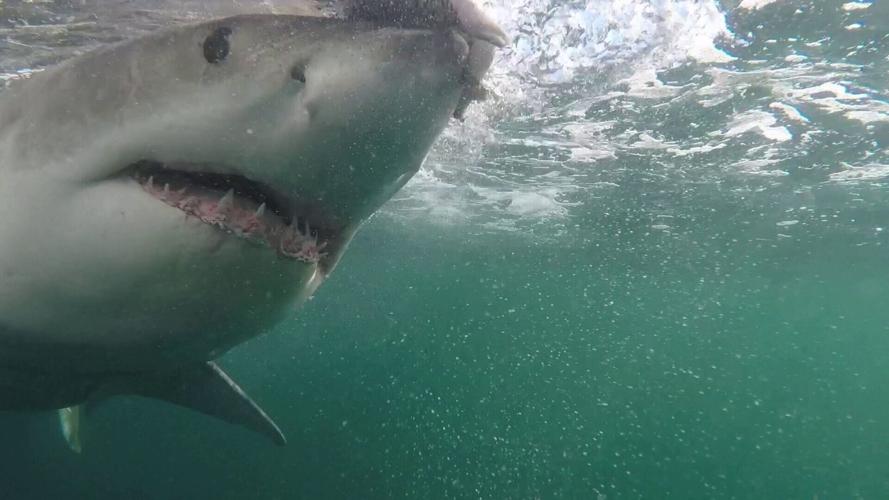

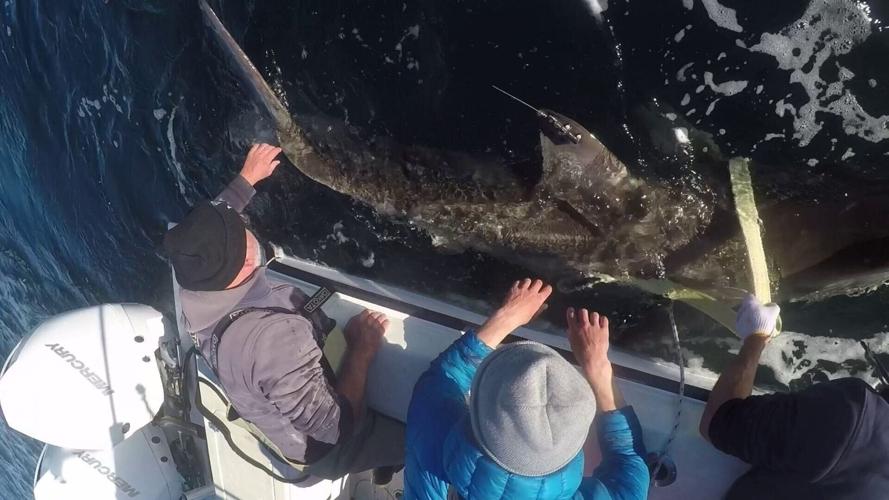
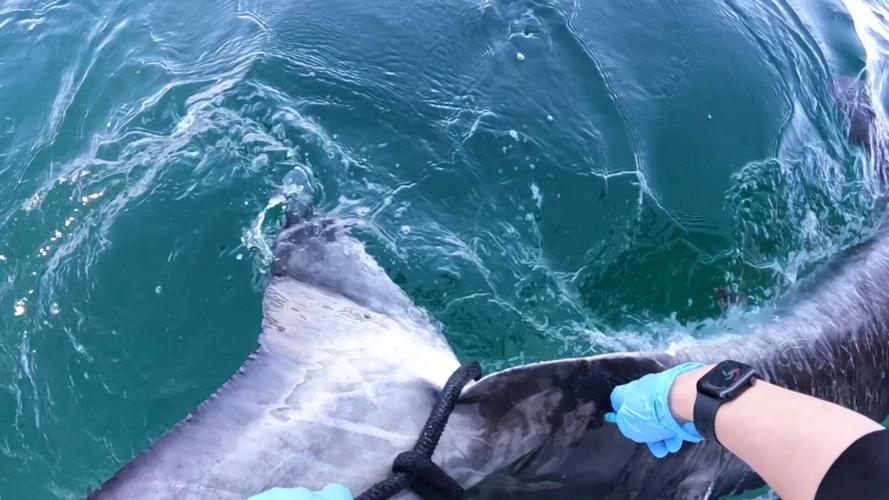
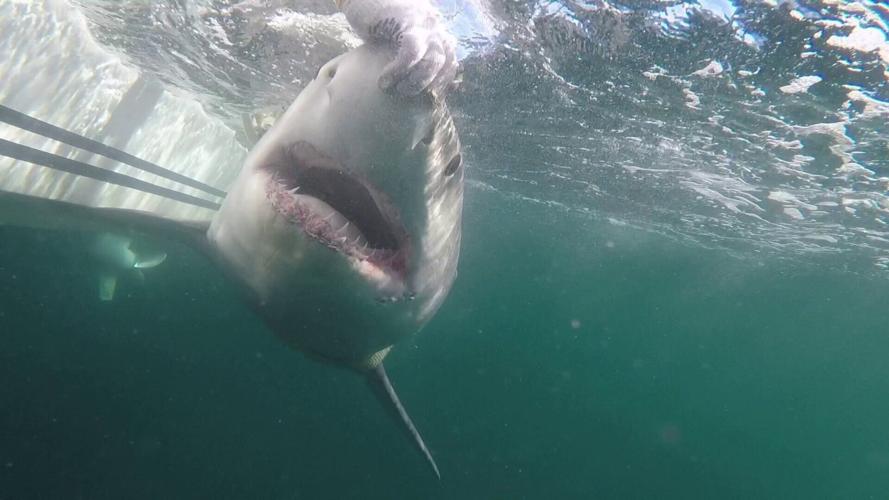



A 9-foot-2-inch great white shark named "Brass Bed" off Merritt Island, Florida. (OCEARCH via SWNS)
By Michael Lee Simpson
A 9-foot-2-inch great white shark "Brassbed" was detected just four miles off the coast of Hollywood, Florida.
She suddenly turned back toward the Atlantic instead of continuing into the Gulf of Mexico, surprising researchers.
Scientists tracking her via satellite say the southward journey through the Straits of Florida is a common route for white sharks overwintering in the Gulf.
OCEARCH researchers say Brassbed's unexpected move highlights the unpredictable behavior and variability in individual shark movements.
On March 11, the nearly 450-pound female shark was last detected four miles off Hollywood, Florida.
The move came after reversing course from her southward journey through the Straits of Florida, according to John Tyminski, Senior Data Scientist at OCEARCH.
"Brassbed was basically south of Sugarloaf Key back on March 6, and I would have expected her to continue on and move into the Gulf, but she took an about face and turned back and essentially reversed course," Tyminski said.

(OCEARCH via SWNS)
The unexpected behavior shines a spotlight on the unpredictable nature of great white shark movements, even as scientists have identified clear migration patterns among the species.
Brassbed was originally tagged by the Tancook Islands Marine Field Station off Mahone Bay in October 2025.
"Since that time, Brassbed, like most white sharks, has gone on their southern migration and spent most of her time off the Southeast United States," Tyminski said.
"In recent weeks, as recently as March 6, Brassbed moved into the Straits of Florida, which is where we've seen a lot of sharks move."
The Straits of Florida serve as a critical corridor for white sharks heading to important overwintering habitats in the Gulf of Mexico.
OCEARCH's extensive tagging program has revealed that this migration pattern is far more common than previously understood by the scientific community.







(OCEARCH via SWNS)
"We have found that of the white sharks we've tagged over the years, since 2012, 62 percent of them have shown movement into the Gulf of Mexico and/or Straits of Florida," Tyminski said.
"We're recognizing that the Gulf serves as an important habitat for white sharks during the overwintering period, much more so than what was recognized in scientific literature earlier."
This research has led to new publications detailing the extent of white shark usage of Gulf waters, including the identification of specific hotspots and habitat preferences.
The findings represent a significant advancement in understanding the ecology and migration patterns of great white sharks along the Eastern Seaboard and the Gulf Coast.
However, Brassbed's recent behavior demonstrates that individual sharks don't always follow predictable patterns, even when broader population trends are well-established.
Her decision to reverse course and head back toward South Florida's Atlantic coast instead of continuing into the Gulf represents the kind of individual variation that keeps researchers engaged.

(OCEARCH via SWNS)
"It's another example of the plasticity and the variability among white sharks," Tyminski said.
"They're not all doing the same thing, far from it. Some of them have moved into the Gulf, others, like Brassbed, just went halfway and then turned back."
The tracking technology used by OCEARCH allows researchers to monitor these movements in real time via satellite tags that transmit location data when sharks surface.
This capability has revolutionized the understanding of great white shark behavior and habitat use patterns.
While scientists can identify general migration trends and seasonal patterns, the decision-making processes of individual sharks remain largely mysterious.
Environmental factors, prey availability, water temperature, and other variables may all play roles in determining when and where sharks choose to travel.
Tyminski said: "It's really hard to say what goes into the decision-making of a shark like that, but it's definitely interesting to follow, and it shows that variability."



(0) comments
Welcome to the discussion.
Log In
Keep it Clean. Please avoid obscene, vulgar, lewd, racist or sexually-oriented language.
PLEASE TURN OFF YOUR CAPS LOCK.
Don't Threaten. Threats of harming another person will not be tolerated.
Be Truthful. Don't knowingly lie about anyone or anything.
Be Nice. No racism, sexism or any sort of -ism that is degrading to another person.
Be Proactive. Use the 'Report' link on each comment to let us know of abusive posts.
Share with Us. We'd love to hear eyewitness accounts, the history behind an article.