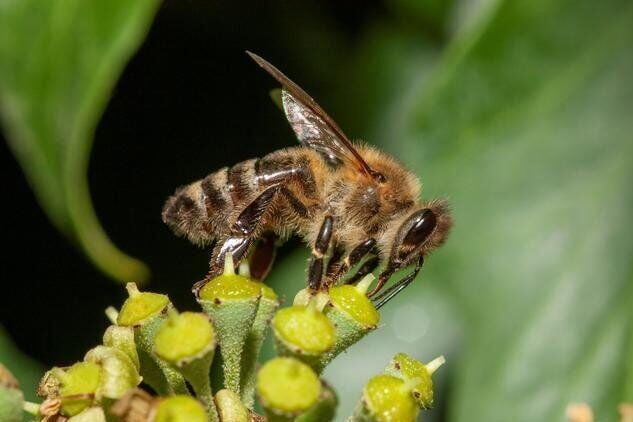
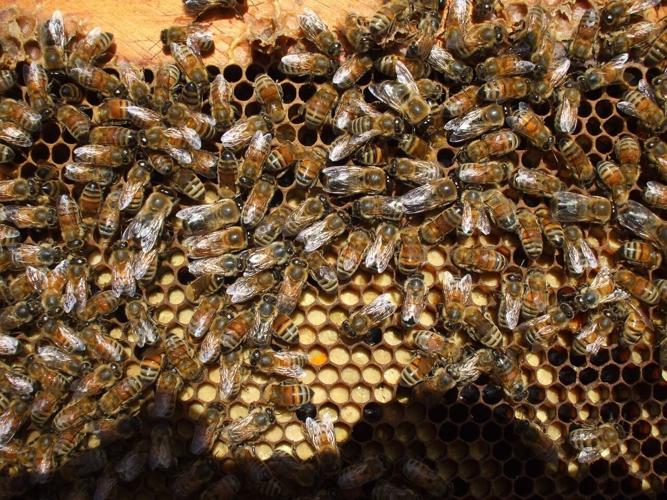
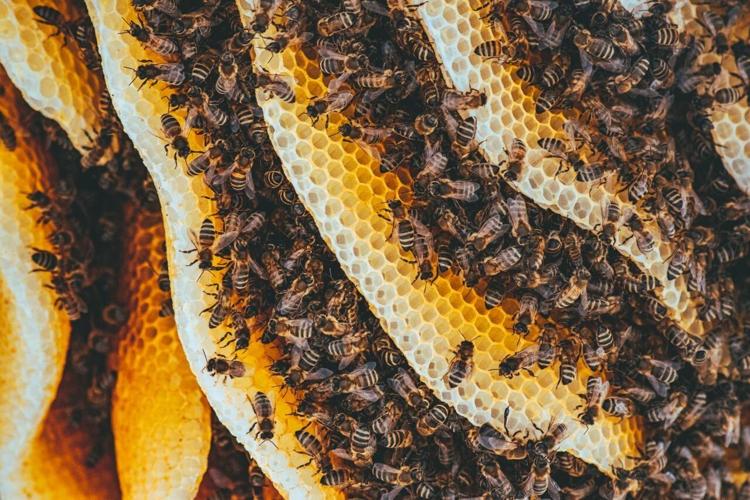
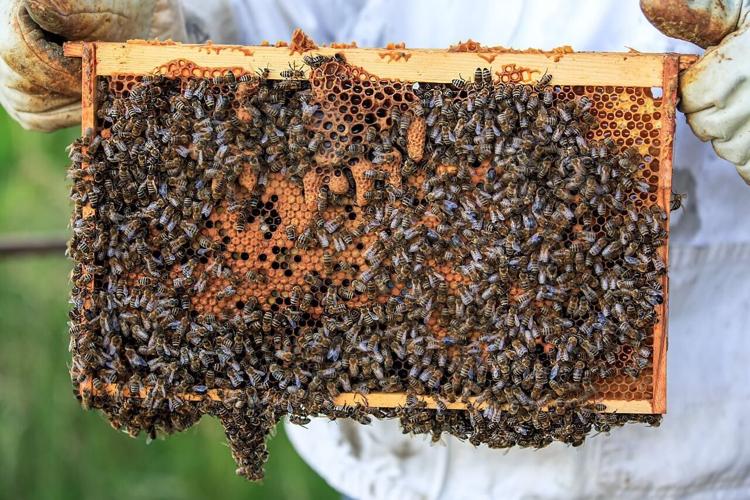
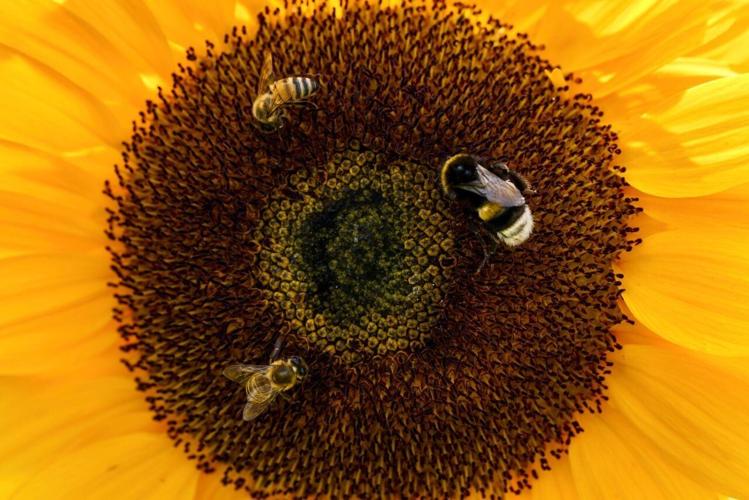
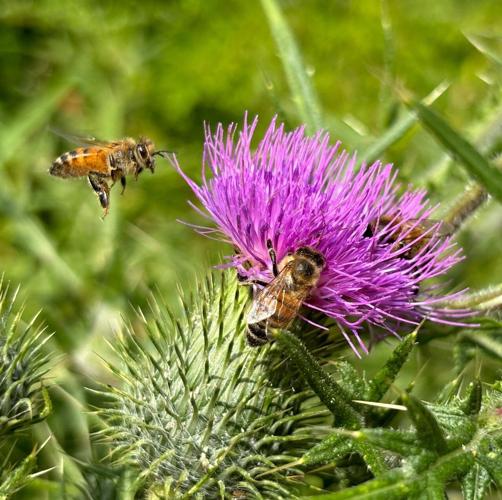
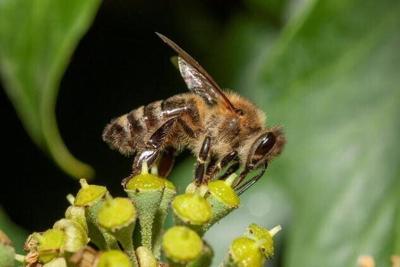

(Photo by Ben Chanas via Pexels)
By Stephen Beech
Honeybees exert “flower power” over rival species, reveals new research.
They muscle out wild pollinators with aggressive behavior when competing for food, shows the study.
British scientists recorded for the first time the extent to which honeybees restrict access to food sources and attack other species.
The study, published in the journal Ecological Entomology, was conducted over two years at five sites in and around the city of Cambridge, all within 300 meters (984 feet) of known honeybee colonies.
Researchers from Anglia Ruskin University (ARU) focused on the behavior of insects foraging on bramble and ivy, both important sources of nectar and pollen, and visited in large numbers when in flower.
The flower visitors were placed into five categories: honeybees, bumblebees, solitary bees, hoverflies and “other” — which included butterflies, beetles and wasps.

(Photo by Ion Ceban via Pexels)
During 93 hours of observations, the research team recorded all interactions where one pollinator disrupted or prevented another from accessing a flower.
The outcomes were recorded as a “win” where one gained access to a flower resulting in a “loss” of forage for another insect, or a “share” — where both gained access with no conflict.
The results found that higher densities of honeybees were associated with both lower numbers of other pollinators and more competitive interactions.
Honeybees had a higher proportion of “wins” during their encounters with other flower visitors.
On bramble, a doubling of honeybee density was associated with a 14% reduction in the abundance of bumblebees, while on ivy, an increase in honeybees was linked to fewer solitary bees and hoverflies.
The researchers found that not only did honeybees win the majority of their interactions, they did so by instigating aggressive interactions — often winning resources by chasing other insects away.
Honeybees were actively avoided by other pollinators in 28% of interactions on bramble and 36% on ivy.

(Photo by susanne marx via Pexels)
And they physically displaced or chased rival pollinators in at least one in five winning outcomes on both plant species.
The research team recorded very few aggressive interactions that were not initiated by honeybees.



The only species that contested interactions with honeybees was the ivy bee — a nonnative solitary bee that was first recorded in Britain in 2001.
Ivy bees were observed defending their food source by displacing and chasing honeybees.
The study is part of a wider project aimed at understanding and mitigating the impact of competition between pollinator species.
At a time when the number of honeybee hives is increasing in the U.K., with the number of registered beekeepers rising from 19,000 in 2010 to 47,000 last year, the study also suggests climate change could further intensify competition between wild and managed pollinators.
The research team found that periods when there were higher temperatures were associated with an increase in competitive interactions.

(Photo by Susanne Jutzeler, suju-foto via Pexels)
It is known that “heat stress” can cause flowers to produce less nectar, and the more limited forage available could be one reason for the increase in interactions between species.
At the same time, pollinators react in different ways to temperature changes, influencing the dynamics of competition.
While low temperatures can improve the foraging capacity of hoverflies and bumblebees, which are sensitive to higher temperatures, the opposite is true for honeybees.
Previous research found that a 12°C temperature increase led to a 10-fold increase in honeybees leaving their nests.
Study lead author Victoria Buckle said: “The aim of our study was not to discourage beekeeping, but to better understand how competition happens between wild and managed pollinator species with the aim of helping to conserve our wild pollinators, which play such an important ecological role.
“We found that most interactions when competing for food were instigated by honeybees and they had a greater number of ‘wins’, resulting in a loss of forage for other pollinators.

(Photo by Stéphane Pruzsina via Pexels)
“Bumblebees, solitary bees and hoverflies would avoid, be displaced by and on some occasions be chased off by honeybees.
“An interesting exception was the ivy bee, which would win contests more often against honeybees.”
Buckle, a Ph.D. student at ARU, added: “It is the first time, to our knowledge, such behaviors have been observed and shows ivy bees are able to ‘hold their own’ in such encounters.
“However, honeybees outcompeted all other wild pollinators and based on our findings, future predicted warming in the U.K. is only likely to further exacerbate interference competition from dominant honeybees.
“Therefore, it’s important to find ways to ensure honeybees and wild pollinators can continue to coexist, particularly in locations with a high density of hives, such as urban areas.”
(0) comments
Welcome to the discussion.
Log In
Keep it Clean. Please avoid obscene, vulgar, lewd, racist or sexually-oriented language.
PLEASE TURN OFF YOUR CAPS LOCK.
Don't Threaten. Threats of harming another person will not be tolerated.
Be Truthful. Don't knowingly lie about anyone or anything.
Be Nice. No racism, sexism or any sort of -ism that is degrading to another person.
Be Proactive. Use the 'Report' link on each comment to let us know of abusive posts.
Share with Us. We'd love to hear eyewitness accounts, the history behind an article.