More than 8 in 10 Americans changed how they buy groceries last year. They hunted for sales, switched to cheaper brands and stopped buying goods they once considered essential. The trigger, for most people, was straightforward: food costs too much.
Fifty-six percent of Americans cited higher overall food prices as the primary reason for their changes. But, interestingly, households earning $100,000 or more were actually 63% more likely to cite food prices as their reason for change than lower-income households. The squeeze doesn’t just impact people who already struggle; it hits everyone.
According to the December 2025 Consumer Food Insights Report from Purdue University’s Center for Food Demand Analysis and Sustainability, 82% of consumers modified their shopping behavior in 2025. The most common adjustments were seeking discounts and trading down to store brands. Nonessential purchases were also cut: the snacks, specialty items and things that used to go into the cart without a second thought.
The return of the pantry meal
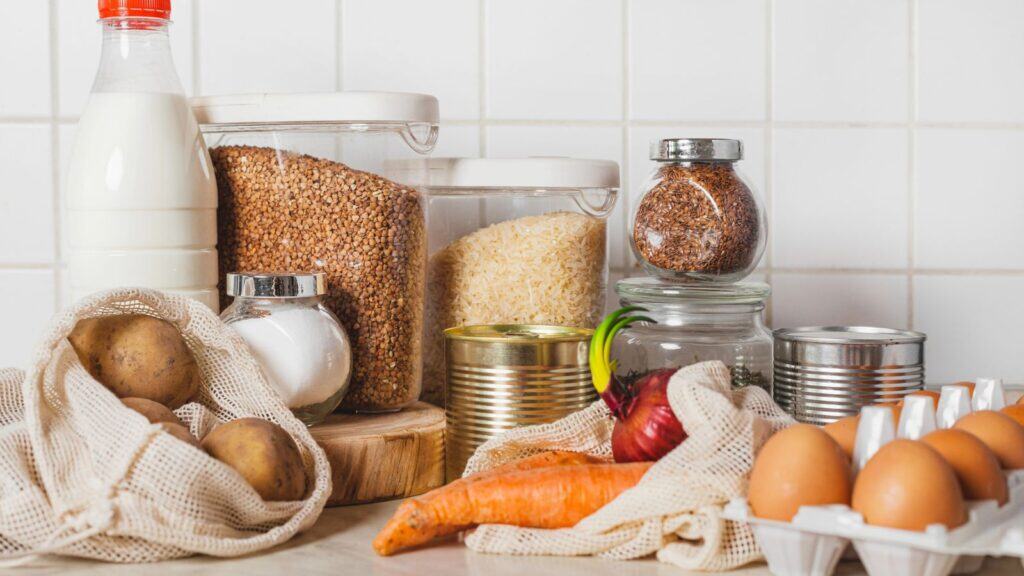
One of the quiet winners of the past few years has been the humble pantry staple. For years, these foods felt old-fashioned, something your grandmother cooked with. Now, the ingredients that keep for months and cost almost nothing per serving, such as dried beans, lentils, canned tomatoes, pasta and rice, are having a moment.
The appeal is obvious: a pot of slow cooker lentil soup costs a few dollars to make and feeds a family for days. There’s no expensive protein to buy, no precious herbs wilting in the crisper drawer. You dump everything in, walk away and come back to dinner.
But the shift isn’t just about cost, but also about confidence. When you learn that a pot of lentils can become something genuinely delicious, not just edible, but something people ask for again, it changes how you think about cooking. You stop needing a recipe for every meal and start trusting yourself to improvise.
The mental load of every trip
For many home cooks, the shift isn’t just financial; it’s cognitive. Grocery shopping used to be automatic for many middle-class families: you bought what you needed, maybe glanced at the weekly ad and moved on. Now every trip requires math. Is the name brand worth it? How many meals can I stretch from this? What’s actually going to get eaten before it goes bad?
That mental load adds up, especially for the person in the household responsible for feeding everyone else. Meal planning, once a nice-to-have, has become essential, not for optimization, but for survival. You can’t afford to waste food when the budget is this tight.
The result is a kind of forced creativity, where people learn to cook with what they have instead of shopping for what a recipe requires. A bag of dried lentils becomes the foundation for a week of meals, and a can of chickpeas is dressed up with pantry spices and whatever vegetables are available. These aren’t deprivation meals; they’re practical ones, born from necessity but often better than what came before.






The coping strategies that emerge from this type of shift also cut across income levels, including batch cooking, freezer meals and repurposing leftovers. A pot of marry me chickpeas that becomes tomorrow’s lunch over rice, then gets folded into a wrap the day after. Nothing wasted.
The question of permanence
The data suggests most people view their new habits as temporary, but behavior doesn’t always work that way. Once you’ve learned that store-brand canned tomatoes taste the same as the expensive ones, it’s hard to go back. When you’ve discovered that a simple penne pomodoro made from pantry ingredients can be deeply satisfying, you stop reaching for the jar of $8 pasta sauce.
Some of these changes will fade when the pressure eases. People will splurge again on the fancy cheese, the out-of-season berries, the convenience foods that save time but cost more. But some won’t. The person who learned to plan meals during inflation will probably keep meal planning. The cook who discovered the satisfaction of a from-scratch soup probably won’t go back to canned.
The USDA’s Household Food Security report shows nearly 48 million Americans lived in food-insecure households in 2024, about 1 in 7 families. For those households, the changes weren’t optional and won’t be temporary. But even for families with more margin, the past few years left a mark.
What comes next
Grocery prices aren’t likely to go back to pre-pandemic levels. For most people, any slowdown in price increases will feel like relief, even though it’s still an increase.
The more interesting question is what sticks. Will Americans keep cooking more from scratch? Will the pantry staples maintain their place in the rotation, or drift back to the bottom shelf? Will the skills people developed under pressure become permanent parts of how they feed their families?
Nobody knows yet. But something changed in how people shop, how they cook and how they think about the food they put on the table. Whether that change lasts depends on factors largely out of any individual shopper’s control. In the meantime, there’s dinner to make. And for a lot of people, that dinner looks different from what it did a few years ago.
Shruthi Baskaran-Makanju is a food and travel writer and a global food systems expert based in Seattle. She has lived in or traveled extensively to over 60 countries, and shares stories and recipes inspired by those travels on Urban Farmie.
The post Inflation permanently changes how Americans grocery shop appeared first on Food Drink Life.


(0) comments
Welcome to the discussion.
Log In
Keep it Clean. Please avoid obscene, vulgar, lewd, racist or sexually-oriented language.
PLEASE TURN OFF YOUR CAPS LOCK.
Don't Threaten. Threats of harming another person will not be tolerated.
Be Truthful. Don't knowingly lie about anyone or anything.
Be Nice. No racism, sexism or any sort of -ism that is degrading to another person.
Be Proactive. Use the 'Report' link on each comment to let us know of abusive posts.
Share with Us. We'd love to hear eyewitness accounts, the history behind an article.