By Dean Murray
Moon bears rescued from tiny cages at an illegal bile farm felt grass under their paws for the first time.
Also known as Asiatic black bears, they were rescued by conservation organization Free the Bears and Lao authorities in Southeast Asia's largest ever bear farm rescue.
Bear bile farming is the controversial industrial exploitation of live bears, to harvest their bile for use in traditional medicine.
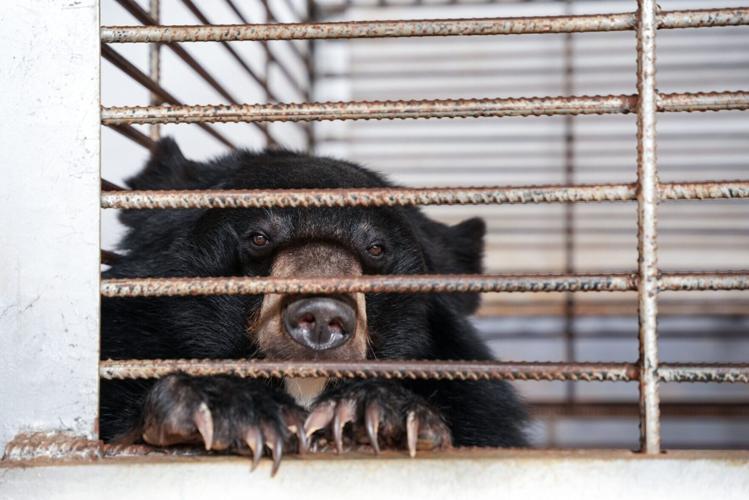
The facility, also in Laos, had confined 27 young bears, aged between 1 and 3 years old, to tiny metal cages in a shed.
The bears are believed to have been taken directly from the wild as cubs, with their mothers likely killed in the process.

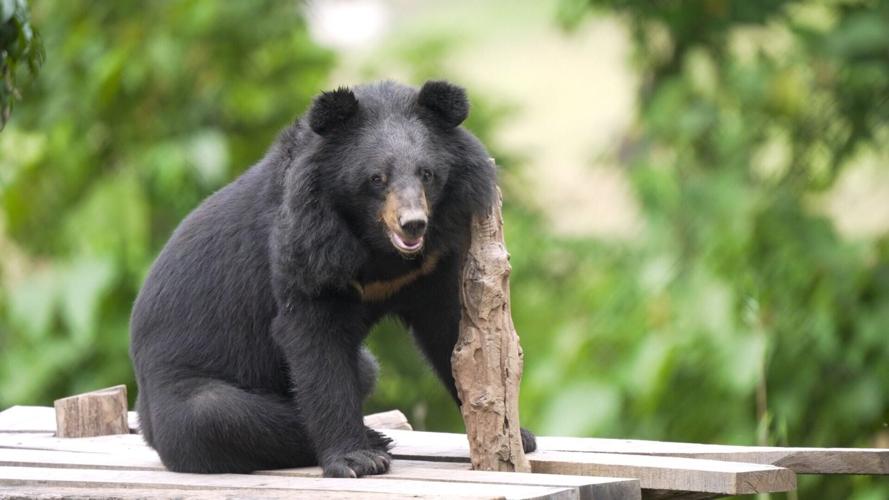
The Moon bears rescued from an illegal bile farm feel grass and experience theoutside after years trapped in tiny metal cages. (Free The Bears via SWNS)
Ten of the 27 bears saved have now completed their quarantine at Luang Prabang Wildlife Sanctuary in Laos, and have been allowed to explore their enclosure.
Free the Bears said it is the first time they have touched grass, foraged freely or climbed trees since they were illegally taken.






Matt Hunt, CEO of Free the Bears, said: "These bears never had the chance to do things as simple as stand on natural ground or feel the sunshine on their face.
"They have experienced many firsts since they arrived at the sanctuary — meeting other bears, eating vegetables, even learning how to regulate their own water intake after years of only being given water once a day."
While the first group from the bears has now moved into a forest habitat, the others are still in quarantine as Free the Bears urgently expands the sanctuary.

One of the bears in a cage. (Free The Bears via SWNS)
Having spent their formative years confined to cages, the bears can't be returned to the wild and will require specialist care for decades.
"This is a very special milestone, but we still have a great deal of work ahead of us," Hunt said.
"We're building additional bear houses and forest enclosures as quickly as we can to give these rescued bears a lifelong sanctuary home, but we can only do it with the support of our community."
Free the Bears is calling on supporters to help fund the urgent £224,000 (about $300,000) sanctuary expansion, so all 27 rescued bears can move from quarantine into large natural forest habitats in the months ahead.
Providing proper care, including nutritious food, daily enrichment and expert veterinary treatment, can cost over £112,000 (about $150,000) per bear across their lifetime.

(0) comments
Welcome to the discussion.
Log In
Keep it Clean. Please avoid obscene, vulgar, lewd, racist or sexually-oriented language.
PLEASE TURN OFF YOUR CAPS LOCK.
Don't Threaten. Threats of harming another person will not be tolerated.
Be Truthful. Don't knowingly lie about anyone or anything.
Be Nice. No racism, sexism or any sort of -ism that is degrading to another person.
Be Proactive. Use the 'Report' link on each comment to let us know of abusive posts.
Share with Us. We'd love to hear eyewitness accounts, the history behind an article.