Wolves, strawberries and sturgeon may not seem connected at first glance, but each one represents a specific full moon tied to the change of seasons. These names, grounded in weather patterns, animal behavior and crop cycles, formed an early system for tracking time long before printed calendars existed. Today, the moonlight and meaning woven into the folklore of the full moon’s many names continue to shape how we read the sky and understand the pattern of the seasons.
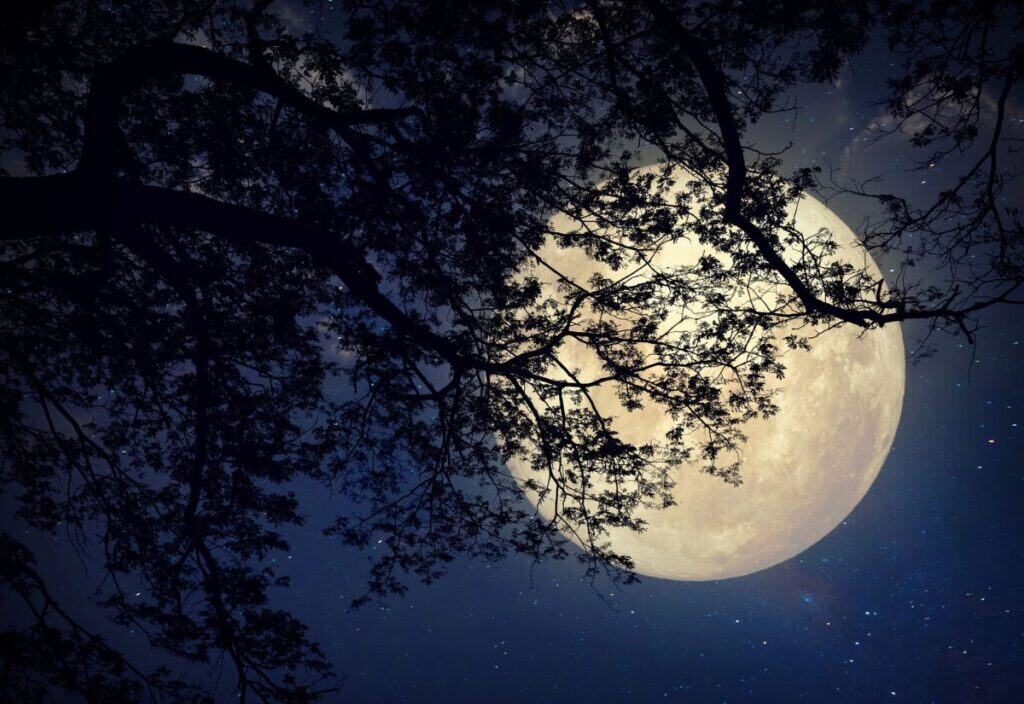
By exploring these lunar names, we begin to see how they became seasonal signposts tied to land, labor and survival, which explains why many still hold meaning. Here’s how this long tradition came into focus, revealing how ancient cultures utilized the night sky as a practical tool for organizing their lives and work.
A calendar written in moonlight
Only the Sun shines with its own light in our solar system, and that light travels through space to illuminate one side of both Earth and the Moon. What we see as moonlight is sunlight reflecting off the moon’s surface, sometimes lighting its entire face, a sliver or none at all. These recurring shifts in appearance are known as the moon phases, and they follow a predictable pattern based on the moon’s orbit around Earth.
Early observers recognized these regular changes, providing them with a natural way to mark time and anticipate what was to come. This growing awareness of lunar patterns evolved into a system of watching the sky for seasonal cues. The full moon, in particular, became a dependable signal, not for calendar dates but for changes in the environment.
Across North America and Europe, communities gave each full moon a name tied to what was happening around them, whether it was planting crops, preparing for a hunt or gathering the harvest. These names weren’t chosen randomly, as they were rooted in lived experience and closely tied to the cycles of the land. Over time, they came to carry layers of meaning, offering practical reminders, seasonal warnings and moments of celebration.
January’s wolf moon
Hundreds of years ago, in deep winter, food was scarce and the nights were long. Wolves howling near villages became a familiar, chilling sound, revealing both their hunger and the severity of the season. That eerie call is what gave the Wolf Moon its name, capturing the shared hardship between people and animals during the coldest time of the year.
February’s snow moon
Following the harshness of January, February’s moon arrives when snow blankets much of the Northern Hemisphere. With deep snow and once limited food, life slowed to a crawl, making this one of the year’s most difficult stretches. Because of this, some Indigenous groups referred to it as the Hunger Moon, a stark reminder of dwindling supplies and the cruelty of winter.
March’s worm moon
March brings signs of change. As the ground begins to thaw, earthworms reappear, soon followed by the birds that feed on them. That’s why this full moon was called the Worm Moon in the past, marking the moment when spring started to stir beneath the surface.
April’s pink moon
April arrives with the first wildflowers and the first blush of life returning to the landscape. Though the moon itself isn’t pink, people named it after moss phlox, one of the first blooms to appear at the time. The Pink Moon symbolized fresh starts, ushering in a time for planting.
May’s flower moon
Following April’s early blossoms, May delivers a full explosion of bloom, with fields and forests coming alive with color and scent. The Flower Moon signaled spring as a time for working the fields, celebrating fertility and reconnecting with the land.
June’s strawberry moon






June offers the short but sweet strawberry season. Harvesters named this full moon after that moment, perfect for gathering ripe fruit. For Algonquin-speaking peoples, this moon is one of the most charming and practical, serving as both a marker and a celebration of the early rewards of summer.
July’s buck moon
July picks up the pace of summer, and with it, the male deer begin to grow velvet-covered antlers. This visible transformation in deer-dependent communities is the inspiration behind the name Buck Moon. It’s a symbol of strength, change and the seasonal rhythm of growth in the wild. For hunters tracking animal behavior, this moon provided important seasonal clues, allowing them to observe nature’s evolution.
August’s sturgeon moon
With summer nearing its peak, August brings the height of sturgeon fishing in the Great Lakes and nearby rivers. Long ago, these massive freshwater fish were central to the diets of many Indigenous tribes. The moon’s name reflected seasonal abundance and the need to prepare for the leaner months ahead.
September’s corn moon or harvest moon
September’s moon shifts focus to the harvest season. Depending on its timing near the equinox, farmers back then called it the Corn Moon or the Harvest Moon, both linked to gathering crops. This moon lit the way for long evenings in the fields and reminded communities that the growing season was closing fast.
October’s hunter’s moon
After the fields were cleared, attention turned to the forest. In the past, October’s bright and bold moon marked the start of hunting season, especially when animals were fattened and easier to track. The Hunter’s Moon was a signal for communities to store food before winter returned, marking a critical window for action.
November’s beaver moon
November’s moon turned attention to the rivers, where ice would soon seal the surface. Before that happened, trappers raced to set beaver traps, knowing the animals’ thick pelts were essential for warmth and trade. The Beaver Moon captures this blend of human necessity and instinct, symbolizing both industriousness and preparation for the long winter ahead.
December’s cold moon
With winter fully settled, December’s Cold Moon rises over a sleeping, frost-covered landscape. It’s the last full moon of the year, and also a quiet but powerful symbol of deep cold, long nights and nature’s pause. Ages ago, it signaled the seasonal threshold, where the darkest days begin to give way to the growing light of a new year.
Looking up, looking back
Even in the digital age, these moon names still evoke something ancient and familiar, offering quiet continuity in a fast-moving world. They aren’t just folklore. They serve as reminders that nature’s rhythms persist, whether viewed from a forest clearing or a city sidewalk. Each name carries a story, small but enduring, that ties people to one another across cultures and across time.
Jennifer Allen, retired chef turned traveler, cookbook author and writer, shares her adventures and travel tips at All The Best Spots. Living at home with her family, and the cats that rule them all, her work has been featured in The Washington Post, Seattle Times, MSN and more.
The post Moonlight and meaning: The folklore behind the full moon’s many names appeared first on Food Drink Life.

(0) comments
Welcome to the discussion.
Log In
Keep it Clean. Please avoid obscene, vulgar, lewd, racist or sexually-oriented language.
PLEASE TURN OFF YOUR CAPS LOCK.
Don't Threaten. Threats of harming another person will not be tolerated.
Be Truthful. Don't knowingly lie about anyone or anything.
Be Nice. No racism, sexism or any sort of -ism that is degrading to another person.
Be Proactive. Use the 'Report' link on each comment to let us know of abusive posts.
Share with Us. We'd love to hear eyewitness accounts, the history behind an article.