



(Photo by Sanket Mishra via Unsplash)
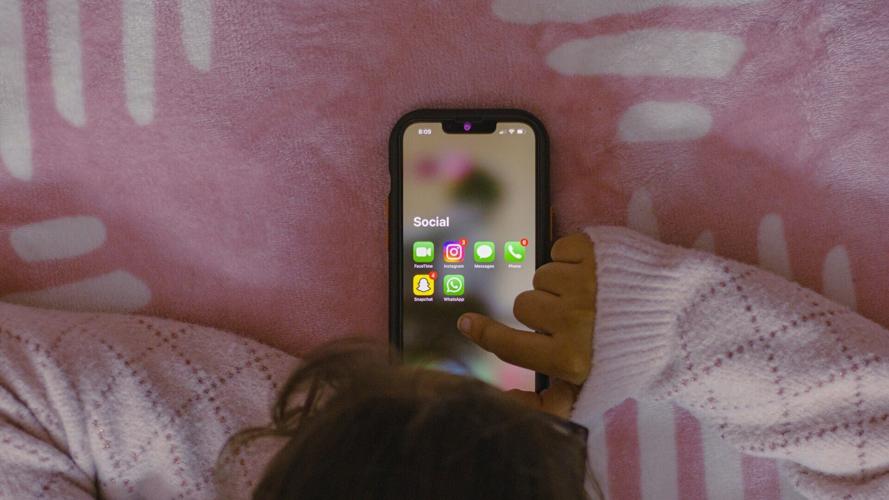
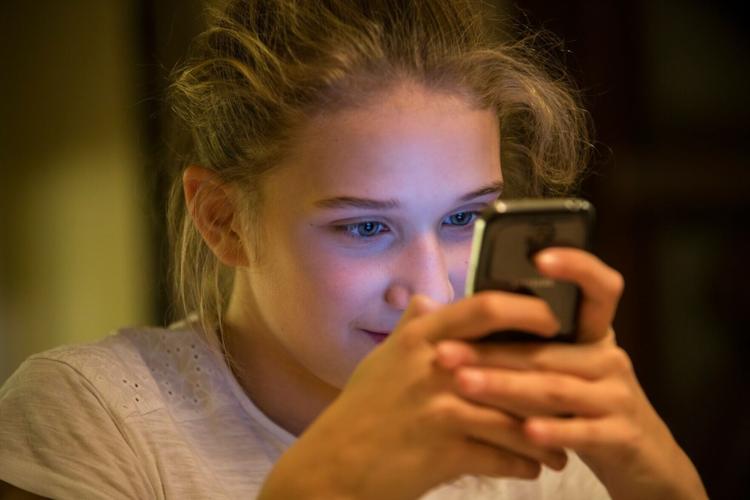
Nearly two-thirds of Americans believe children under the age of 16 should not be allowed on social media, according to new research.
The survey of 2,000 Americans revealed that 62% of respondents agreed that kids 15 and under should be barred from creating social media accounts.
With discussions ramping up around the topic, the research aimed to figure out whether people actually thought this was a good idea.
According to the poll, 35% said it should be an all-encompassing country-wide policy that minors under the age of 16 should not be allowed on social media.
Twenty-seven percent agreed with that sentiment, but believe parents should still have discretion on the matter.
One in five (17%) believe that it should be a family decision whether or not a child is allowed on social media and 11% believe that children should be free to use social media if they want.
Interestingly, when asked who should be responsible for children’s online safety, only 4% of those polled pointed to the government.
An overwhelming 55% believe that it’s still the parents’ responsibility to protect their kids online, with just 10% saying the duty should fall to social media companies.
Some respondents believe that social media bans could be a net good for kids and young teens.






(Photo by Johnny Cohen via Unsplash)
A quarter of those polled (25%) believe that a social media ban would lead to improved mental health and 23% think it would lead to more in-person socializing.
However, another one in four (25%) think that kids would simply find ways around the ban and remain on the platforms.
Michael Reynolds, Lead Social Media Strategist & Platform Analyst at Socialeum commented on the data by Talker Research:
“The data highlights a massive friction point: parents are desperate for structural guardrails but deeply distrustful of government execution. While 62% favor some form of age restriction, the fact that 55% place safety responsibility on parents — and 25% acknowledge kids will easily bypass bans — shows we are dealing with an enforcement paradox. In social media mechanics, age verification is notoriously easy to circumvent via VPNs or self-reported birthdates, meaning a hard ban would likely just push underage usage into unmonitored, third-party spaces rather than stopping it.
“Instead of a flat ban, the industry needs to shift toward ‘safety by design’ standards, such as disabling algorithmic recommendation engines and infinite scroll by default for accounts under 16,” continued Reynolds. “This addresses the mental health concerns and encourages offline socialization without creating a cat-and-mouse game of digital evasion that parents ultimately have to police anyway. A government ban on social media is a blunt instrument for a sharp problem; without hardcoded platform design changes, it will only turn kids into digital outlaws and parents into full-time IT police.”
Research methodology:
Talker Research surveyed 2,000 general population Americans; the survey was administered and conducted online by Talker Research between July 1 and July 6, 2026. A link to the questionnaire can be found here.
To view the complete methodology as part of AAPOR’s Transparency Initiative, please visit the Talker Research Process and Methodology page.

(0) comments
Welcome to the discussion.
Log In
Keep it Clean. Please avoid obscene, vulgar, lewd, racist or sexually-oriented language.
PLEASE TURN OFF YOUR CAPS LOCK.
Don't Threaten. Threats of harming another person will not be tolerated.
Be Truthful. Don't knowingly lie about anyone or anything.
Be Nice. No racism, sexism or any sort of -ism that is degrading to another person.
Be Proactive. Use the 'Report' link on each comment to let us know of abusive posts.
Share with Us. We'd love to hear eyewitness accounts, the history behind an article.