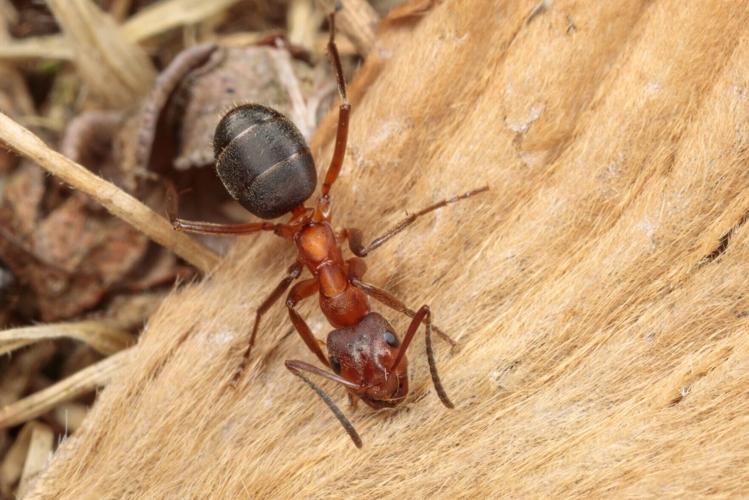
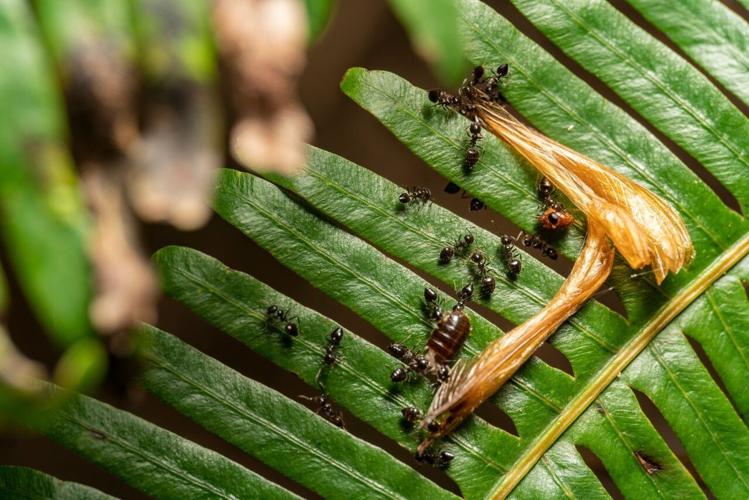

Narrow-headed Ants (Formica exsecta) feeding on a moth wing. (Alex Hyde / Devon Wildlife Trust via SWNS)
By Georgia Cook
Thieves have stolen a nest of England’s rarest ant species using a spade to dig it out of a field, a conservation charity has said.
The nest belonging to narrow-headed ants was removed without permission from its Chudleigh Knighton Heath nature reserve in south Devon.
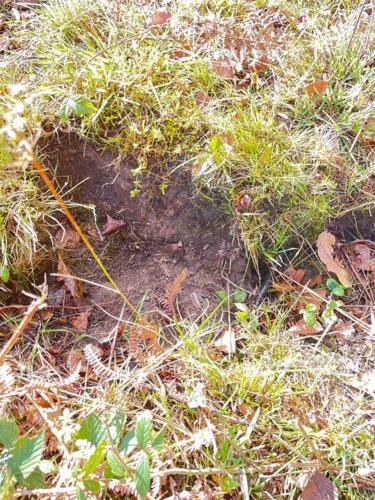
Devon Wildlife Trust says the theft was discovered in mid-October when researchers carrying out regular checks on the ants found a hollow where a known nest had been.
The surrounding ground showed clear signs of digging with a spade.
A single nest can hold a colony of between 1,000 and 5,000 ants, along with one or more breeding queens which can live for as many as 25 years.
Chudleigh Knighton Heath is a Site of Special Scientific Interest, while narrow-headed ants are also a Section 41 species, Nationally Rare, and Near Threatened on the IUCN Red List of species.
The deliberate disturbance or removal of material from the nature reserve is breaking the law and is something Devon Wildlife Trust is taking very seriously.

Scene of the theft at Chudleigh Knighton Heath nature reserve where a nest of Narrow-headed Ants was removed without permission. (Devon Wildlife Trust via SWNS)
The theft has been reported to Devon and Cornwall Police and the Trust is asking anyone who might have information about the incident to come forward.
Steve Hussey at Devon Wildlife Trust said: “We’re unsure why anyone would take a Narrow-headed ant nest from our nature reserve.
“It may be that the nest was taken for someone’s collection or perhaps in a misguided attempt to reintroduce the species at another site.
“Whatever their motive, this was a reckless act and places more pressure on an already rare and endangered species.
“People removing wildlife for our nature reserves is, sadly, far from an unusual occurrence.
“But in most cases it is the removal of bird eggs or nestlings or the taking of rare fungi which we see.
“This is the first time we’ve experienced the loss of an ant nest.”

(Photo by Jimmy Chan via Pexels
The nature reserve is the last stronghold for the narrow-headed ant in England. A small number of colonies still exist in Scotland, including on the royal family’s Balmoral Estate.





The species, which is named after the distinctive “pinched” look to their heads, was once much more widespread but has seen its numbers dwindle over the past 100 years.
Particularly as their favored heathland homes have been lost to building development and agricultural change.
Julia Balfour, the Devon Wildlife Trust’s species recovery officer, said: “The removal of an established nest is a significant loss for this species.
“Narrow-headed Ant colonies develop slowly, and each mature nest, with its long-lived queens, represents many years of growth that cannot quickly be replaced.
“This is a crime every bit as serious as illegal raids on wild bird eggs. It shows the pressures that our nature and wild places are under.
“Our most recent survey recorded 142 active nests on the nature reserve, so every nest matters.
“This is the last population of Narrow-headed Ants in England, and losing even one colony sets back years of careful work by our staff, volunteers and partners.
“This incident makes us even more determined to ensure that our work to secure their future is a success.”

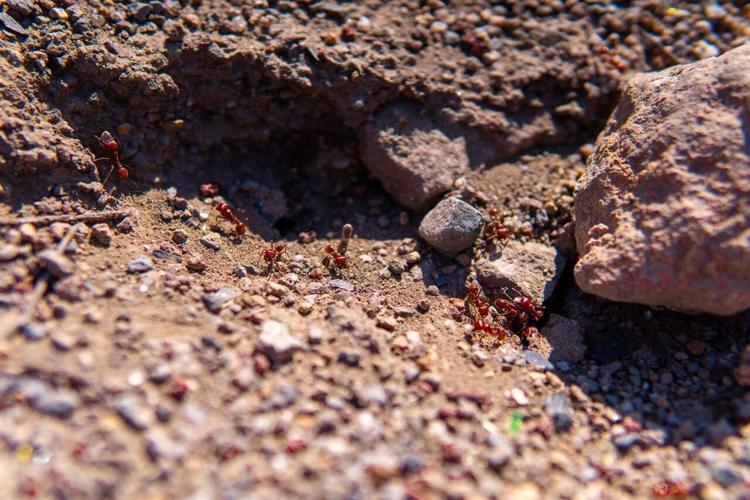
Photo by Israyosoy S. via Pexels
The ant nest theft comes at a time when conservation efforts have recently begun, which specifically target improvements to secure the future of narrow-headed ants locally.
A collaboration between Devon Wildlife Trust and Buglife began in the summer after support was received from the UK government as part of the “Wild Again: Restoring England’s Wildlife” initiative.
Laura Krusin is Buglife’s conservation officer for the Moor Invertebrates Project.
Laura said: “Narrow-headed Ants are an extremely rare species, only known from one site in Devon and a handful of sites in Scotland.
“Therefore, removal of any nests, can have a catastrophic impact on the population, putting even more pressure on an already threatened species.
“Not only are the ants incredibly special, but Chudleigh Knighton Heath itself is a Site of Special Scientific Interest, for the ants and the other species it supports.
“Any damage to the site or removal of material is criminal and should be treated as a serious offense.
“The destruction to this wonderful site and the removal of the Narrow-headed Ants that call it home is heartbreaking and highlights the threats still impacting these rare invertebrates!”
Police Constable Lucy Wyatt, from the rural affairs team at Devon & Cornwall Police, said: “Sites of Special Scientific Interest are legally protected and it is a criminal offense for any person to intentionally or recklessly damage, destroy, or disturb the protected area.
“If you’ve seen anything suspicious in recent weeks or have any information that may assist us with our investigation, please contact us by calling 101 or filling in a form on the Devon & Cornwall Police website, quoting crime reference: 50260284768.”
(0) comments
Welcome to the discussion.
Log In
Keep it Clean. Please avoid obscene, vulgar, lewd, racist or sexually-oriented language.
PLEASE TURN OFF YOUR CAPS LOCK.
Don't Threaten. Threats of harming another person will not be tolerated.
Be Truthful. Don't knowingly lie about anyone or anything.
Be Nice. No racism, sexism or any sort of -ism that is degrading to another person.
Be Proactive. Use the 'Report' link on each comment to let us know of abusive posts.
Share with Us. We'd love to hear eyewitness accounts, the history behind an article.