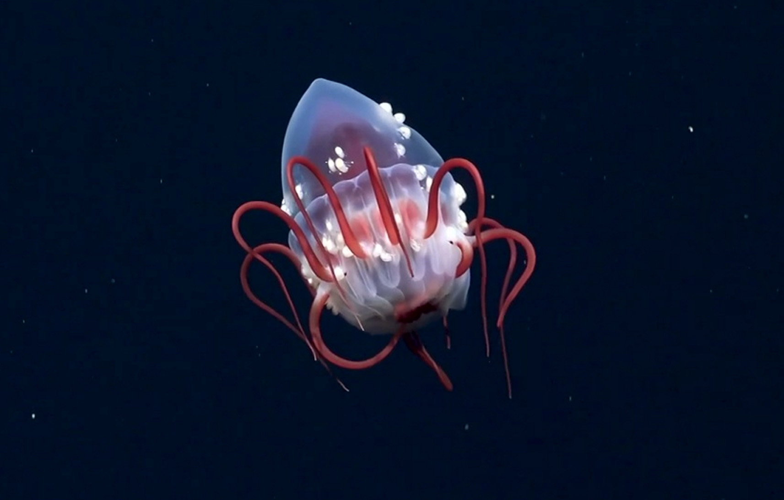
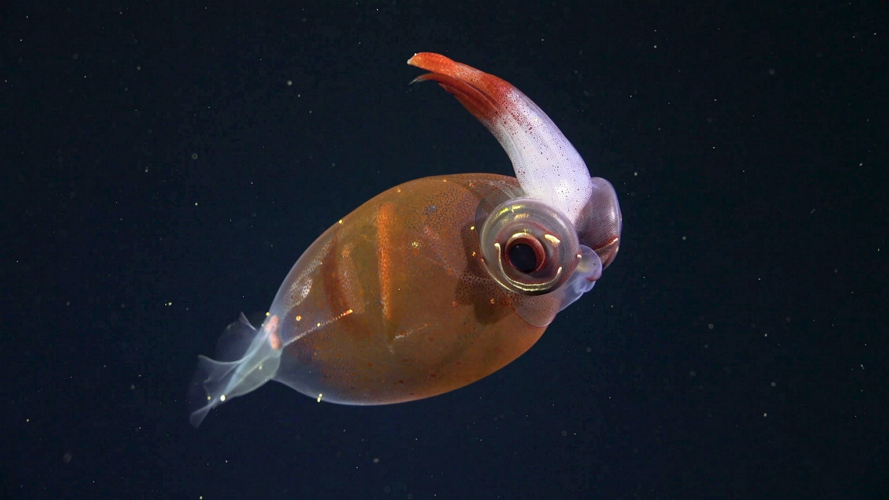

(ROV SuBastian/Schmidt Ocean Institute via SWNS)
By Dean Murray
A deep-sea exploration team has discovered 57 new species – including one they compare to a SpongeBob SquarePants character.
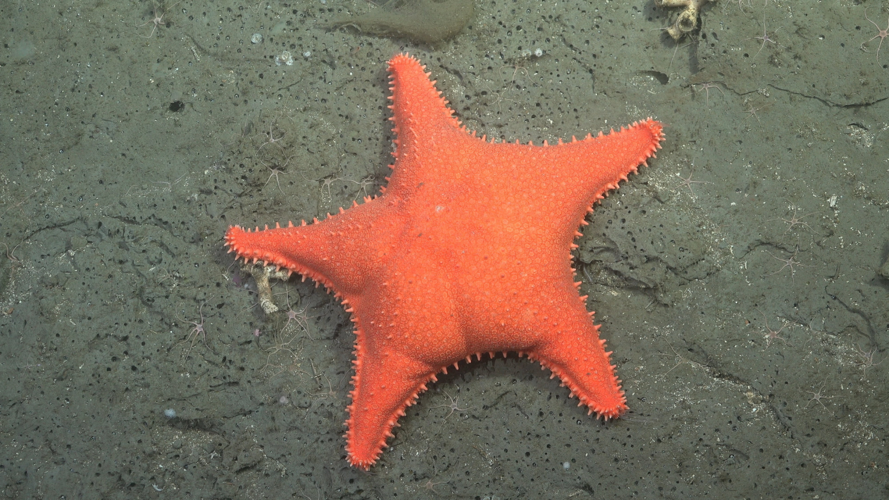
The Schmidt Ocean Institute said one vivid orange sea star bore an "uncanny resemblance to the cartoon character 'Patrick Star,'" even seemingly displaying the outline of a behind like the character.
The sea star was documented on the seafloor of the Mar del Plata Submarine Canyon, off Argentina, and was among the new species identified at an international Species Discovery Workshop, led by the Nippon Foundation-Nekton Ocean Census in partnership with the Schmidt Ocean Institute.

(ROV SuBastian/Schmidt Ocean Institute via SWNS)
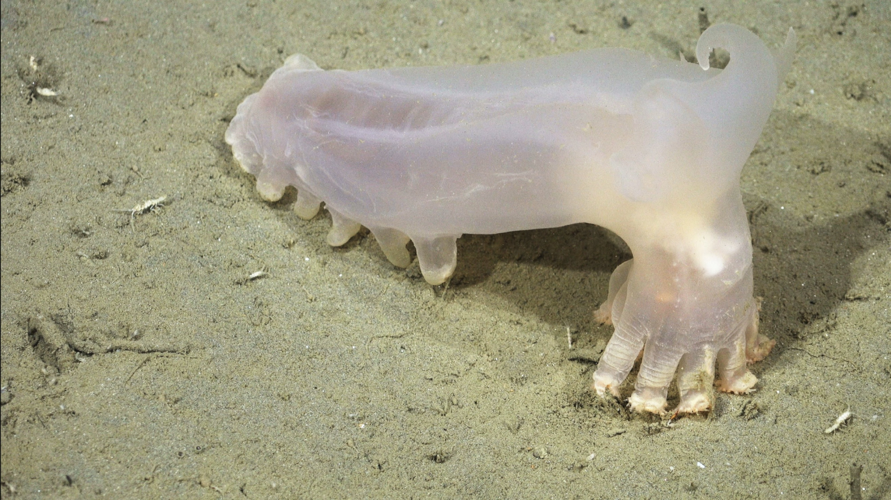
Other standout discoveries included a deep-sea sea cucumber, which was named "Loki" for its prominent horned appendages, reminiscent of the god in Norse mythology.
The workshop brought together 20 taxonomists and early-career researchers from across Latin America and Europe to examine deep-sea biological samples, primarily from the Schmidt Ocean Institute Underwater Oasis of the Mar del Plata Canyon expedition in August 2025, aboard the Schmidt Ocean Institute's research vessel Falkor (too).






Researchers used the Schmidt Ocean Institute's remotely operated vehicle, ROV SuBastian, rated to a depth of 4,500 meters to search the ocean's mysteries.

(ROV SuBastian/Schmidt Ocean Institute via SWNS)
In total, the team identified 20 new species of copepods, 22 echinoderms (sea cucumbers and crinoids), 14 cnidarians (octocorals, sea pens and stony corals), and one scaphopod mollusk, with five new scientific genera spanning corals, sea cucumbers and crustaceans.
Daniel Lauretta, principal investigator at CONICET and the Museo Argentino de Ciencias Naturales, said: "International cooperation in taxonomy is critical, especially in groups with few active specialists.
"The species discovery workshop accelerated species identification, the recognition of species new to science, and increased capacity building for local early-career taxonomists working on deep-sea fauna."

(ROV SuBastian/Schmidt Ocean Institute via SWNS)
Michelle Taylor, Ocean Census Head of Science, said: "Discovering 57 new species and five new genera in just two weeks demonstrates the speed and power of collaborative taxonomy. The deep sea holds some of the least understood ecosystems on Earth.
"By bringing Latin America's scientific expertise and international experts together with, as well as connecting them to the open-access Ocean Census NOVA platform, we are drastically accelerating our understanding of marine biodiversity."
(0) comments
Welcome to the discussion.
Log In
Keep it Clean. Please avoid obscene, vulgar, lewd, racist or sexually-oriented language.
PLEASE TURN OFF YOUR CAPS LOCK.
Don't Threaten. Threats of harming another person will not be tolerated.
Be Truthful. Don't knowingly lie about anyone or anything.
Be Nice. No racism, sexism or any sort of -ism that is degrading to another person.
Be Proactive. Use the 'Report' link on each comment to let us know of abusive posts.
Share with Us. We'd love to hear eyewitness accounts, the history behind an article.