Most drivers have no idea their car’s safety systems might be lying to them. A quiet but growing issue in modern auto repair is putting millions at risk, and two industry experts are sounding the alarm before it leads to more crashes and lawsuits.
Modern cars rely on features like automatic braking, lane-keeping assist, and blind-spot monitoring. However, these systems depend on sensors that require precise calibration. After routine repairs like windshield or bumper replacement, those sensors can shift. If you skip recalibration, your safety systems may stop working properly.
The risks aren’t theoretical. A misaligned camera can nudge a car out of its lane. A faulty radar sensor might fail to brake in time. Blind-spot monitors may fall silent when you need them most or send phantom warnings that cause drivers to tune them out. Adaptive cruise control can behave erratically, following too closely or braking without warning.
John Voulgarakis and Christopher Fox, two veteran collision and diagnostics experts, say recalibration is one of the most overlooked and misunderstood issues facing the auto industry today. At their shop, Lightning Auto Service in Voorhees, NJ, they’re working to fix that. When these systems fail, it’s not just an inconvenience — it’s a hazard.
The Mission Behind Raising Awareness
Voulgarakis and Fox have a combined 40 years of experience in service and collision, making them more than qualified to speak on this subject. Their commitment to prioritizing precision and quality repairs led to the launch of Lightning Auto Service, after their frustrations mounted about the industry shortcuts and their limitations to enact change while working for others.
Together, they’re helping others maintain their vehicles with high-quality repairs, putting their customers’ safety at the top of mind. Separately, they bring much to the table, like Voulgarakis’ background as an automotive technician and an estimator before transitioning into management roles within numerous collision-repair centers (he oversaw over 160 OEM [original equipment manufacturer]-certified collision-repair centers). Fox also began his career as an automotive technician before shifting to an OEM role, training technicians and managing advanced diagnostics across over 60 centers.
Through their expertise, they shared why recalibrating sensors is crucial for modern vehicles and the difference between dynamic and static recalibration. They also provided insight into the process of ADAS recalibration, where the most challenges lie, and their predictions for the future of recalibration. Here’s what you need to know about the process.
When a Simple Repair Can Break Your Safety Systems
If there’s any chance your vehicle’s sensors have been moved or disturbed, you should almost always recalibrate, say Voulgarakis and Fox. Neglecting to do this following an accident or any event that could’ve thrown your sensors out of whack could cause features such as lane-keeping (staying in your lane), adaptive cruise control (maintaining distance from other vehicles), and blind-spot monitoring to not work properly. In turn, this could result in more traffic accidents because you’re depending on these features to operate as usual.
This was highlighted in a February 2025 article in Fleet Equipment Magazine, which also noted that traffic accidents were the culprit of an estimated 29,135 fatalities in only the first nine months of 2024, per the National Highway Traffic Safety Administration (NHTSA). Failed sensors aren’t entirely innocent when it comes to road incidents, but they’re also not solely to blame. While consumer vehicles primarily use ADAS features, autonomous vehicles (self-driving cars) rely significantly on accurate sensors in navigating the roadways (where deployed); however, as a study published in August 2024 mentioned, there can be hiccups when not calibrated.
Voulgarakis and Fox warn that the systems more commonly in need of recalibration are forward-facing cameras (windshield replacements), radar sensors (front bumper work, grille replacements), blind spot monitoring systems (mirror or rear bumper repairs), surround-view or rear-view cameras (tailgate or liftgate adjustments), and LiDAR (Light Detection and Ranging) systems (in select newer vehicles).
Modern vehicles rely on increasingly complex sensors, so recalibration is especially important. Even minor impacts, like a fender-bender or rough road, can knock those sensors out of alignment and cause malfunctions. Experts therefore recommend recalibrating to keep sensors within the manufacturer’s specifications, ensuring they accurately interpret distance, speed, and other data to maintain driver safety.
The Two Types of Calibration — and Why Both Matter
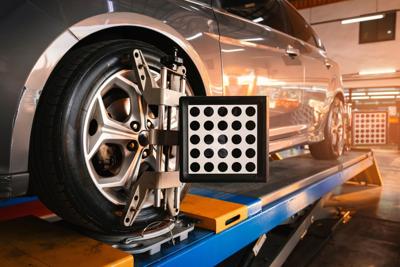
Let’s talk about the different types of calibration. There’s dynamic, which Voulgarakis and Fox point out, that involves driving the vehicle on various road types at designated speeds while a scan tool actively communicates with the system to complete calibration. And then there’s static, which takes place in a controlled, indoor environment using specialized targets, tools, and alignment equipment while the vehicle is stationary.
According to a May 2023 article by Hesai Technology, the type of calibration needed depends on the make and model of your vehicle, as well as recommendations from the original manufacturer. Speak with a specialist if you’re unsure which is best for you, as experts note that some may even require both services.
Impact of Not Recalibrating or Recalibrating Incorrectly
We’ve already warned you that not recalibrating your vehicle in the event its sensors are altered could be detrimental to its functioning correctly. But how bad could it be? Voulgarakis and Fox urge drivers not to take this step lightly, as it could really mess with your ADAS system. Some things that could happen are you could get false warnings or no warnings at all, or incorrect system behavior, which is most concerning when lane-keeping or braking.
There is also an increased danger of accidents when calibrations aren’t accurate, leading to compromised vehicle safety. Additionally, liability issues could materialize for repair shops and insurers when questioning who’s at fault if an accident does occur.






The Process of ADAS Recalibration
The overall process of ADAS recalibration isn’t one-size-fits-all, as it highly depends on the make and model of the vehicle, says Voulgarakis and Fox. However, they shared the steps that it generally includes.
At Lightning Auto Service, technicians first pre-scan the vehicle for existing DTCs (Diagnostic Trouble Codes), which is described in a January 2025 article by Motive as being a system that typically alerts the driver of a malfunction via a warning light or a note on the instrument panel. They would then perform the necessary repairs and replacements before setting up the vehicle in a calibration space (for static calibrations) using targets and measuring tools.
The next step is to use a scan tool to initiate the recalibration process and follow the necessary procedures specified by the OEM. If undergoing a dynamic calibration, the technician would then perform a road test and conduct a post-scan of the vehicle to confirm system functionality. Lastly, they document the process and provide reports for compliance.
Common Challenges During Recalibration
Although recalibration might seem seamless, it isn’t always smooth sailing. The experts have faced multiple common challenges, like limited calibration space to meet OEMs’ requirements on specific measurements and lighting conditions. Sometimes, they run into incomplete or unavailable repair information when working on newer vehicles.
Other factors that could come into play are software compatibility issues with scan tools, sensor damage that’s only noticeable during calibration, and tight turnaround times from collision centers and insurance partners.
After it’s all said and done, there are several ways to know if a recalibration was successful, one being that the scan tool would show no active DTCs. Another is that the system would pass all self-tests and functional verifications, and documentation would be complete per OEM and industry standards. For final confirmation, a road test is conducted to validate system performance in real-world conditions (if required).
Trust the Experts
Not only do Voulgarakis and Fox keep themselves and their team refreshed on the new equipment and software updates, but they also strive to ensure their customers are well-informed. On their website, visitors can find manufacturer resources and an entire portal for multiple-level ADAS courses to stay in the know about the latest industry standards, including an overview of basic calibrations.
The team’s experts say they stay current by subscribing to OEM service information platforms and regularly attending training workshops and virtual webinars. They also partner with ADAS equipment manufacturers for updates, participate in industry forums and peer groups, and maintain close relationships with insurance and collision partners to monitor emerging trends.
Their training is also extensive, as the specialists typically have a background in automotive repair, diagnostics, or collision work, and formal ADAS training from manufacturers or independent providers. Additionally, they have hands-on experience with calibration tools and vehicle systems, as well as ongoing education to stay current as technology rapidly evolves.
Staying Ahead of the Curve
With artificial intelligence (AI) use running rampant and car features growing ever more advanced, it’s hard not to think about the future of the car industry. When asked specifically where they envisioned vehicle recalibration heading, Voulgarakis and Fox said they predict that AI will play a considerable role from predictive diagnostics to adaptive, real-time recalibration adjustments based on driving data and sensor feedback.
They also believe the future will be driven by increasingly advanced sensor arrays, especially in EVs (electric vehicles) and autonomous vehicles, more proprietary OEM-specific calibration requirements, cloud-based calibration management systems, and growth in remote calibration capabilities and AI-supported diagnostics.
Before You Hit the Road
By now, we hope you better understand the importance of vehicle recalibration (and hopefully have already scheduled an appointment with a specialist if you dodged recalibrating your car after a collision or sensor disruption).
We’ll leave you with a few more tips from the experts, specifically for specialists, such as (1) always verify recalibration requirements for every repair job, (2) use OEM-approved tools, targets, and procedures, (3) document every step for accountability and liability protection, (4) educate customers on why recalibration matters for your safety, (5) invest in continuous training, as ADAS technology is evolving quickly.
Voulgarakis and Fox insist that the shops that embrace this now will lead the market tomorrow. And the vehicle owners who prioritize recalibration can enjoy the roadways with ease.
(0) comments
Welcome to the discussion.
Log In
Keep it Clean. Please avoid obscene, vulgar, lewd, racist or sexually-oriented language.
PLEASE TURN OFF YOUR CAPS LOCK.
Don't Threaten. Threats of harming another person will not be tolerated.
Be Truthful. Don't knowingly lie about anyone or anything.
Be Nice. No racism, sexism or any sort of -ism that is degrading to another person.
Be Proactive. Use the 'Report' link on each comment to let us know of abusive posts.
Share with Us. We'd love to hear eyewitness accounts, the history behind an article.