



(Photo by Pixabay via Pexels)
By Stephen Beech
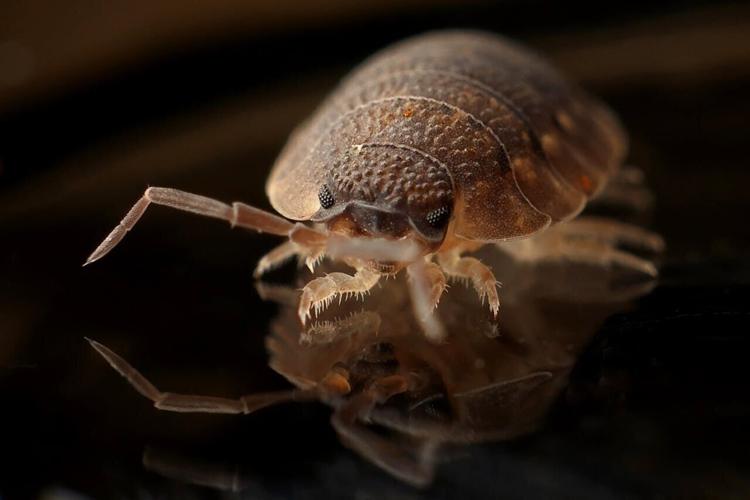
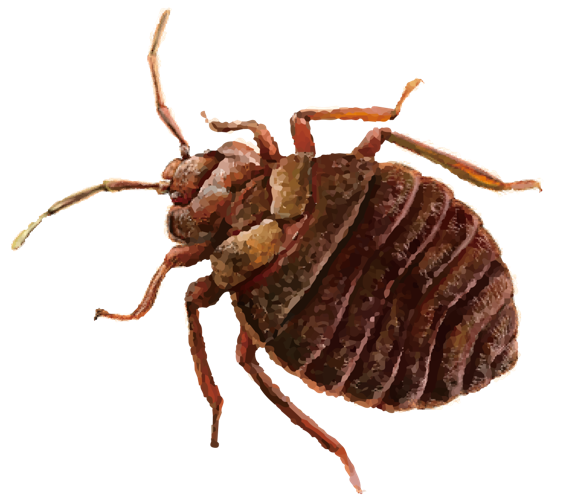
Bed bugs were the first human pest, suggests a new study.
They have been bugging people since they hopped off a bat and attached themselves to a Neanderthal around 60,000 years ago, say scientists.
Bed bugs have enjoyed a thriving relationship with their human hosts ever since.
But the research team explained that populations of bed bugs that stayed with bats have continued to decline since the Ice Age, also known as the Last Glacial Maximum, around 20,000 years ago.
The team compared the whole genome sequence of the two genetically distinct lineages of bed bugs.
Their findings, published in the journal Biology Letters, indicate that the human-associated lineage followed a "similar demographic pattern" as humans and may well be the first true urban pest.

Crawford Jolly
Study co-leader Dr. Lindsay Miles, of Virginia Tech, said: “We wanted to look at changes in effective population size, which is the number of breeding individuals that are contributing to the next generation, because that can tell you what’s been happening in their past."
Dr. Miles says the historical and evolutionary symbiotic relationship between humans and bed bugs will inform models that predict the spread of pests and diseases under urban population expansion.
By directly tying human global expansion to the emergence and evolution of urban pests such as bed bugs, scientists may identify the traits that co-evolved in both humans and pests during urban expansion.
Dr. Miles said: “Initially, with both populations, we saw a general decline that is consistent with the Last Glacial Maximum; the bat-associated lineage never bounced back, and it is still decreasing in size.
“The really exciting part is that the human-associated lineage did recover and their effective population increased.”







(DataBase Center for Life Science (DBCLS) via Wikimedia Commons)
Dr. Miles points to the early establishment of large human settlements that expanded into cities such as Mesopotamia around 12,000 years ago.
Study co-leader Professor Warren Booth said: “That makes sense because modern humans moved out of caves about 60,000 years ago.
“There were bed bugs living in the caves with these humans, and when they moved out they took a subset of the population with them so there’s less genetic diversity in that human-associated lineage.”
As humans increased their population size and continued living in communities and cities expanded, the human-associated lineage of the bed bugs saw an "exponential" growth in their effective population size.
By using the whole genome data, the researchers say they now have a foundation for further study of the 245,000-year-old lineage split.
Since the two lineages have genetic differences yet not enough to have evolved into two distinct species, the researchers are interested in focusing on the evolutionary alterations of the human-associated lineage compared with the bat-associated lineage that have taken place more recently.
(Wikimedia Commons)
Booth said, “What will be interesting is to look at what’s happening in the last 100 to 120 years.
“Bed bugs were pretty common in the old world, but once DDT was introduced for pest control, populations crashed.
"They were thought to have been essentially eradicated, but within five years they started reappearing and were resisting the pesticide.”
The research team has already discovered a gene mutation that could contribute to that insecticide resistance in a previous study.
Now they are looking further into the genomic evolution of the bed bugs and relevance to the pest’s insecticide resistance.

(0) comments
Welcome to the discussion.
Log In
Keep it Clean. Please avoid obscene, vulgar, lewd, racist or sexually-oriented language.
PLEASE TURN OFF YOUR CAPS LOCK.
Don't Threaten. Threats of harming another person will not be tolerated.
Be Truthful. Don't knowingly lie about anyone or anything.
Be Nice. No racism, sexism or any sort of -ism that is degrading to another person.
Be Proactive. Use the 'Report' link on each comment to let us know of abusive posts.
Share with Us. We'd love to hear eyewitness accounts, the history behind an article.