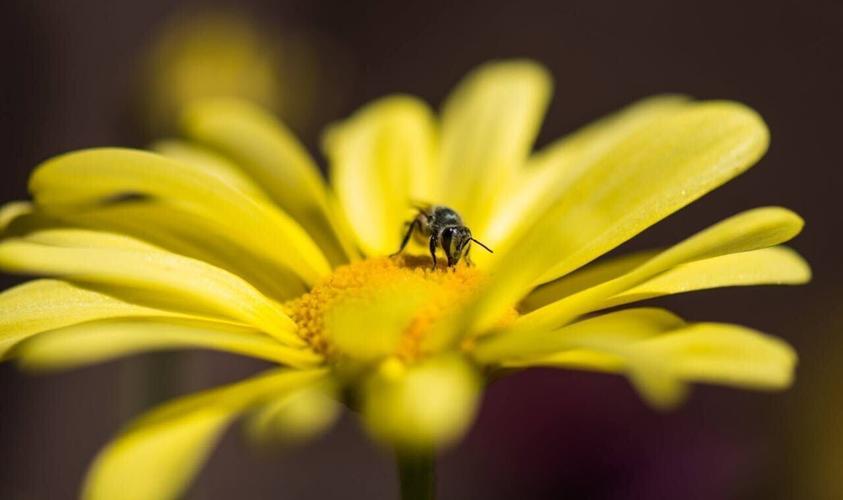

(Photo by Pixabay via Pexels)
By Stephen Beech
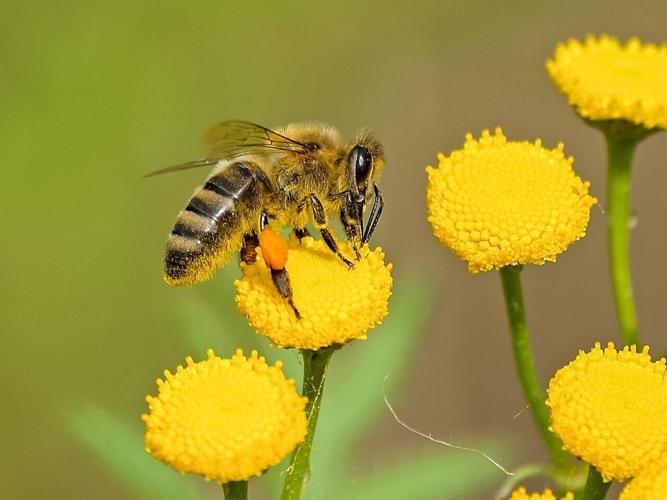
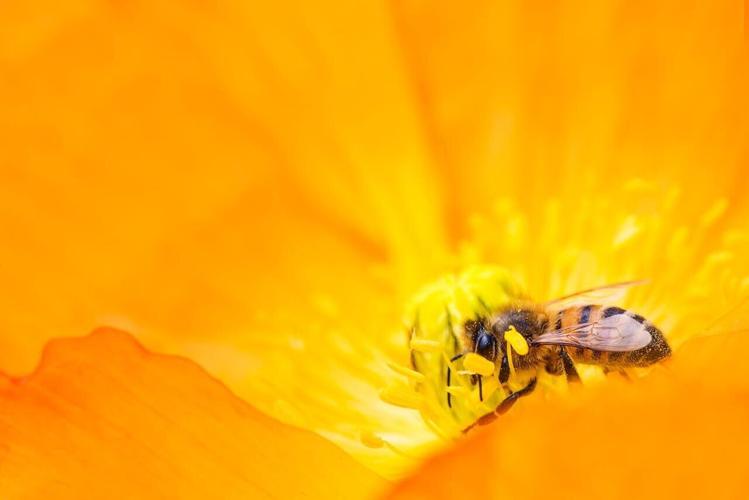
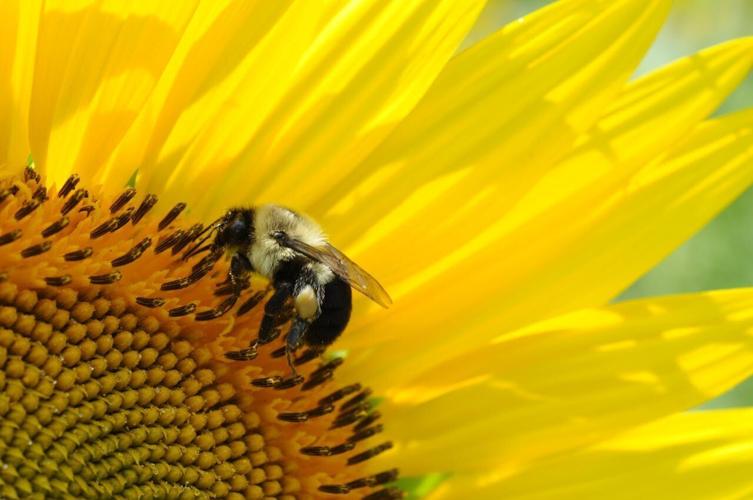
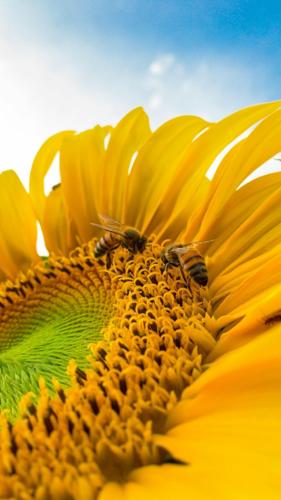
Bees prefer yellow flowers to red ones, reveals new research.
And the findings may eventually lead to higher-yielding crops, say scientists.
The discovery was triggered when researchers examining wild plants in the United States encountered a curious, colorful example of biodiversity several years ago.
Two species of red Mimulus, also known as monkeyflowers, normally pollinated by hummingbirds, have unusual, yellow-flowered populations at the edge of their ranges.
The research team found that the rarer yellow forms seemed to be favored by pollinating bees.
But there was little information on whether other traits, such as floral scent or shape, were attracting them.

(Photo by Kat Smith via Pexels)
Now, Dr. Kelsey Byers’ research group at the John Innes Centre (JIC) in Norwich, UK, has revisited the original study using state-of-the-art scientific resources in controlled lab environments.
The aim was to explain the genetic and biochemical basis of the color change and to investigate how traits such as floral color, scent and shape might be involved in an apparent pollinator shift from hummingbird to bumblebee.
Dr. Byers says the findings, published in the journal Nature Communications, offer a "fascinating" glimpse into the workings of biodiversity in nature and - may help engineer better pollinated, higher yielding crops.
The experiments showed that bumblebees did indeed prefer yellow to red flowers and were twice as likely to visit them.

(Photo by Pixabay via Pexels)
The study also found that both types of yellow morphs had increased scent emission, which could reflect selection from pollinators such as bees, which use scent to forage, unlike hummingbirds.
However, the shape of the flowers presented the bees with problems to the extent that they were not good pollinators for the plant itself.






Dr. Byers said: "Bumblebees were ill-fitted to the flowers, causing damage while attempting to access nectar and poorly contacting floral organs, which would be a hindrance to efficient pollen transfer."
The study suggests that the yellow flowers represent a possible early stage in the evolutionary transition, the “adaptive walk” from hummingbird to bee pollination.
It also sheds light on the order in which floral traits may evolve in a pollinator shift, and how mutations of larger effect, in this case color, might precede smaller changes, in scent and morphology.

(Photo by Caio via Pexels)
Dr. Byers said a key question, which was not answerable at the time of the previous research, was whether the yellow forms in the species M. cardinalis and M. verbenaceous had evolved convergently - that is, if their characteristics were underpinned by the same genetic differences or if they had arrived by different routes.
She said the answer from the new study is both.
The research team found that some of the changes were convergent, with the yellow morphs resulting from an increase in the production of carotenoids - red-orange-yellow pigments - which were increased using the same genes in both species.
Other traits had emerged independently by separate means - for example, red pigment regulators and floral scent compounds.
Dr. Byers said, “Even though these species are closely related, they have followed different paths to the same endpoint for many of their traits.

(Photo by ofer dahan via Pexels)
“We have identified ways that flowers can change and affect pollinator visitation, as well as some genetic pathways that can underlie these changes and how they have evolved in different but closely related species.”
The research team now plans to do some functional testing of the genes that they have found that are convergent or divergent to see how they have evolved.
They are also investigating another yellow population of M. cardinalis to see whether it has followed the same convergent paths or not.
Dr. Byers says the complex partnership between plants and pollinators is essential for biodiverse ecosystems, which support cleaner environments and the production of many crops.
She added: “By understanding how traits evolve in the wild, we understand biodiversity better, and by understanding how these traits can be affected by plant genetics, we have the foundation of the ability to engineer traits to impact pollinator preference and thus crop yield."

(0) comments
Welcome to the discussion.
Log In
Keep it Clean. Please avoid obscene, vulgar, lewd, racist or sexually-oriented language.
PLEASE TURN OFF YOUR CAPS LOCK.
Don't Threaten. Threats of harming another person will not be tolerated.
Be Truthful. Don't knowingly lie about anyone or anything.
Be Nice. No racism, sexism or any sort of -ism that is degrading to another person.
Be Proactive. Use the 'Report' link on each comment to let us know of abusive posts.
Share with Us. We'd love to hear eyewitness accounts, the history behind an article.