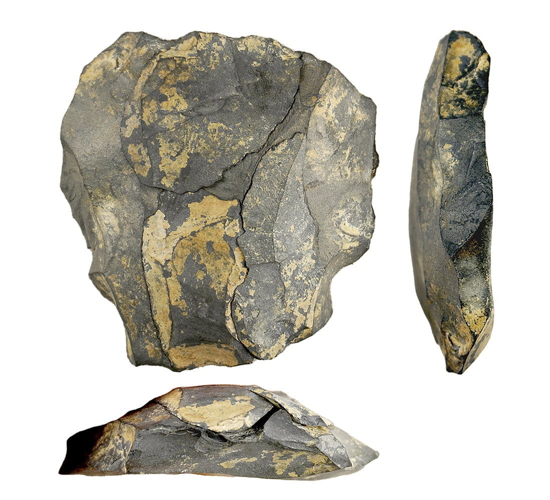

(UoT / Manuel Wi via SWNS)
Early humans were quarrying stone in southern Africa over 200,000 years ago, reveals new research.
People quarried rocks for their tools in places they specifically sought out thousands of years earlier than previously thought, say scientists.
An international team, led by researchers from the University of Tübingen in Germany, found that quarrying was taking place at the Jojosi site in South Africa.
The discovery, published in the journal Nature Communications, challenges the prevailing view that Paleolithic hunter-gatherers collected their raw materials incidentally during other activities.
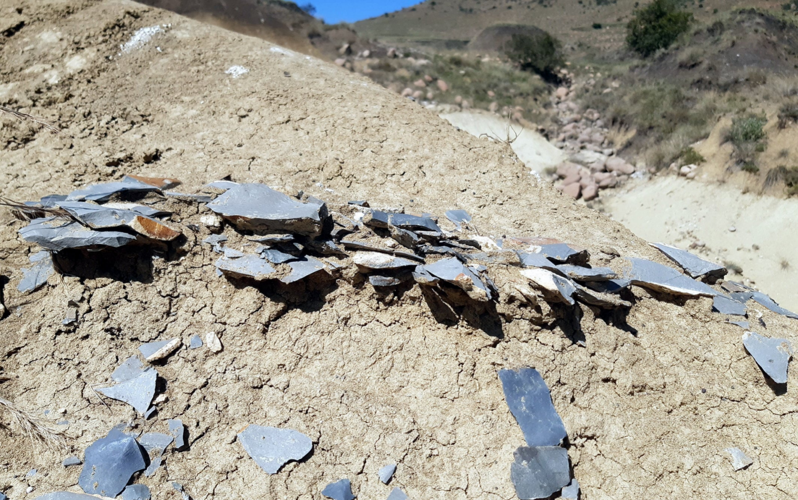
Dr. Manuel Will, from the University of Tübingen, said: “At Jojosi, we found numerous traces of the quarrying of hornfels - a metamorphic shale - including blocks that were tested for their quality, flakes of various sizes, thousands of millimeter-sized pieces of production waste and hammerstones."
He explained that hornfels is a fine-grained rock that was often used to produce tools in the Stone Age.
Will said: “People worked cobbles on site here and knapped the material until they had achieved the desired shape from the rock – probably to make tools from it later.”

(Gunther H. D. Möller via SWNS)
He says the team almost exclusively found "production waste" at the site.
Will said the absence of both the end products and other traces of activity and settlement indicate that the people of Stone Age Jojosi were "solely and deliberately" seeking to extract the coveted raw material.
He says they were quarrying for tens of thousands of years, at least until 110,000 BC, as can be seen from the luminescence dating of the finds.






Given its great age and long period of use, the researchers say Jojosi provides new evidence about the lifestyles of early Homo sapiens - indicating that they planned the long-term acquisition of resources much earlier than previously thought.
The Jojosi excavation site lies in grasslands in eastern South Africa, around 85 miles from the Indian Ocean coast.
Geological processes during the Pleistocene period formed a landscape characterized by erosional gullies, also exposing large hornfels layers.
A team headed by Will has been studying the geology and archaeology of the landscape since 2022.
He said: “On our very first visits, both on foot and using drones, we discovered about a dozen sites where perfectly-preserved, unweathered hornfels flakes were visible in eroded sediment – an absolute rarity for an open-air site."

(Gunther H. D. Möller via SWNS)
During their excavations, the research team sieved sediment to retain even the smallest fragment.
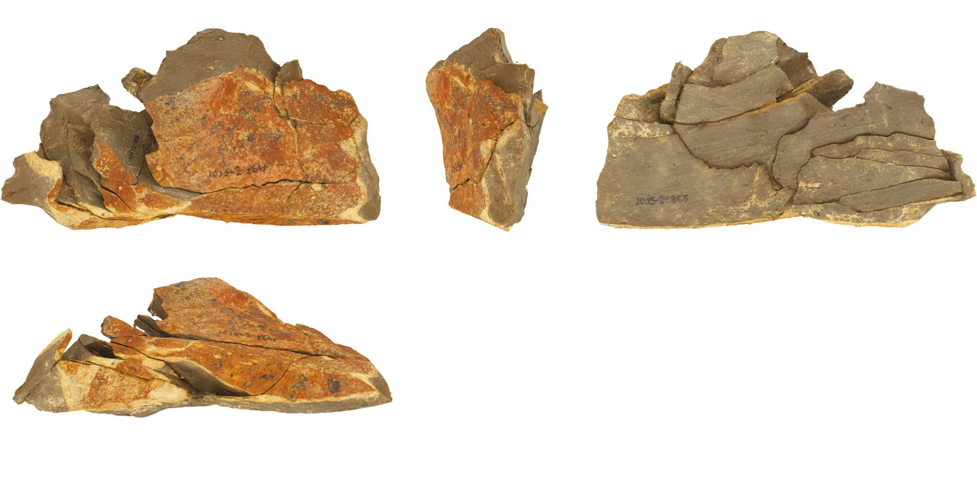
Gunther Möller, a PhD student at the University of Tübingen, successfully assembled 353 of the left-behind pieces into "refits."
He said: “With these 3D puzzles, we were able to see precisely where and how material was chipped off and in what order.
"Several of these puzzles together then allow us to draw conclusions about the form of the actual end product, before it was taken to another place."
Professor Karla Pollmann, president of the University of Tübingen, added: “The finds from Jojosi reveal a rare, clear view of the early roots of humanity’s ability to plan.
"They show that the ability to select resources deliberately and organize activities stretches across generations."
(0) comments
Welcome to the discussion.
Log In
Keep it Clean. Please avoid obscene, vulgar, lewd, racist or sexually-oriented language.
PLEASE TURN OFF YOUR CAPS LOCK.
Don't Threaten. Threats of harming another person will not be tolerated.
Be Truthful. Don't knowingly lie about anyone or anything.
Be Nice. No racism, sexism or any sort of -ism that is degrading to another person.
Be Proactive. Use the 'Report' link on each comment to let us know of abusive posts.
Share with Us. We'd love to hear eyewitness accounts, the history behind an article.