


(Photo by Luiza Braun via Unsplash)
Two in five moms of little ones feel like parenting is a job that the day is simply too short for, according to new research.
The survey of 2,000 mothers who are currently breastfeeding or have done so within the past five years examined where the time goes in those early years of parenting.
Results found that 39% feel like there’s never enough time in their day to accomplish all of their parenting responsibilities, with moms who are currently breastfeeding especially feeling this way (43% vs. 37%).
While the average day includes four hours spent playing or snuggling with their baby, another two hours are allotted to changing diapers, and two more for bedtime routines and soothing their child.
Above all, feeding takes up the most time: From breastfeeding to starting solids, the average mom spends over 91 full days feeding their baby over the course of a year.
Commissioned by Momcozy and conducted by Talker Research for National Breastfeeding Month in August, the survey found that the average mom spent three hours a day breastfeeding during the first year, with 28% spending upward of five hours on this.
Nursing, itself, takes up most of this time (33%), but pumping also consumes nearly a quarter of their breastfeeding time (22%).
Moms also had to allocate time for cleaning their equipment (16%), storing and packaging milk (15%) and planning feeding times (14%).
This adds up to over 23 hours per week, or nearly 100 hours per month.
Breastfeeding was also noted as one of the most challenging aspects of being a new mom (40%), only surpassed by the lack of sleep (47%).
Other challenging aspects included bedtime routines (32%), knowing what’s best for their baby (26%) and making sure they’re providing the best environment (26%).

(Talker Research)
“These findings reflect what we hear from families every day,” said Melissa Kotlen, International Board Certified Lactation Consultant and Clinical Manager of Momcozy. “While breastfeeding is often described as natural, that doesn't mean it comes naturally. It requires an incredible investment of time, energy and emotional resilience, especially during the first year.






“When challenges arise, many mothers feel like they're falling short, when in reality they're experiencing something that's incredibly common. Every feeding journey is different, and access to timely, trusted support can help mothers feel more informed, more confident and better able to make the choices that are right for themselves and their families.”
Although time-consuming, moms had a vision: the average mom surveyed planned to breastfeed for 10 months.
However, this goal didn’t pan out for 28% of those surveyed who are past breastfeeding — for those who didn’t meet their goal, the average mom only breastfed for about five months.
More than half of moms surveyed identify with a “go with the flow” parenting style (53%), but 40% set strict, specific parenting goals even before their baby was born.
Part of these goals included choosing to breastfeed for their baby’s health (56%) and to bond with them (43%).
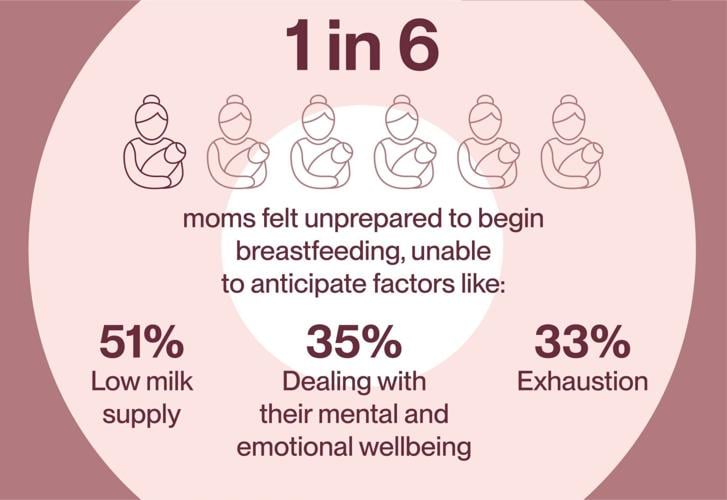
But as much as they had a plan in mind, one in six felt unprepared to begin breastfeeding.
For many, the factors that they couldn’t anticipate were low milk supply (51%), dealing with their mental and emotional wellbeing (35%) and exhaustion (33%).
This left more than half of these respondents feeling disappointed at not being able to meet their breastfeeding goals (53%).
First-time moms especially experienced this feeling (61%), but half of seasoned moms also can’t shake the disappointment of not being able to meet these goals.
At the end of it all, three-quarters of women surveyed expressed feeling exhausted by their breastfeeding journey (73%), having to overcome barriers like sore nipples (48%), physical exhaustion (39%) and baby latching (33%).
Moms expressed the weight of carrying this, wishing they had more support from their partner for other household responsibilities (49%) and to support them more emotionally and mentally (46%).
“Breastfeeding places much of the physical demand on mothers, but they should not have to manage every part of the experience alone,” said Kotlen. “It's encouraging to see that many mothers are using practical tools like breast pumps (51%), nursing bras (37%) and nursing pillows (31%) to help navigate the everyday demands of feeding, from improving comfort and flexibility to making routines more manageable.
“While products can ease some of the daily challenges, they're most impactful when paired with the right support system. Whether that's a partner sharing responsibilities, guidance from a lactation consultant or simply having someone to reassure you that what you're experiencing is normal, every mother deserves to feel supported throughout her feeding journey.”
Research methodology:
Talker Research surveyed 2,000 mothers who are currently breastfeeding or have within the past five years, who have access to the internet; the survey was commissioned by Momcozy and administered and conducted online by Talker Research between July 1 and July 9, 2026. A link to the questionnaire can be found here.
To view the complete methodology as part of AAPOR’s Transparency Initiative, please visit the Talker Research Process and Methodology page.

(0) comments
Welcome to the discussion.
Log In
Keep it Clean. Please avoid obscene, vulgar, lewd, racist or sexually-oriented language.
PLEASE TURN OFF YOUR CAPS LOCK.
Don't Threaten. Threats of harming another person will not be tolerated.
Be Truthful. Don't knowingly lie about anyone or anything.
Be Nice. No racism, sexism or any sort of -ism that is degrading to another person.
Be Proactive. Use the 'Report' link on each comment to let us know of abusive posts.
Share with Us. We'd love to hear eyewitness accounts, the history behind an article.