Spring planting season arrives with a new kind of garden prep as home gardeners test drip lines, install app-linked controllers and add moisture sensors before beds and containers fill. The rush is practical due to extension guidance placing spring irrigation checks early in the seasonal list, when leaks, clogs and incorrect settings are still easier and cheaper to fix. What once looked like extra equipment is becoming part of basic spring preparation for many home gardens.
This post may contain affiliate link(s). As an Amazon Associate, I earn from qualifying purchases. See Disclosures.
Tech-driven gardening draws more interest as residential outdoor water use in the United States reaches nearly 8 billion gallons a day, mainly for landscape irrigation, according to the U.S. Environmental Protection Agency. The scale of that water use is one reason households seek tools that reduce waste and make irrigation easier to manage. For many, the value lies less in convenience than in avoiding overwatering that raises bills and leaves plants in soil wetter than they need.
Water waste raises the stakes
EPA estimates that up to 50% of residential outdoor water use can be wasted due to overwatering and inefficient systems. The agency also reports that replacing a standard clock-based controller with a WaterSense-labeled irrigation controller can save up to 15,000 gallons of water per year.
Utilities also have a direct interest in the category, as EPA’s WaterSense rebate finder says many WaterSense partners offer rebates for labeled products and water-conservation services. EPA’s guidance on controllers notes that some utilities run rebate programs aimed at smarter outdoor watering.
Buying the device, however, is only part of the job. Soil-moisture sensor systems must be installed in representative soil and calibrated correctly, so the sensor can bypass scheduled watering when rainfall or existing soil moisture already meets plant needs.
March is the setup window
March often serves as the natural setup month for irrigation systems because spring startup comes just ahead of planting and regular watering, making it the easiest time to catch problems before they waste water or weaken early growth. Gardeners should inspect irrigation systems as the season begins, check for winter damage and test drip lines before planting starts.






UC Marin Master Gardeners says drip lines should be checked as soon as the system is turned on in spring, since blocked lines, plugged emitters, pinched feeder lines and low-pressure issues are common trouble spots. Walking the line while it runs can also reveal weak flow, hidden leaks and emitters that are not delivering enough water.
Everyday tools widen the market
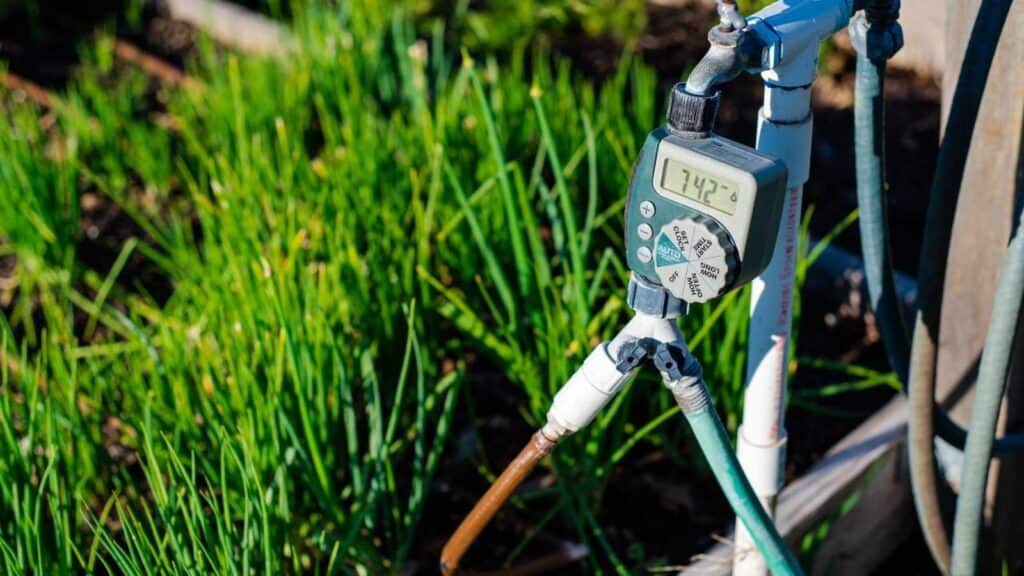
In most yards, tech-driven gardening means modest equipment rather than elaborate backyard automation. The product list is familiar: weather-based controllers, soil-moisture sensors, hose timers and rain shutoff devices that can often be added to existing systems. Garden Media Group’s 2026 garden industry report lists precision gardening among its main categories for the year and describes it as using data and technology to reduce waste and improve resilience.
University guidance describes the same equipment in practical terms, as the University of California says smart irrigation controllers adjust watering schedules using weather, soil moisture and evapotranspiration to reduce overwatering and keep moisture closer to what plants need. In home systems, that may mean replacing the controller or adding a sensor to an existing timer, while rain shutoff devices offer a lower-cost upgrade for households that want better control without changing the entire setup.
For many households, the most useful garden technology fits easily into spring prep, with gardeners still hand-watering containers and using drip irrigation in vegetable beds while a weather-based or soil-moisture-based controller manages parts of the yard most prone to overwatering. These controllers use weather or soil data to keep moisture more consistent without adding much complexity.
Tech-driven gardening enters spring routines
Better watering decisions now play a role in starting a garden, especially when tech-driven tools help households avoid small errors that turn into higher bills, stressed plants and midseason repairs. Spring success depends not only on what gets planted but also on whether watering is set up to hold steady once heat and dry weather arrive.
Mandy writes about food, home and the kind of everyday life that feels anything but ordinary. She has traveled extensively, and those experiences have shaped everything, from comforting meals to small lifestyle upgrades that make a big difference. You’ll find all her favorite recipes over at Hungry Cooks Kitchen.
The post Tech-driven gardening moves into the mainstream appeared first on Food Drink Life.



(0) comments
Welcome to the discussion.
Log In
Keep it Clean. Please avoid obscene, vulgar, lewd, racist or sexually-oriented language.
PLEASE TURN OFF YOUR CAPS LOCK.
Don't Threaten. Threats of harming another person will not be tolerated.
Be Truthful. Don't knowingly lie about anyone or anything.
Be Nice. No racism, sexism or any sort of -ism that is degrading to another person.
Be Proactive. Use the 'Report' link on each comment to let us know of abusive posts.
Share with Us. We'd love to hear eyewitness accounts, the history behind an article.