For years, a chrome finish was the default answer for anyone who wanted a kitchen or bathroom to look pulled together. That premise is losing ground to brass and nickel, which behave, age and sit differently in a room. What changed is not the metals but what designers decided a finished space should feel like.
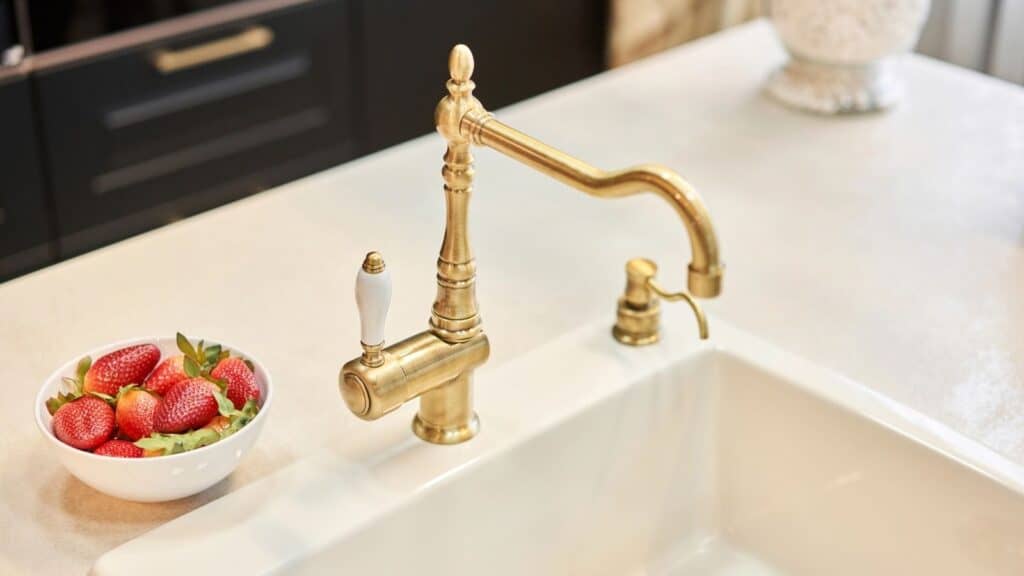
Hardware, lighting and fixtures do more of the visual work, and even small changes can affect how a room feels. Spring 2026 trend coverage from Homes & Gardens highlights brass and nickel among the finishes drawing attention this year, indicating a broader move toward interiors that feel less stark and more layered.
The move beyond all-matching finishes
Designers say chrome still has a place, particularly in modern fixtures and more affordable options, but it is less often used as the only finish in a room. Kitchens and bathrooms that once relied on matching faucets, handles and lighting are now built around contrast, with multiple metals appearing side by side.
Instead of aiming for a perfect match, designers are layering materials to create balance. Designers at Pamela Lynn Interiors describe mixing metals as a deliberate choice, not a mistake, with different finishes used to define areas within the same space.
Brass and nickel offer a softer alternative to chrome
Part of the appeal comes down to how these finishes interact with light. Chrome reflects sharply and can feel stark, especially in spaces dominated by hard surfaces. Brass and nickel soften that effect, which helps explain why they are being highlighted in current trend coverage.
Brass introduces warmth, particularly in non-highly polished finishes, while brushed nickel reduces reflectivity without losing a clean, finished look. That combination aligns with the broader direction noted in Homes & Gardens, where materials that reduce glare and add depth are gaining attention.
Where designers introduce these finishes
Designers are not approaching this as a full reset and instead working through smaller elements that carry visual weight. Cabinet hardware is often the starting point, since it repeats across a space and is relatively easy to change. Lighting fixtures tend to follow, acting as focal points that set the tone of a room. Mirrors and plumbing fixtures also come into play, especially in bathrooms where finishes are closely grouped. Designers at Pamela Lynn Interiors refer to these elements as natural places to layer finishes without reworking larger surfaces.
Mixing metals requires structure
Designers emphasize that mixing metals works best when it follows a plan. The most common approach limits a space to two primary finishes, allowing each to appear more than once so the mix feels intentional.
One finish usually sets the tone of the room, appearing in larger or more dominant elements, and a second finish introduces contrast, often through hardware or lighting. Repetition is what holds the look together. Without it, the mix can feel scattered. This approach mirrors Pamela Lynn Interiors’ guidance, which frames mixed metals as structured rather than random.






Brass and nickel behave differently over time
Brass starts with geology before it becomes a finish. The alloy combines copper and zinc, and that composition affects how it reacts when exposed to air, moisture and handling. The key distinction is whether the surface is sealed, as many brass fixtures are coated with a clear lacquer that preserves a consistent color.
Unlacquered brass is left exposed, allowing it to react with its environment, and over time, it darkens and develops patina, a surface change caused by oxidation rather than wear. Manufacturer guidance from Kohler notes that unlacquered brass can change toward brown or gray-green tones as it ages.
Brushed nickel finishes behave differently, typically sealed and designed to remain stable, making them easier to use across larger areas without visible change. The contrast is both practical and visual. Brass evolves, while nickel is chosen for consistency.
Warm metals are being paired with natural materials
These finishes are also being used alongside materials that soften the overall look of a space. Stone and wood appear frequently in the same environments, with surfaces such as travertine and limestone paired with brass and nickel to reduce contrast. This pairing supports the broader direction outlined in Homes & Gardens, where natural materials and warmer finishes are used together to create more balanced interiors. Matte textures and wood tones help absorb light, allowing metal finishes to integrate rather than dominate.
Where the look can fall apart
Designers say the approach loses its impact when too many finishes are introduced without repetition. A mix that appears only once in each finish can feel disconnected rather than cohesive.
At the same time, matching every finish removes the contrast that makes the approach work. Highly polished metals can also push a space back toward a more reflective look, especially when used across multiple elements. Designers at Pamela Lynn Interiors emphasize limiting the palette and repeating finishes to maintain cohesion.
A shift in how finishes are used
For designers, the focus on brass and nickel is less about replacing chrome and more about how finishes work together. The change is most evident in smaller elements, where combinations of materials can reshape a space without requiring a full redesign. Handles, fixtures and lighting now carry more visual weight, giving designers flexibility to adjust tone and contrast through details rather than large-scale changes.
Mandy writes about food, home and the kind of everyday life that feels anything but ordinary. She has traveled extensively, and those experiences have shaped everything, from comforting meals to small lifestyle upgrades that make a big difference. You’ll find all her favorite recipes over at Hungry Cooks Kitchen.
The post The chrome era cools as designers turn to these metals for 2026 appeared first on Food Drink Life.

(0) comments
Welcome to the discussion.
Log In
Keep it Clean. Please avoid obscene, vulgar, lewd, racist or sexually-oriented language.
PLEASE TURN OFF YOUR CAPS LOCK.
Don't Threaten. Threats of harming another person will not be tolerated.
Be Truthful. Don't knowingly lie about anyone or anything.
Be Nice. No racism, sexism or any sort of -ism that is degrading to another person.
Be Proactive. Use the 'Report' link on each comment to let us know of abusive posts.
Share with Us. We'd love to hear eyewitness accounts, the history behind an article.