For the tens of millions of Americans who work remotely on any given weekday, every day qualifies as a work-from-home day. This year’s National Work From Home Day raises the question of what workers did with the extra time working from home created.
Remote work has always been about the hours that open up when the commute disappears. A long-term analysis of American time-use data found that when the commute disappears, workers consistently reallocate that time to sleep, cooking, exercise and family. Where that time went says more about remote work than any return-to-office mandate does.
An hour back means sleeping past the alarm
Seven in 10 remote workers report lower stress since stepping back from full-time office schedules. That number is not mainly about better management or quieter workspaces. It is about what happens when the commute disappears from the start of the day.
Workers who no longer have to drag themselves onto a train or into traffic get more sleep, and the difference shows up by noon. Better sleep is directly linked to lower stress, sharper focus and fewer sick days. None of that registers in a productivity dashboard, but all of it shapes what a workday actually feels like from the inside.
The kitchen gets reclaimed along with the clock
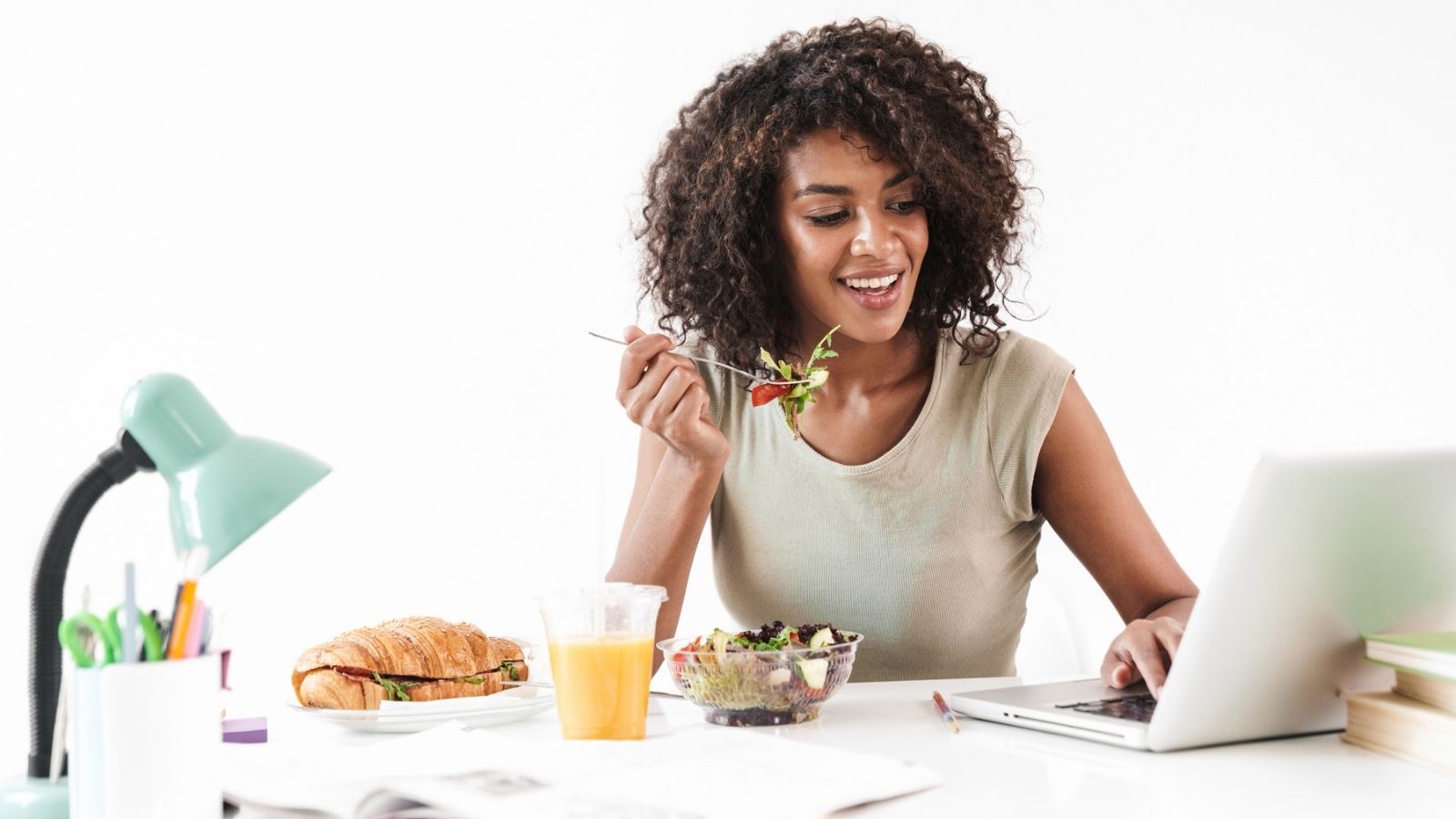
Gone too is the desk lunch, traded for an actual meal made in an actual kitchen, with time to sit down and eat it. When asked, 71% of Americans say they find cooking more stress-relieving than stressful, and 83% say eating with others is better for their mental health.
Remote workers don’t just eat at home by default, but make more deliberate use of their kitchens. Among people who planned to increase the amount of time they spent in the kitchen, 81% cited health as a reason for doing so. The home kitchen was always there, but what changed was having the hour to use it.
Movement fits where commuting used to






The commute was also the only walking some people did in a day. Remove it and that time does not automatically go to exercise, but the opportunity opens. The same analysis of American time-use data found that exercise time increased for remote workers on their remote days compared with workers required on-site full-time, a pattern that held post-pandemic. The midday walk, the workout between calls, the run that used to require a 5 a.m. alarm when a 7 a.m. train had to be caught; those are not aspirational anymore. They are on Tuesday afternoon.
The people at home got more of the day
More than 6 in 10 remote workers say they now have more room for family and personal pursuits, a figure that holds across age groups and genders, according to the same remote work well-being survey. It is the most concrete measure of what reclaimed time actually does in a person’s life: not productivity metrics, not output scores, but time.
That extra time often appears in ordinary moments that are easy to overlook. A child gets a parent home before dinner, an aging parent gets the check-in call that used to fall through the cracks, and a partner does not have to handle everything alone because someone is available at 3 p.m. The hour that once went to a highway goes there instead.
What a good day at home actually costs
National Work From Home Day is not a celebration of pajamas and Zoom calls. It is a celebration for what working from home actually makes possible: the meal that did not get skipped, the walk that actually happened, the hour that went back to the people and the pursuits that make a life outside of work.
The return-to-office debate has spent years arguing over desks and productivity metrics. The people who live this reality every day are often focused on something simpler. They know what the data confirms: the best hours of the workday are the ones that used to disappear before it even started.
Jennifer Allen is a retired chef turned traveler, cookbook author and nationally syndicated journalist; she’s also a co-founder of Food Drink Life, where she shares expert travel tips, cruise insights and luxury destination guides. A recognized cruise expert with a deep passion for high-end experiences and off-the-beaten-path destinations, Jennifer explores the world with curiosity, depth and a storyteller’s perspective. Her articles are regularly featured on the Associated Press Wire, The Washington Post, Seattle Times, MSN and more.
The post While bosses debate office mandates, remote workers are sleeping better and actually eating lunch appeared first on Food Drink Life.

(0) comments
Welcome to the discussion.
Log In
Keep it Clean. Please avoid obscene, vulgar, lewd, racist or sexually-oriented language.
PLEASE TURN OFF YOUR CAPS LOCK.
Don't Threaten. Threats of harming another person will not be tolerated.
Be Truthful. Don't knowingly lie about anyone or anything.
Be Nice. No racism, sexism or any sort of -ism that is degrading to another person.
Be Proactive. Use the 'Report' link on each comment to let us know of abusive posts.
Share with Us. We'd love to hear eyewitness accounts, the history behind an article.