A friend wrote in response to an article we both read on returning to faith communities in the midst of religious conflicts (“We need a truce in our wars over religion. Here’s a glimmer of hope,” E.J. Dionne, Washington Post, Sept. 11, 2023).
My friend was troubled by a nagging question: “What’s the difference between the church and the Kiwanis club?” My initial response was trying to be funny: “Maybe the best way to frame it is: Do-you-wanna-club?” Growing more serious, I continued: “If people are seeking a community, with meaning and purpose, social engagement, intellectual growth, etc, maybe it doesn't matter what it's called?
Is the "God part" essential? Dionne seems to suggest that's not the point, it's about connection.” Yet, I agree with my friend; it can be uncomfortable to ask these questions, wondering what it is that people are seeking in some kind of association or assembly.
It was encouraging to read this opening line from Dionne, a liberal Catholic: “When it comes to religion — one of the most divisive topics in U.S. politics — there are glimmers of hope for a better conversation.” He presents a well-known argument for why our culture, or any culture, needs religion: “Over the past several months, an old truth has become new again: Houses of worship and other religious institutions play an essential role in promoting social connectedness, mutual aid and community building.” I don’t really have a serious problem with that way of framing the “role” religion often plays, yet I do have issues with the direction it takes. And it somewhat relates to the unsettling question raised by my friend.
How “essential” is religion, or religious faith, in our communities, our culture, our world? There’s no denying the elements highlighted by the article: connection, helping others, building community. And calling attention to loneliness and disconnection in society makes sense. Then, Dionne states: “With religious disaffiliation soaring, especially among younger Americans, there is reason to worry that secular alternatives to religious civil society are not growing fast enough to fill the void. Even if secular social spaces proliferate, a society suffering from disconnection can ill afford to lose any of its community-building capacity.” Yes, “faith-based groups do that sort of work,” but as the article also notes, while religion can be a positive force and a unifier, it can also be divisive and ideological, seeking political power or, at the extreme, ethnic dominance. Dionne is heartened to see: “Many secular people and progressives are lifting up religion’s socially constructive role.”






As Dionne recognizes (referring to Perry Bacon’s perceptive article: “I left the church — and now long for a ‘church for the nones’,” WaPo, August 21, 2023), secular alternatives haven’t matured enough to attract those who no longer find the church (or synagogue or mosque) providing what they seek. Though he doesn’t mention it, secular-centered groups such as Oasis, Sunday Assembly, Humanistic Judaism or Ethical Humanists offer many of the elements traditional congregations have provided. These aren’t large or greatly impactful at this time, but have great potential for growth. Point is, there are alternatives, and why not create more?
E.J. Dionne concludes with a challenge for seculars like myself: “Nonetheless, critics of religion who rightly preach the value of open-mindedness should apply that virtue in their approach to people of faith and the institutions they build. Doing so won’t work miracles. But it might help us recognize that the path to truth and to a less fractious society often takes unexpected turns.”
My thoughtful friend responded to the question: “Is the God part essential?” with a further question and a common sense thought: “Don't most people attend church for the community? The God and Jesus part is secondary.” That certainly seems reasonable, though many would argue God is first and foremost for them. People will always desire to gather with likeminded folks, to pray and sing together. I would say, what is “essential” is People Together, rather than a particular belief (unless the “belief” is that people need to be together!).
Hearing from my old friend reminded me we both share a history with faith; now we have a tentative relationship with church, and Sunday morning is no longer reserved for pew-sitting. Though he remains a believer, his beliefs don’t blind him from some of the same issues I have with Christian faith and practice. I think the call to “open-mindedness,” and a willingness to take some of those “unexpected turns” when it comes to the future of faith, is a point of convergence for those of us on whichever side of these matters. Perhaps the most essential role we can play is to take the challenge to seek the bumpy path of truth, and be less “clubby” and less divided.
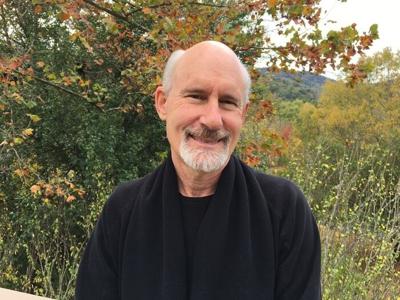
Chris Highland was a Protestant minister and interfaith chaplain for many years before becoming a humanist celebrant and author of many books. He lives in Asheville, North Carolina. His website is www.chighland.com.
(0) comments
Welcome to the discussion.
Log In
Keep it Clean. Please avoid obscene, vulgar, lewd, racist or sexually-oriented language.
PLEASE TURN OFF YOUR CAPS LOCK.
Don't Threaten. Threats of harming another person will not be tolerated.
Be Truthful. Don't knowingly lie about anyone or anything.
Be Nice. No racism, sexism or any sort of -ism that is degrading to another person.
Be Proactive. Use the 'Report' link on each comment to let us know of abusive posts.
Share with Us. We'd love to hear eyewitness accounts, the history behind an article.