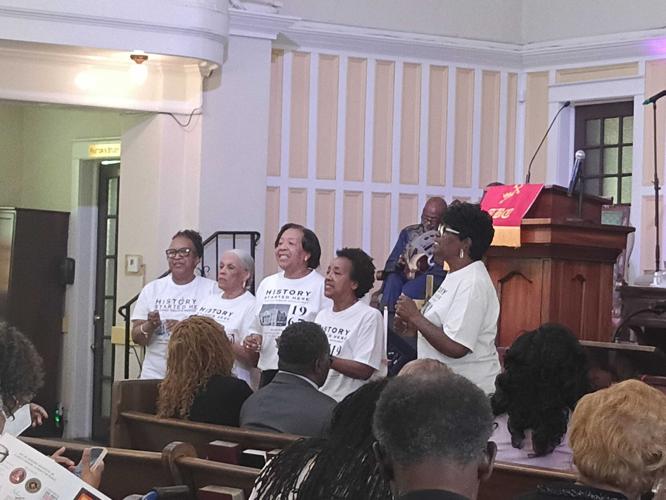
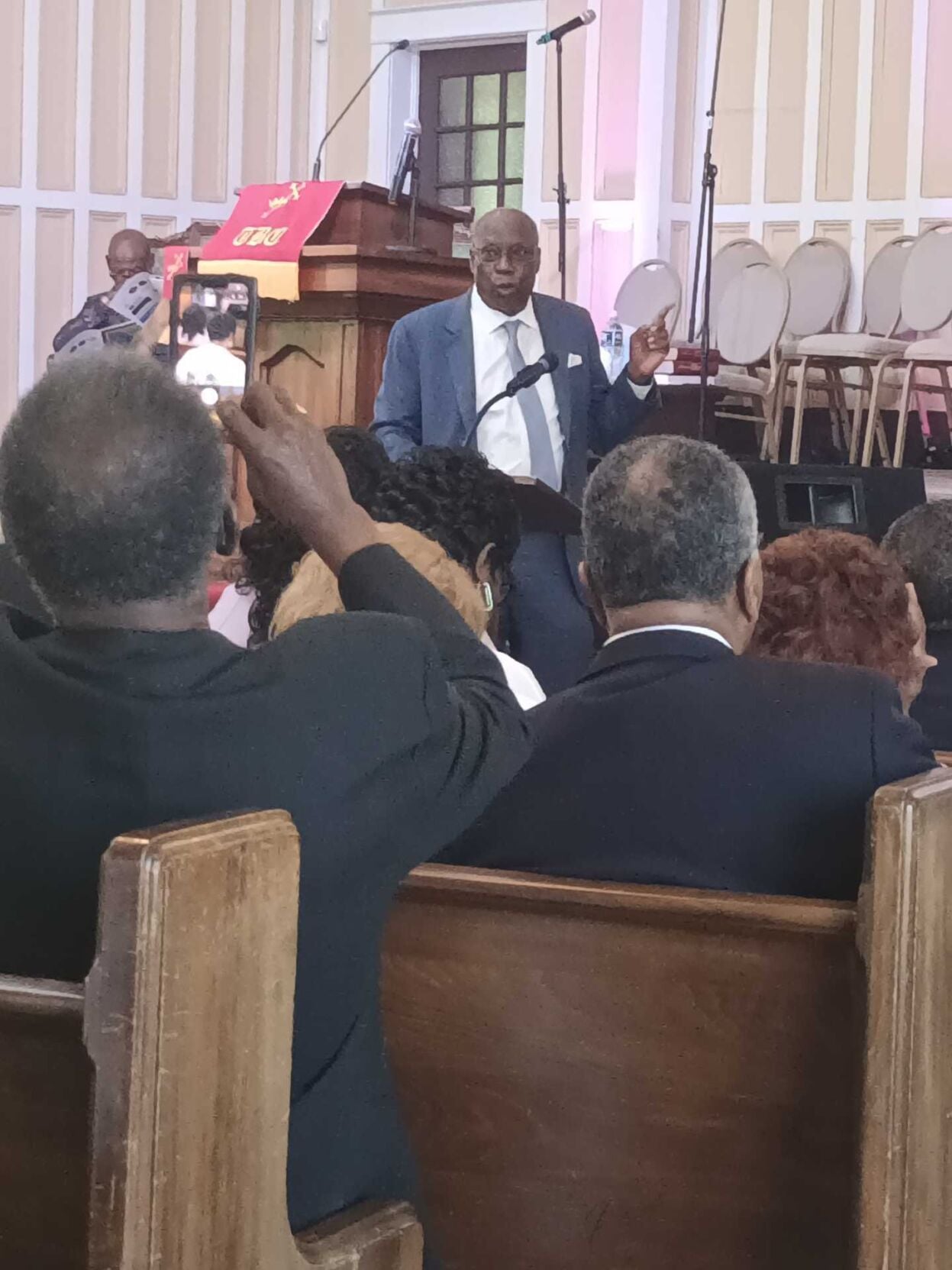

Civil rights leaders, former foot soldiers and community members gathered Wednesday at Tabernacle Baptist Church to honor the life and legacy of Bernard Lafayette Jr., a key organizer in the 1960s voting rights movement who died March 5.
The tribute service also marked the 63rd observance of the first mass meeting of Selma’s voting rights movement, held May 14, 1963.
The program opened with performances by the Selma Foot Soldiers Singers, a group made up of veterans of the Civil Rights Movement who participated in demonstrations and organizing efforts through the Student Nonviolent Coordinating Committee and the Southern Christian Leadership Conference.
Remarks honoring Lafayette were delivered by Selma Mayor Johnny “Skip” Moss III, a representative from the office of Terri Sewell and several people who knew Lafayette personally.
Reginald “Reggie” Moore shared memories of meeting Lafayette as a 9-year-old in 1963 while living just a few houses away from him in Selma.
Reginald “Reggie” Moore stood to say he had lived a few paces from Lafayette grew to know and love the man since he was 9 years old in 1963.
Attorney Charles Bonner, who said he was organized directly into the movement by Lafayette, spoke about the history of SNCC and the dangers organizers faced while canvassing for voter registration in Selma during the early 1960s.





Bonner talked about how hard it was to canvass in Selma in the early 1960s and recalled that many Black residents were initially afraid to register to vote or even speak with SNCC organizers. He said the movement grew over time as more students and local residents joined voter registration efforts, including groups of domestic workers who organized together to register.
He also reflected on the violence civil rights workers faced during the movement, including attempts on Lafayette’s life.
Bonner added that unity formed during the Civil Rights Movement and solidarity among people of different races helped the nation overcome injustice and paved the way for future generations of political participation. Their marching in the 60s led to the election of a Black man as president of the United States, he added.
The program also included presentations on nonviolence principles from Ainka Jackson, reflections from former Selma student movement president Charles Mauldin and a memorial tribute from former state Sen. Hank Sanders.
The service ended with additional songs from the Civil Rights Movement and an original musical score honoring Lafayette’s legacy.
The program’s tribute ended with these words:
“Rev. Dr. Lafayette’s witness reminds us that love is stronger than hate, that nonviolence is stronger than fear, and that the arc of the moral universe, though long, bends towards justice. He will be loved and remembered, especially in Selma.”

(0) comments
Welcome to the discussion.
Log In
Keep it Clean. Please avoid obscene, vulgar, lewd, racist or sexually-oriented language.
PLEASE TURN OFF YOUR CAPS LOCK.
Don't Threaten. Threats of harming another person will not be tolerated.
Be Truthful. Don't knowingly lie about anyone or anything.
Be Nice. No racism, sexism or any sort of -ism that is degrading to another person.
Be Proactive. Use the 'Report' link on each comment to let us know of abusive posts.
Share with Us. We'd love to hear eyewitness accounts, the history behind an article.