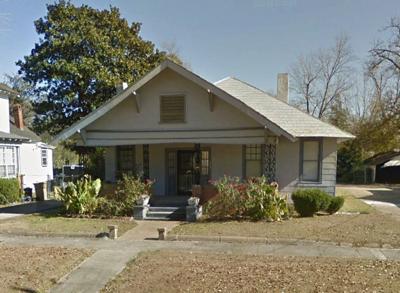

A home in Selma where Rev. Martin Luther King and other civil rights leaders planned the Selma to Montgomery marches will be dismantled and reassembled at a civil rights museum in Michigan, the Associated Press reported.
The Jackson House, owned by dentist Sullivan Jackson and his wife, Richie Jean, will be part of a history museum in Dearborn, Michigan. The project is expected to take up to three years. The home was sold to the Henry Ford Museum by Jawana Jackson, who now lives in Pensacola, for an undisclosed price, the AP said.
King was inside the home when President Lyndon Johnson announced a bill that would become the Voting Rights Act of 1965. The house and artifacts, including King’s neckties and pajamas, and the chair where he sat while watching Johnson’s televised announcement, will be part of the acquisition by The Henry Ford.
The home will be part of Greenfield Village where more than 80 historic structures are displayed and maintained at the Henry Ford Museum. The Jackson House will be rebuilt there, joining the courthouse where Abraham Lincoln first practiced law, the laboratory where Thomas Edison perfected the light bulb, and the home and workshop where Orville and Wilbur Wright invented their first airplane, the AP reported.
(0) comments
Welcome to the discussion.
Log In
Keep it Clean. Please avoid obscene, vulgar, lewd, racist or sexually-oriented language.
PLEASE TURN OFF YOUR CAPS LOCK.
Don't Threaten. Threats of harming another person will not be tolerated.
Be Truthful. Don't knowingly lie about anyone or anything.
Be Nice. No racism, sexism or any sort of -ism that is degrading to another person.
Be Proactive. Use the 'Report' link on each comment to let us know of abusive posts.
Share with Us. We'd love to hear eyewitness accounts, the history behind an article.