
MONTGOMERY, Ala. – A Senate committee will on Tuesday consider an update to how the state distributes online sales tax revenues to municipalities and counties.
The Simplified Sellers Use Tax was established about a decade ago to collect a flat 8% on online purchases from distributors without a physical presence in Alabama. Half of revenue from SSUT goes to the state, 30% to cities and 20% to counties, based on population.
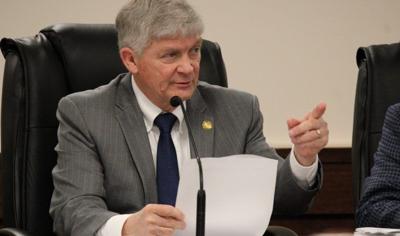
Under Sen. Greg Albritton’s Senate Bill 347, the state would gather population data from the U.S. Census Bureau Population and Housing Estimates Program every five years beginning in 2027, instead of every 10 years from the census.
Albritton, R-Range, said the idea for the bill came out of a meeting he had last week with groups representing cities, municipalities, counties and education.
The City of Tuscaloosa and other municipalities previously brought a lawsuit over the state’s collection and distribution of sales tax revenue from online purchases, arguing they lose money on the current tax structure compared to traditional sales taxes applied to in-person purchases.
The cities voluntarily dropped the lawsuit in mid-February, instead hoping to find a solution in the Legislature.
Though they haven’t landed on a more sweeping overhaul of SSUT, Albritton said the population data source was a small change everyone could agree on. Albritton said this bill doesn’t solve all the issues but is a step forward in building trust between interested parties.
“Looking at the calendar where we were legislatively and looking at what we were trying to accomplish, my position was we need to prove to each other, one, that we could trust each other, and, two, that we’re telling the public that we’re actually trying to resolve a sticky situation,” Albritton said.
Richard Rush, government relations and external affairs for the city of Tuscaloosa, said the bill moves Alabama toward a more accurate distribution model for SSUT.
“Senator Albritton’s bill is a positive step forward and reflects progress toward a constructive partnership on this issue,” Rush told ADN. “While this is not a final resolution, it is an important part of the ongoing discussions and helps create a path for continued negotiations.”






Albritton and Sonny Brasfield, executive director of the Association of County Commissions of Alabama, agreed that it’s too early to know how municipalities might be impacted by more frequent population updates.
“This bill was pulled together quickly and is the outgrowth of talks that concluded only a couple of hours before the bill was introduced,” Brasfield told ADN. “In principle, the association does not oppose the use of more up-to-date census numbers to allocate tax proceeds. However, we are still analyzing the legislation’s impact at the local level. Each county and city is going to view this proposal through the prism of its individual revenue stream because SSUT is vital to local services all over the state.”
Albritton said he’s not yet sure where his colleagues in the Senate stand on the bill. He said he is “flexible” and wants to move the bill through as fast as the people and the legislative process allow.
Even if the bill passes, the time for a more serious overhaul of how SSUT works is waning quickly. There are 11 legislative days left in the 2026 session.
“While it only takes five legislative days to pass a bill, as I’ve told them numerous times, we don’t have a bill, nor do we have an agreement for a bill, so we got a ways to go,” Albritton said.
The bill is on the agenda for the Senate Finance and Taxation General Fund committee’s meeting at 12:30 p.m.
Albritton, the chair of the committee, will also introduce a revised draft of the 2027 General Fund budget on Tuesday. He said he expects the committee to vote on the budget during the meeting.
Gov. Kay Ivey in January sent lawmakers her proposed $3.69 billion General Fund budget. It calls for level funding of all state agencies’ operations and maintenance. It reflects a $28.5 million drop from the current year’s $3.71 billion budget.
General Fund revenues are expected to decline by 4.2% in fiscal 2027, which begins Oct. 1, 2026. So far in fiscal ’26, revenues are up .77%.

(0) comments
Welcome to the discussion.
Log In
Keep it Clean. Please avoid obscene, vulgar, lewd, racist or sexually-oriented language.
PLEASE TURN OFF YOUR CAPS LOCK.
Don't Threaten. Threats of harming another person will not be tolerated.
Be Truthful. Don't knowingly lie about anyone or anything.
Be Nice. No racism, sexism or any sort of -ism that is degrading to another person.
Be Proactive. Use the 'Report' link on each comment to let us know of abusive posts.
Share with Us. We'd love to hear eyewitness accounts, the history behind an article.