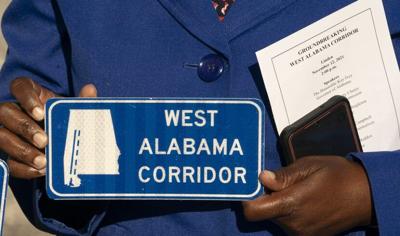
Frustrations over the financing of a major highway project in west Alabama are likely to seep into the upcoming legislative session as more State House leaders express concern and at least one is calling for more oversight for the transportation department.
The state recently borrowed $730 million to finish the West Alabama Corridor and will pay off the bonds over 20 years with revenue from the 2019 gas tax increase. Some lawmakers this month expressed frustration over the project being 100% state funded — most highway projects are an 80/20 federal and state split — and tying up a large slice of the gas tax revenue on one project through largely rural areas.
Concerns have now reached the Alabama Speaker of the House’s level.
“I think the thing it really bothered me about it — and of course, I get along with Gov. Ivey and we’ve had a really good working relationship and I certainly don’t have a problem with the corridor — but I think the method upon which it was funded was a mistake,” Speaker of the Nathaniel Ledbetter, R-Rainsville, told Alabama Daily News during a pre-session interview this week.
“I’m just really disappointed, really disappointed,” he said. “There’s a better way to do it.”
Ledbetter, a longtime Ivey ally, said he’s not one to publicly call people out and he’s not doing that now, but he has sought alternatives.
“From the speaker’s standpoint, if there was a way that we could stop it legislatively, or some other way, I would try to do it, but we’ve researched with our attorneys to see what we can do, and it’s really out of our court, unfortunately.”
The West Alabama Corridor project was announced by Gov. Kay Ivey in 2021 and has been a priority for her administration in her second full term in office. Four-laning most of U.S. Highway 43 and State Route 69 will create generational economic development opportunities and ease congestion on I-65, her administration has argued.
On Wednesday, Ivey spokeswoman Gina Maiola said the 2019 gas tax increase, called the Rebuild Alabama Act, makes hard but needed projects like the West Alabama Corridor possible.
“After Gov. Ivey championed the Rebuild Alabama Act in 2019, she identified this project, which was decades in the making, as a transportation priority project of hers,” Maiola said. “It was important to the governor, not only because she hails from rural west Alabama, but also because this project would breathe life into a region of the state that had not seen a major investment like this in decades. In unsurprising fashion, Gov. Ivey does not only say she is ‘for’ something, but found an actual way to make it happen.”
Last month, House Speaker Pro Tem Chris Pringle, R-Mobile, accused the Ivey administration of “maxing out the credit card” with the bond issue as her last term expires.
Now, he is bringing a bill to create a five-person State Transportation Commission to oversee the Alabama Department of Transportation and appoint its director. Currently, the ALDOT director is a governor’s appointee. Pringle, who has butted heads with ALDOT Director John Cooper in the past, previously sponsored the bill in 2020.
Pringle on Wednesday told ADN he’d like to see ALDOT managed like the Alabama Port Authority, which has a board appointed by the governor and approved by the Alabama Senate. It was created via legislation in 2000.
“Under a professional board, we now have the second-fastest growing port in the nation,” Pringle said.
Pringle said there is a need for more north-south corridors in the state, but like Ledbetter, he questions the method and cost. While he praises ALDOT for recent work it’s done to repair existing bridges in the state, he’s said there needs to be more continuity and long-term planning.
About Pringle’s suggestion, Ledbetter said there will likely be discussions on more checks and balances in the future.
“With the Legislature being the appropriators, I certainly think there should be oversight from the legislative body,” Ledbetter said.
Maiola said people of every part of Alabama elect the governor to set the transportation priorities.





“So, Gov. Ivey would certainly oppose any efforts by the Legislature to hinder future administrations’ ability to pursue infrastructure projects the people of Alabama elected them to do,” she said.
Passed in 2019 to improve road infrastructure around the state, the Rebuild Alabama Act raised the gas tax by 10 cents per gallon. Because it also allows for a 1-cent hike every two years based on the consumer price index, the increase is now up to 12 cents.
Total revenue collected has increased from about $203.8 million in 2020 to $405.8 million last year. The state receives 66.67% of the new revenue; counties get 25% and municipalities get 8.33%.
In 2025, the state had $173.9 million in gas tax revenue after meeting other infrastructure obligations outlined in the law.
The act allows for 50% of the state’s projected revenue from the tax increase to be committed to bond debt. That’s currently about $128 million. The Finance Department earlier this month said after the West Alabama Corridor Bond sale, it expected more than half of the bonding capacity to still be available for other projects.
“Claims that the governor is ‘maxing out the credit card’ and using up all the bonding authority is just absolutely false and wrong – only less than half of the bonding capacity is used here, leaving plenty of room for future projects,” Maiola said. “So, in other words, of the total ALDOT net of Rebuild revenues, slightly more than 75% remains in cash for projects, with the remainder going to bonding.
“Since 2019, all work on this project beginning with the Linden to Highway 80 stretch has been publicly noticed and approved by the Legislature. Thanks to Gov. Ivey, Rebuild Alabama has been transformative for the state bringing hundreds more road and bridge projects to all 67 counties and into the districts our legislators represent.”
The Rebuild Alabama legislation said ALDOT was to prioritize at least some new funds for “economic development road projects with priority given to projects in economically underserved areas of the state.”
That’s what is happening in west Alabama, said Sen. Gerald Allen, R-Tuscaloosa. He’s chairman of the Senate Transportation Committee.
“When you invest in communities like this project is, and all the infrastructure that is going to affect all these communities, that’s going to open opportunities and doors to be able to expand their economies,” Allen told ADN on Wednesday. “It is a huge investment, but it’s going to pay huge dividends for years and generations to come.”
Ledbetter does not dispute the need for the West Alabama Corridor project, just the urgency and method of paying for it. He said as much as $50 million a year could have been allocated toward it.
“And we could have done that repetitively till we got it done, but to borrow $730 million and it really doesn’t get any oversight through this legislative body, that’s kind of bothersome to me.”
Ledbetter estimates that by the time interest is paid on the bonds, the total amount will be more than $1 billion.
“And I’m not sure that will be enough to get it done,” he said.
Because the west Alabama project is design-build, an updated estimated final price tag on the multi-part project, some of which is already complete, hasn’t been available.
The 2026 legislative session begins Tuesday, Jan. 13.
This story is from alabamadailynews.com.
(0) comments
Welcome to the discussion.
Log In
Keep it Clean. Please avoid obscene, vulgar, lewd, racist or sexually-oriented language.
PLEASE TURN OFF YOUR CAPS LOCK.
Don't Threaten. Threats of harming another person will not be tolerated.
Be Truthful. Don't knowingly lie about anyone or anything.
Be Nice. No racism, sexism or any sort of -ism that is degrading to another person.
Be Proactive. Use the 'Report' link on each comment to let us know of abusive posts.
Share with Us. We'd love to hear eyewitness accounts, the history behind an article.