
In a reflective mood, I was having one of those uncomfortable conversations in my mind with a friend who takes the Bible very seriously.
He lives by the scriptures; in some ways they are the center of his life, though he would say Jesus is the true center. In this (imagined) conversation, I asked, “If you could summarize the whole Bible into a word, a thought, what would that be?” Knowing this person fairly well, I’m confident he would respond with something like: “Believe in Jesus” or “Have faith.”
“Faith, hope, love abide, and the greatest of these is love.” When the Apostle Paul wrote those famous words in his First Letter to the Corinthians, chapter 13, he presented a conundrum for the committed. He certainly wrote a lot about believing, about having faith in God. Yet, here in this verse, he reduces the focus of attention for the believer into something religion finds uncomfortably confusing.
Having faith is good; having hope is good; but there’s something even better: love. This has never been fully embraced by the Church. After all, how do you craft creeds, develop doctrines and tamper with theologies, when it all boils down to love? What happens to clergy, those who control the message, who determine what faith means, who interpret scriptures in a theological context? If love is the whole point, leadership wouldn’t take an advanced, seminary education to remind and encourage “followers” to live a loving life.
How would you summarize the life of Jesus? Was he born, did he live and die, for faith? Was his whole purpose to bring hope for a future life in heaven? Or was his life and central teaching to live a life of love? If so, what does that mean, and what does it mean for faith? What happened to that primary emphasis? What happens to the church, to the Bible, to beliefs about Jesus himself, when the story becomes all about loving? Has faith actually replaced love as the main message of the Christian religion? If so, what can be done about that?
What if the central teaching of a religion was love? Couldn’t anyone, of any faith or no faith, practice that? The First Letter of John proclaims: “God is Love.” Maybe someone who is living a life of lovingkindness and compassion is, in this view, living a “godly” life, whether they know it or not. We might even speculate that “God” is another name for the active practice of love, that “God” is not a person at all but an action.
Someone posted a playful meme showing a new Buddhist book that only had one word on each page. On one page was simply printed: “Inhale,” the other: “Exhale.” In my experience with Buddhist breathing meditation, that’s fairly accurate. As a Zen priest once told me: “It all circles back to the breath; keep returning to your breath.” Awareness of our breath invites us to be aware of the present, to be alive. Breath is the most intimate way to be called, to return, to what it means to “have life.”
Can a whole religious tradition be condensed into deep, mindful breathing, or a few words? If so, might that revolutionize the religious experience, since religious faith is presumably about experience, condensing faith into one’s life?
Is it possible that faith is not the primary instruction of the Bible, Jesus of Nazareth, or Christianity in general? As much as I dislike the Apostle Paul for his transformation of Jesus into a super-god and his replacement of Jesus’ teachings with theology and doctrine, he may have been onto something with the Corinthians 13 passage. Perhaps he was finally seeing that all the “spiritual practices,” all the made-up dogmas, and even all the scriptural commands and demands, mean little or nothing in the presence of Love. We might wish he would have stopped writing his “strict parent” patronizing letters full of “divine guidance” right here, right at “the greatest of these is love.” What a difference in the history of Christianity that would have caused.
Imagine what a radically different form of preaching could emerge from this renewed emphasis on love over faith. A preacher would not only tell current stories of living the loving life but would invite storytellers to write and read and perform new kinds of scriptures for today.
As some Christian mystics have said, the scriptures are being written now. Of course, that is considered heresy by those who want to protect their positions of power and piety, but isn’t it time to follow a more creative, free and open path that could be called religious, but doesn’t have to? As I’ve wondered for a long time, maybe “religion” is simply life, or love.
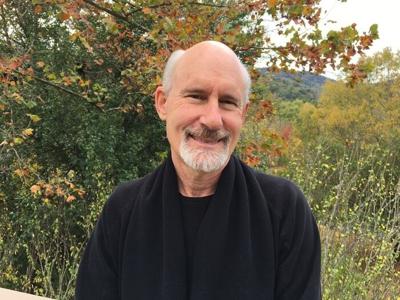
Chris was a Protestant minister and interfaith chaplain for many years before becoming a humanist celebrant and author of many books. He lives in Asheville, North Carolina. His website is www.chighland.com.



(0) comments
Welcome to the discussion.
Log In
Keep it Clean. Please avoid obscene, vulgar, lewd, racist or sexually-oriented language.
PLEASE TURN OFF YOUR CAPS LOCK.
Don't Threaten. Threats of harming another person will not be tolerated.
Be Truthful. Don't knowingly lie about anyone or anything.
Be Nice. No racism, sexism or any sort of -ism that is degrading to another person.
Be Proactive. Use the 'Report' link on each comment to let us know of abusive posts.
Share with Us. We'd love to hear eyewitness accounts, the history behind an article.