We often talk about legacy communities with reverence. We name the history. We honor the sacrifice. We preserve the story. But reverence without reinvestment is not enough.
Across this country, there are places rich in history and thin in opportunity, communities that shaped the nation’s moral direction but have not shared equally in its economic growth. The question is no longer whether these communities matter.
The question is whether we are willing to build momentum inside them.
Because momentum, not moments, is what changes outcomes.
Economic momentum does not emerge because a place is important.
It emerges because a place is intentionally built to move.
Too often, legacy communities are treated as destinations for remembrance instead of platforms for growth. Attention spikes. Visits increase. Speeches are made.
Then the system resets.
Momentum requires something different. I requires consistency over ceremony; investment over interest; and, coordination over fragmentation.
It is not about one project.
It is about aligned systems moving in the same direction.
Before we talk about buildings, we must talk about people. Economic development begins with human infrastructure. That infrastructure includes: 1) Education systems that prepare students for today’s economy; 2) Workforce pathways that connect talent to opportunity; and, 3) Mental health and well-being supports that sustain performance.
If the people are not prepared, the projects will not hold. Legacy communities do not lack potential. They lack sustained alignment around developing it.
Investment does not move toward nostalgia. It moves toward clarity and confidence. Communities that build momentum do three things well: 1) They define their economic identity; 2) They communicate a clear value proposition; and, 3) They reduce friction for those willing to invest.
Recently, the city of Selma was awarded a $4.2 million federal grant from the U.S. Department of Housing and Urban Development (HUD) to launch the “Healthy Homes, Healthy Selma” initiative. The program is designed to improve housing conditions and reduce environmental health hazards for vulnerable residents, including seniors, children, and individuals with respiratory illnesses.
For generations, communities like Selma have carried the weight of national history while too often being left behind in national investment conversations. That is why this recent federal investment is bigger than a grant announcement. It is a signal. A reminder that places with deep historical significance still possess deep future potential.
History also teaches another lesson that one grant alone does not transform a city. Sustained coordination does.
Selma now faces a defining opportunity. The question is no longer whether outside resources can arrive. They have. The real question is whether local leadership, regional stakeholders, educators, healthcare systems, philanthropies, and economic development organizations can align around a long-term vision bold enough to match the moment.
This is where communities either build momentum or miss it.
The most successful revitalization stories in America were never built on symbolism alone. They were built on implementation, partnerships, measurable outcomes, and relentless consistency over time. Cities that once struggled with disinvestment became models of resilience because they treated every investment as leverage for the next one.
Selma should do the same.
The city should immediately begin positioning itself for additional federal and private-sector opportunities tied to workforce housing, public health innovation, historic tourism, entrepreneurship, broadband access, and small business growth. Local institutions should be convened around a shared redevelopment framework focused not simply on preservation of history, but creation of future opportunity.
Because the truth is this, the rest of the country is competing aggressively for investment, talent, and relevance. Communities that move early, collaborate strategically, and tell a compelling story backed by action will attract the next wave of resources.
And, communities that hesitate may spend another generation talking about what could have been.
Selma has something many cities spend millions trying to manufacture and that is identity, legacy, authenticity, and national recognition. The opportunity now is to connect that history to modern economic mobility and quality-of-life investment.
The nation already knows Selma’s past.
What happens next will determine whether the country begins talking about Selma’s future with the same level of attention.
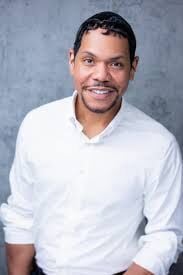
Dr. Shed Jackson is a marketing and communication professional with experience in economic development, higher education and business science. He is a 1997 graduate of Selma: https://about.me/shedjackson

(0) comments
Welcome to the discussion.
Log In
Keep it Clean. Please avoid obscene, vulgar, lewd, racist or sexually-oriented language.
PLEASE TURN OFF YOUR CAPS LOCK.
Don't Threaten. Threats of harming another person will not be tolerated.
Be Truthful. Don't knowingly lie about anyone or anything.
Be Nice. No racism, sexism or any sort of -ism that is degrading to another person.
Be Proactive. Use the 'Report' link on each comment to let us know of abusive posts.
Share with Us. We'd love to hear eyewitness accounts, the history behind an article.