In a column published last year, David Brooks describes his movement over time from agnosticism to religious faith (“The Shock of Faith: It’s Nothing Like I Thought it would Be,” NYT, December 19, 2024).
From the title onward, Brooks cycles back to an array of terms that identify the sometimes shocking emotions that have driven his search for a faith he can live with. My response isn’t meant as a criticism of his expression of personal faith, but to call attention to the question of feeling as the foundation of faith.
Brooks grew up in a Jewish family but now goes to church more than synagogue. He believes in the God of the Jews, including the God of the “Jewish Jesus” most revealed in the Beatitudes of the Sermon on the Mount. Though some of his friends think he’s “crossed over to Team Christian,” he remains connected to both Judaism and Christianity.
One paragraph in particular drew my attention to the role of feelings in religion, and choosing a religion. He writes: “When faith finally tiptoed into my life it didn’t come through information or persuasion but, at least at first, through numinous experiences. These are the scattered moments of awe and wonder that wash over most of us unexpectedly from time to time. Looking back over the decades, I remember rare transcendent moments at the foot of a mountain in New England at dawn, at Chartres Cathedral in France, looking at images of the distant universe or of a baby in the womb. In those moments, you have a sense that you are in the presence of something overwhelming, mysterious. Time is suspended or at least blurs. One is enveloped by an enormous bliss.”
He points to other moments when he, or someone he respects, feels joy, harmony, a “desire to be opened up,” a feeling “we are in the presence of a vast something just beyond the rim of our understanding.” and “events that tell us about the meaning of life and change the way we see the world.” He senses an “awareness” that people have “souls.” (this caused him to take the leap from “souls” to a “soul-giver”). Then, in a very revealing comment, Brooks writes: “Once you accept that there is a spiritual element in each person, it is a short leap to the idea that there is a spiritual element to the universe as a whole.” He seems to believe that once we “feel” that “spiritual element,” the leap to a wider “spiritual element” becomes acceptable. It just feels right.
Unfortunately, Brooks references an opinion by Christian defender, C.S. Lewis, who said an atheist’s “faith” is destroyed by “a mere glimmer of the spirit.” The main problem with that is an atheist does not hold a faith position at all. Brooks himself has taken a big jump from souls to spirit to the God of the Bible. On a mountain hike, he felt beauty, goodness and grandeur of the world. “It hit me with the force of joy.” He was overcome by a “sensation of intoxicating beauty.” In this happy state he “wanted to laugh, run about, hug somebody.” Searching for other descriptive terms, he says: “I felt something clicking into place.”
David Brooks tells us that his move toward God was gradual: “the process felt more like an inspiration.” He now experiences faith not so much as something to possess, but “a yearning for something beautiful … more about longing and thirsting.”
Brooks continues his grasping for language that frames his feelings. “I feel pulled by concrete moments of holy delight;” “it feels like a venture toward something unbelievably worth wanting;” and “putting the heart at the center of your life.” He repeats the words longing, hunger, yearning for a “pervasive presence.” He is grateful “to live toward someone I can seek and serve.”
The recurring word “sense” is significant, here and across the fields of faith. A sensitive person has a profound sense of something, a feeling of connection and relationship with something or someone. It feels natural, yet super-natural. Present in that moment, one may sense a Presence. This feels mystical—beyond the senses—and still, it is a sensate, sensual experience. Something beyond words, but not beyond feelings. The question becomes: is faith primarily feeling? If so, could we say the divine, the sacred, the spiritual, God—is a feeling, an emotion, a sense? We can’t fully trust our feelings, can we? Brooks concedes that he is an intellectual, yet he’s willing to let go of trying to reason through his religion for that sense of Presence.
Like David Brooks, I have no conclusion to offer. Only that we ought to be careful; we can’t always be guided by what we feel.
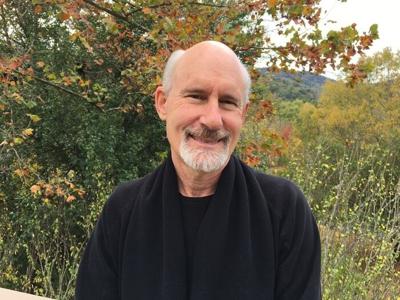
Chris Highland was a Protestant minister and interfaith chaplain for many years before becoming a humanist celebrant and author of many books. He lives in Asheville, North Carolina. His website is www.chighland.com.

(0) comments
Welcome to the discussion.
Log In
Keep it Clean. Please avoid obscene, vulgar, lewd, racist or sexually-oriented language.
PLEASE TURN OFF YOUR CAPS LOCK.
Don't Threaten. Threats of harming another person will not be tolerated.
Be Truthful. Don't knowingly lie about anyone or anything.
Be Nice. No racism, sexism or any sort of -ism that is degrading to another person.
Be Proactive. Use the 'Report' link on each comment to let us know of abusive posts.
Share with Us. We'd love to hear eyewitness accounts, the history behind an article.