
Since music was such an important part of my chaplaincy work through the years, many tunes and lyrics still linger in the dim-lit corners of my mind. I never know exactly why a certain song pops into my head. I suspect that I was singing in dreamland. This morning “Everyday People” floated to the surface. Looking it up in my old songbook, I was reminded it was composed by Sylvester Stewart, who everyone knows as “Sly Stone.” I watched a delightful YouTube version of “Everyday People” sung by many musicians and children at various schools (arranged by the amazing organization “Playing for Change”).
Reading and hearing the song again after all this time, I could see, in my mind’s eye, jail inmates, streetfolk, shelter guests, mentally challenged students, all singing along as I strummed my six- string guitar. It was a privilege to gather people in a county jail, a free dining room, a shelter, a school, and sing together. The harmony—and disharmony—could be quite contagious. Sometimes women and men enduring stressful, even depressing, periods in life, would be smiling, laughing, clapping, swaying with the enthusiasm of a simple song. And “Everyday People” was one of the best, popular for good reasons. With a lively melody and joyfully meaningful words, we could blend our voices and forget, for a few moments, we were in a place of struggle, suffering and shadow. There was always room for a brighter note.
“Sometimes I’m right and I can be wrong, my own beliefs are in my song; the butcher, the banker, the drummer and then, makes no difference what group I’m in … I’m everyday people.” The following verses reveal an open and honest experience of life: “I am no better and neither are you, we are the same whatever we do,” and, like a child’s chant: “There is a yellow one that won’t accept the black one, that won’t accept the red one that won’t accept the white one.” The upbeat rhythm keeps it moving; then when you stop to think about the lyrics, truth bounces in: “Different strokes for different folks.” We’re all so different, yet we are everyday people, common, wonderfully—and strangely—diverse.
Sly Stone was a pioneer in funk, fusion, “progressive soul” and even gospel. Sly and the Family Stone was one of the first bands with a mix of ethnicity and gender. He grew up in a very religious household in Texas, and in the San Francisco Bay Area, where his family were members of the Church of God in Christ. His parents encouraged their children to express themselves through music. I think we can hear echoes of that early exposure to family, faith and freethinking in a song like “Stand”: “There’s a cross for you to bear, things to go through if you’re going anywhere; Stand for the things you know are right, it’s the truth that the truth makes them so uptight.” Several lines later come these powerful words: “You’ve been sitting much too long, there’s a permanent crease in your right and wrong.” The song comes down to: “They will try to make you crawl, and they know what you’re saying makes sense and all; Stand, don’t you know that you are free? Well, at least in your mind if you want to be.” An invitation, a proclamation, to think freely, to stand, independent and strong, after “sitting much too long.”
What about those who still refuse to accept the differences, the appearances, the colors of the human family? Often we see religious faith (through doctrine, dogma or discrimination) resisting that acceptance; other times, people of faith are leading the way to more inclusion. Secular people can also fall on some point of the spectrum between Inclusion and Exclusion. Like Sly’s band, there is a mixture of people, with various looks and styles and talents. It can seem “funky” or too psychedelic for us (don’t ask about the wild colors I used to wear). Accepting self-expression, affirming unique individuals, may not be comfortable, and not always harmonious, but maybe what matters the most is communal singing—moving the body and soul.
At the conclusion of “Everyday People,” we join in singing a blend of nonsense and common sense: “Oh, sha-sha, we got to live together.” The song was a hit single in 1969, during a time (like ours) when many wondered if we could actually live together in peace and harmony. Music, from all corners of culture, through an array of voices, can serve an almost religious service, at least when the message rings out: We are all in the chorus, and we need every voice. We could use more inspiration from the music—the fusion, soul, and dancing—among “Everyday People.”
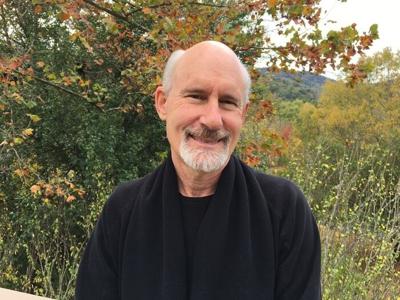
Chris Highland was a Protestant minister and interfaith chaplain for many years before becoming a humanist celebrant and author. He lives in Asheville, North Carolina. His website is www.chighland.com.



(0) comments
Welcome to the discussion.
Log In
Keep it Clean. Please avoid obscene, vulgar, lewd, racist or sexually-oriented language.
PLEASE TURN OFF YOUR CAPS LOCK.
Don't Threaten. Threats of harming another person will not be tolerated.
Be Truthful. Don't knowingly lie about anyone or anything.
Be Nice. No racism, sexism or any sort of -ism that is degrading to another person.
Be Proactive. Use the 'Report' link on each comment to let us know of abusive posts.
Share with Us. We'd love to hear eyewitness accounts, the history behind an article.