When I was a child I was taught to fold my hands together and bow my head to pray. As an Evangelical teen, I was taught to hold my hands, palms up, to “receive blessings” from the Lord. In my Pentecostal period, I was taught to raise my hands in the air and wave them—not to get God’s attention—but to express surrender and praise. Very emotional.
In later years, I was invited to hold the hands of those on my right and left in worship, during congregational prayer. As a chaplain in a county jail and homeless shelter, a “prayer circle” was a meaningful way to literally touch each person, squeezing the hands of those we wouldn’t normally touch.
Along the way, I learned that prayer means many things to many people and can be practiced in a variety of ways. One of the most sincere acts of prayerfulness for me as a minister, chaplain, teacher and housing manager, was physically extending a hand to another person to offer connection and encouragement, especially in difficult times.
This was my process of transition as I let go of prayer and held onto humanity.
I’ve prayed or meditated with Muslims and Jews, Catholics and Protestants, Wiccans and Bahais, Hindus and Buddhists. These were often accompanied by words, but sometimes by silence (with all the public performances of prayer, silence isn’t honored as much now).
In many of these moments of prayer or meditation I felt honored and privileged to be included, though some knew I didn’t share their beliefs. It was the practice of inclusive welcoming that set the scene.
Do secular people pray? No. Do they meditate? Sometimes. Does there have to be something or Someone to direct our attention toward? No. From Buddhists I learned to “come back to breath,” to pay attention to the here and now without being distracted by thoughts or surrounding noises or activities. Just be present. I won’t say that’s easy, but worth the effort (“right effort” is one step on the Buddha’s “Eightfold Path”). Meditation isn’t really something to “work at,” yet “the practice takes practice” as we might say. I’m not a Buddhist, but as with other religious communities, I’ve picked up hints from them for a personal practice. For instance, the value of silent appreciation for life, in me and around me, and connection to something greater (for me, that’s Nature). I also learned from Buddhists the significance of placing palms together and bowing in respect to others.
It’s important to ask ourselves what is the purpose of prayer or meditation? People of various faith traditions may give quite different responses. Yet, if the intent is to improve ourselves, to show more compassion toward others, and to practice what we think is good and right, then, as I see it, it doesn’t matter which religion, or if there is religious belief at all.
Another aspect of prayer is disheartening and disrespectful. We might describe this as prayer used as a kind of weapon—a tool of judgement to “throw” at someone else. “I’ll pray for you” can be, at times, almost a threat (“I’m calling God and telling Him about you, so watch out!”). In some charismatic (Pentecostal) circles, this can sound like battlefield language: “I’m asking God to send angels to fight the demons in you!”). The assumption is that this person has such an intimate relationship with God, they can make the Almighty act at their bidding. That seems like a Servant God, and a strange way to view the world, always imagining we’re on a battlefield of belief.
Hands can be used for good or ill, to help or harm. When I learned as a child that God would hear me if I only folded my hands, bowed my head and said a sincere prayer, I got the message: the Lord was concerned about me and I must keep my end of the bargain and show humility in God’s presence—everywhere, but especially in church and before bed. Now, I think any practice of humility, that honors the humanity in ourselves and others, can be a force for good.
In my memory, I drift back to those moments when we created circles. I would tell everyone:
“This is not a hand-holding moment.” We stood close, even embraced those beside us, and in silence, song and deep shared breathing, felt the interrelationship of person to person. We felt alive and interconnected to one another. Though we often had no idea what each of us in the circle believed, we experienced a deep sense of life’s goodness. Truly humbling, truly human.
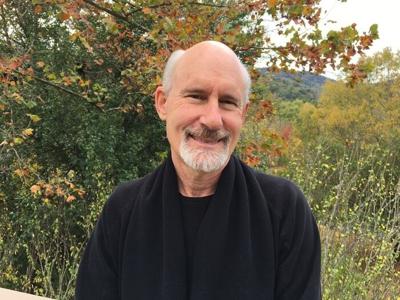
Chris Highland was a minister and chaplain for many years. He is a writer and teacher in Asheville, NC. www.chighland.com, (chris.highland@gmail.com)
(0) comments
Welcome to the discussion.
Log In
Keep it Clean. Please avoid obscene, vulgar, lewd, racist or sexually-oriented language.
PLEASE TURN OFF YOUR CAPS LOCK.
Don't Threaten. Threats of harming another person will not be tolerated.
Be Truthful. Don't knowingly lie about anyone or anything.
Be Nice. No racism, sexism or any sort of -ism that is degrading to another person.
Be Proactive. Use the 'Report' link on each comment to let us know of abusive posts.
Share with Us. We'd love to hear eyewitness accounts, the history behind an article.