A friend once gave me a book on near death experiences (NDEs). He was excited about the collection of personal testimonies of people who apparently died and what they saw. He was sure it proved there is life beyond death. After reading the book, I wasn’t convinced. These dramatic stories get a lot of attention for their emotional impact, however, they offer no evidence for a world beyond. Testimonies passed around from believer to believer are never sufficient. “This happened to me. It really did!” Are we obligated to believe these stories?
I understand the longing, the hope, many people have to find proof of life after death. I’ve read articles by individuals who believe they experienced death, like the physician who claimed to see things after he was “clinically dead.” A young boy became famous in some circles for his claim that “heaven is real,” believing he “saw things” after he died. This isn’t surprising. In our predominantly Christian culture, where even atheists know the basic story of Easter and the resurrection, there is something very attractive about “the other world” beyond the grave. Whether the “walking dead,” vampires, or fairy tales, we’ve been steeped in films about “the beyond” since childhood. We want so much to believe. This life can’t be all there is, can it?
This subject was brought back to my mind when reading about a conference of brain scientists gathering in Portugal this spring (“These patients saw what comes after death. Should we believe them?,” WaPo, 2/5/2026). We learn that, “Thousands [have] returned from the precipice of death with stories of strange visions and journeys that challenge what we know of science. Last year, a team of researchers from Belgium, the United States and Denmark launched an ambitious effort to explain these experiences on a neurobiological level …” What they are finding is fascinating. Studies suggest that “sensations resembling out-of-body experiences may be generated in the temporoparietal junction, a high-level hub for processing sensory information and helping distinguish the self from others. Studies indicate that applying electric stimulation to this area, located behind and just above the ear, could trigger an out-of-body experience.”
When we read these NDE testimonies more closely (and yes, skeptically, as rational observers), we hear “I was out of my body,” or “I was transitioned to another place,” “I was in a peaceful tunnel where I heard someone reading scripture,” or “she felt herself return to her body.” In my view, these are not stories of anyone “leaving their body.” The mind conjures all kinds of wondrous fantasies. Perhaps the “afterlife” is one of the greatest fantasies, believed by billions across the globe?
Try this experiment. Close your eyes. Now, imagine you are floating above the ground like a drone. Look down on yourself and your surroundings. Does it feel like you are “out of your body”? If we can do this while conscious, what can the brain do when we’re not? Isn’t this what happens in dreams? If someone claims they really went to a castle in their dream, and rode a white horse, would we believe it? Could we disprove it? If we watched them while they were dreaming and observed they never left the bed, we can assure them it was “just a dream.” I suspect it’s the same with NDEs. It is not the person who leaves their body, it’s the mind’s amazing ability to imagine, like a great movie projector in our head. Besides, has a person actually died, or simply come “near death”? Some dissenting scientists say a person was “deceased” and had “visions.” Well, visions are one thing, actual death is another. Maybe they were “clinically dead,” but unless these people are being resurrected, they are simply being “revived,” resuscitated. They went nowhere. But their brain projected something, perhaps personally profound.
As the article states, “a deep mystery still surrounds near-death experiences.” Mysteries are wonderful puzzles to rationally seek to solve. Our families, religions or cultures provide us convenient “plug ins” when we are faced with troubling mysteries. “I saw a light!” … “Jesus walked beside me!” “I heard celestial music” … “That was a choir of angels.” “I could look down from above” … “No doubt, I was in heaven.” Do any of these folks stop to think, if they were Hindu or Buddhist, Native American or Jewish, Muslim or Taoist, they might have experienced something quite different?
On balance, some scientists say that “aspects of such experiences cannot be explained solely by brain physiology.” Maybe so. Yet, it remains to be asked: Did these patients see what comes after death and should we believe them? Personally, I don’t think so. This doesn’t discount whatever meaning a person feels or finds at the edge of life.
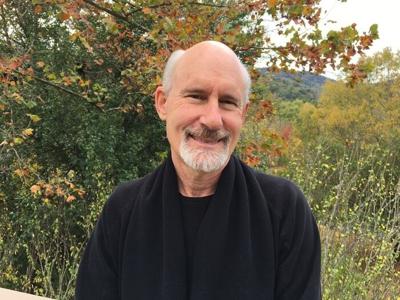
Chris Highland was a minister and chaplain for many years. He is a writer and teacher in Asheville, NC. www.chighland.com (chris.highland@gmail.com)
(0) comments
Welcome to the discussion.
Log In
Keep it Clean. Please avoid obscene, vulgar, lewd, racist or sexually-oriented language.
PLEASE TURN OFF YOUR CAPS LOCK.
Don't Threaten. Threats of harming another person will not be tolerated.
Be Truthful. Don't knowingly lie about anyone or anything.
Be Nice. No racism, sexism or any sort of -ism that is degrading to another person.
Be Proactive. Use the 'Report' link on each comment to let us know of abusive posts.
Share with Us. We'd love to hear eyewitness accounts, the history behind an article.