

There are many poignant passages in Pat Conroy’s book, “South of Broad.”
From the time the main character Leo King finds the body of his brother, to the discovery that his mother had been a nun, to the death of his wayward wife Starla, Conroy presents a man who wrestles with his family, friends and faith.
When his wife dies far away and alone, the sadness of her mental illness and lost life overwhelms Leo. During her funeral in a Charleston cemetery, Leo gazes at the beauty of the Southern sky while he struggles to pray, but prayer eludes him. “I call on God to explain to me the ruthless life he granted to Starla [his wife], but my God is a hard God, and he answers me with a silence that comes easily to Him from his position of majesty.” In lines that echo survivors of the Holocaust like Elie Wiesel, Leo addresses the realization that the God he thought he knew was absent. “The terrible silence of God can offend the violated sensibilities of a bereft and suffering man. For me, it does not suffice. If the only feast my God can provide me is a full portion of nothingness, then prayer dries up in me. If I worship an uncaring God, then He wouldn’t give a passing thought to the fact that He had created a difficult, unmovable man. My heart is drying up inside of me, and I can barely stand it.” In this inner cry of grieving and awakening, Leo releases a wrenching question into the dark void: “What can a man do when he decides to fold up his God as though He were a handkerchief and place Him in a bottom drawer, and even forget where he put Him?” A stunning image of disappointment and despair.
In the darkest time of his life, Leo reaches for rational explanation, even the cold comfort of illumination. One set of beliefs is extinguished as a chilling reality meets him in the face of death.
“As I stand there over the coffin, there is a transformation of the God of my childhood, who I could adore with such thoughtless, devotional ease, to someone who has turned His back on me with such sightless indifference. In the black-rooted withering of my faith, I take note of the workings of my annoyed heart and mark the sense of desolation I feel when I demote God to a lowercase g as I kiss Starla’s casket before they lower it into the earth.”
Conroy masterfully exposes a wounded and dying faith, and a God who may not survive the intense light of one person’s echoing confession in the silence. Yet, it’s not meant as a disrespectful assault on all religious faith or as a threat to any personal beliefs, only an honest expression of one person’s evolving perspective of the God he was raised to believe in. When a person who has believed, sometimes since childhood, that God is a loving guardian over their life, a protective Parent, yet finds their faith doesn’t hold up through grief and loss, that shouldn’t be threatening to anyone. It ought to elicit compassion and empathy.
People leave their childhood beliefs for many reasons, sometimes for very good reasons. And it’s not simply a “bad experience” with a church or a pastor. They may have been taught that prayers are always answered, and sometimes answered by silence, but they come to the realization that “does not suffice,” as Leo reasons. They may find that once they read the Bible for themselves, they aren’t finding satisfactory responses to hard questions. In fact, in many places their questions may be discouraged. In my case, over a period of years I began to find faith mostly irrelevant to living a life of “goodwill to others.” I discovered an ethical life does not depend on faith. Believing in a divine presence does not necessarily make for good people or a good life. Like Leo, there was a “drying up” of prayer; beliefs carried over from younger years proved insufficient and no longer made sense.
As we change and grow, we sense God changes, or at least our view of God goes through an evolution. The intimate, personal relation we once felt to our own “private deity” expands to reveal a much broader understanding of the divine. Then, for some of us, the divine stretches to the breaking point and evaporates. There is loss, maybe a period of grief, then relief and a deeper feeling of liberation. Once again, this process is not to deny anyone the free choice to believe whatever they choose. It is an individual’s story of faith and leaving faith, walking through the desolation as it transforms into deliverance.
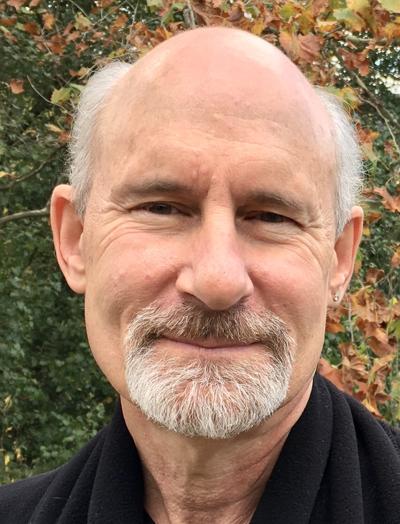
Chris Highland was a Protestant minister and interfaith chaplain for many years before becoming a humanist celebrant and author. He lives in Asheville, North Carolina. His website is www.chighland.com.

(0) comments
Welcome to the discussion.
Log In
Keep it Clean. Please avoid obscene, vulgar, lewd, racist or sexually-oriented language.
PLEASE TURN OFF YOUR CAPS LOCK.
Don't Threaten. Threats of harming another person will not be tolerated.
Be Truthful. Don't knowingly lie about anyone or anything.
Be Nice. No racism, sexism or any sort of -ism that is degrading to another person.
Be Proactive. Use the 'Report' link on each comment to let us know of abusive posts.
Share with Us. We'd love to hear eyewitness accounts, the history behind an article.