Think back to all the vehicles you have owned. You might even reflect on the earliest modes of transportation: trike, bike, scooter, skates, skateboard (a horse?). How did it feel to be in control of something propelling you on wheels? Thrilling? Frightening? No doubt, a combination of emotions. Consider the cars or trucks you’ve driven, each with its own unique affect on your senses —the smells, the touch of the steering wheel and upholstery, the shiny paint, sound of the engine. Does it make you long for one of those old forms of transportation?
My first car, a hand-me-down from my mother, was a light blue, 1964 Dodge Dart—a ragtop convertible with bucket seats, a slant-six engine and pushbutton transmission. That’s right, push button. Now, most cars start with the push of a button. We’re used to buttons. But I can still feel what it was like to touch and push each gear button. I drove that car in high school, then college, then to seminary in California. When I finally, sadly, sold the old Dart, I remember the lump in my throat when I saw it driven away by someone else. That car had been part of me, and part of major moments in my life. But I had to let it go. The next car I had was a Nissan Pathfinder I drove for 25 years before donating it to charity. Now, we drive a ten-year-old Nissan we intend to trade in for an electric.
I share this brief history of my personal transportation to raise awareness of how our beliefs can carry us—to transport us to places we freely choose to go—if it’s truly a free choice. Some of us were brought up riding in one “family car,” believing in things we didn’t understand, trusting our parents, preachers and teachers to steer us toward truth. We may have been carried along— transported—by these beliefs for a few years or a lifetime. Do we ever ask: Who is driving? Who’s at the wheel? Do we ever wonder if the vehicle we were given, or “bought” years ago, is really best for us, the right choice? What if we let it go? We may have a lump in our throat, or a sick feeling in our stomach, to watch our faith go. Yet, could it be the right time to change wheels, to take the wheel, steering toward something different?
Many people seem to think faith means allowing a spiritual teacher from centuries past to take the wheel, to control where they go, navigating each turn along life’s roadway. Personally, that not only sounds strange but dangerous. I don’t want to be near them in traffic,
let alone inside that car. I want to know that people are in control of their own vehicle, and driving responsibly (I’m not sure I’ll ever get used to the idea of “self-driving” cars. I would avoid them in any way). If Buddha or Jesus, Moses or Muhammad, were driving around today, the first concern would be: they wouldn’t know what a car was! We might also wonder where they might be going. Would their destinations be similar—a religious rendezvous at a public park, on a mountain, or in a fast-faith-food restaurant? I’m playing here a bit, but I keep circling back to a parking lot full of concerns and questions: We ought to have some idea of where religion is driving us, and who is at the wheel. Are we willing to get out of the car and take responsibility for driving ourselves, making decisions about direction without some pre-installed GPS (God Positioning System)?
The analogy has limits. Speed limits are important. We shouldn’t be too quick to change cars without serious thought. And there are limits in terms of fuel—is our tank full enough, with inner energy and willpower. to empower the journey to the destination of our choice?
While I drove that old Pathfinder, I also rode several motorcycles. The first, my treasured Honda Nighthawk, threw me like a horse when a redlight-runner smashed into me, totaling the cycle. Less than a year later, I purchased a Suzuki Intruder that took me to Yellowstone and all over California, until I decided it just wasn’t safe any longer to ride around on something so vulnerable on the roads. I sometimes miss the open highway, the feel of the wind, the sights and smells and freedom of the saddle, straddling the horsepower on the “iron horse.”
In traveling the often rough roads or dusty trails of faith, with an old worn seat or saddle, we may be used to the ride. But could it be time to switch wheels, or horses?
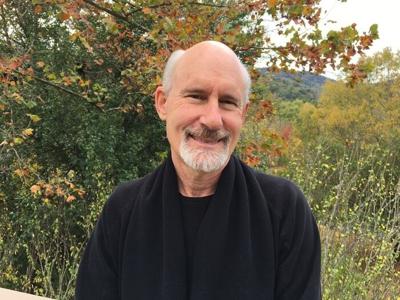
Chris Highland was a minister and chaplain for many years. He is a writer and teacher in Asheville, NC. www.chighland.com, (chris.highland@gmail.com)

(0) comments
Welcome to the discussion.
Log In
Keep it Clean. Please avoid obscene, vulgar, lewd, racist or sexually-oriented language.
PLEASE TURN OFF YOUR CAPS LOCK.
Don't Threaten. Threats of harming another person will not be tolerated.
Be Truthful. Don't knowingly lie about anyone or anything.
Be Nice. No racism, sexism or any sort of -ism that is degrading to another person.
Be Proactive. Use the 'Report' link on each comment to let us know of abusive posts.
Share with Us. We'd love to hear eyewitness accounts, the history behind an article.