Several times recently I’ve heard people say “Christians do this” or “Christians believe that.” When I have the opportunity, I gently respond: “Not all Christians do that or believe that.” Over the many years I identified as a Christian I became well aware of the wide spectrum of beliefs and practices among Christians. There are many forms of Christianity, and quite an array of beliefs, from the most conservative fundamentalist to the most liberal progressive. And just about any flavor in between. This is one reason I mildly, sometimes firmly, remind people “not all are like that.” A secondary reason is that I rather enjoy being the secular person in the room who stands up or speaks out for a faith group. Some find that surprising.
We like to lump. We like to wrap up neat little packages to put people inside. We gravitate to grouping. In some ways this seems natural and normal. However, something gets lost in translation when we perform this mental trickery—we lose the humanity, one person at a time.
“Those people.” When I was a chaplain, serving “persons with housing challenges” (so-called “homeless” people), a church deacon volunteering with us told me it felt good to be “helping the homeless.” As we slowly walked through downtown together, I passed along something I had learned as a chaplain, calmly explaining that our work focused on the people, each individual experiencing a shelter crisis. For this reason, we tried not to lump folks into categories, never called people “the homeless,” since that tends to dehumanize, to deflect or neglect the human person. While acknowledging the critical issue of homelessness, the women, men and children we served were not an “issue” or a problem to solve. Each was a valuable member of the community, our neighbors, though they had no roof over their head, though they had very limited resources, though they may not look or act like us.
This nice church lady, who recognized her privilege, immediately felt bad about her use of language, but I assured her that we all do this, and we can learn to be more aware of the words we use. Words reflect our thinking. Words can exclude; words can overlook the humanity of each person; words can sound like judging: “They are different from me.” It’s certainly true that people have differences, and we shouldn’t ignore or deny that (for instance, I am not “color-blind” any more than I’m “economic-privilege blind”—and even using the word “blind” can show insensitivity or bias). To my mind, differences can be very good; engaging people who are different can be an excellent opportunity for learning, expanding knowledge, showing empathy.
Someone said they couldn’t understand why “Christians are so cruel toward the migrants.” First, we could remind them that many who identify as Christian have great compassion for refugees—homeland-seeking people. It may not seem that way sometimes, when we see such a focus on worship services, theology, the Bible, prayer, and believing. Yet, I still think most Christians who take the central, essential teachings of Jesus to heart, are loving, empathetic people. Second, a family enduring a homeland or housing crisis isn’t merely “the migrants” or “the homeless” —the emphasis ought to be on the people, the human beings, experiencing some situation, circumstance or condition that doesn’t define them as a person.
In the 1980’s, the rockstar Sting recorded a song with a lyric: “I hope the Russians love their children too.” Seems like a good reminder, given our inclination to speak of “the Russians,” “the Chinese,” as well as “the Muslims” or even “the Atheists.” Do they love their children too? Does that make “them” too human, too much like us, to think this way? Consider the rhetoric around political parties and gender identities. Notice the anger, the judgment, keeping others at a safe distance where we don’t have to see each as a person, or look them in the eye (reminds me of our “Eye to Eye” newsletter, published when I was a jail chaplain).
I don’t know why some Christians are kind, good-natured people, and others are mean-spirited. I just know there are many “brands” of believers. And I know that it comes down to choice—choosing to practice a particular kind of faith, either one that is evident in love and compassion or one that sees only “them and those.” The person who told me Christians seem so cruel, may have only seen one kind of believer. Maybe that’s a challenge, a mirror held up for the majority of Christians, to work harder at showing a kinder face of their faith.
Believers and nonbelievers can speak out for the humanity behind the labels and beliefs.
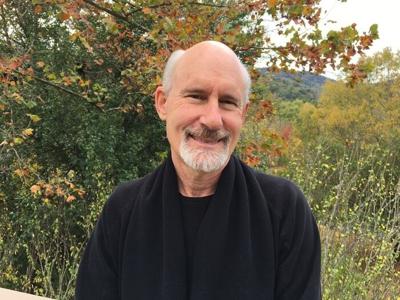
Chris Highland was a Protestant minister and interfaith chaplain for many years before becoming a humanist celebrant and author. He lives in Asheville, North Carolina. His website is www.chighland.com.
(0) comments
Welcome to the discussion.
Log In
Keep it Clean. Please avoid obscene, vulgar, lewd, racist or sexually-oriented language.
PLEASE TURN OFF YOUR CAPS LOCK.
Don't Threaten. Threats of harming another person will not be tolerated.
Be Truthful. Don't knowingly lie about anyone or anything.
Be Nice. No racism, sexism or any sort of -ism that is degrading to another person.
Be Proactive. Use the 'Report' link on each comment to let us know of abusive posts.
Share with Us. We'd love to hear eyewitness accounts, the history behind an article.